
Archaeologists working near the Swedish border have uncovered an unusual stone burial chamber believed to be around 4,000 years old.
A rare prehistoric stone tomb has been uncovered during archaeological excavations near Halden in southeastern Norway.
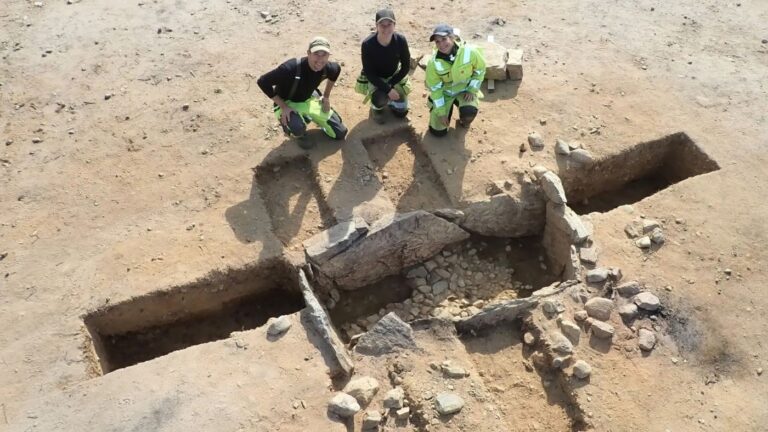
The burial chamber was discovered on the Svinesund plateau, close to the Swedish border, where archaeologists are investigating the area ahead of the construction of a large industrial development.
Researchers believe the stone cist, known in Norwegian as a hellekiste, could be approximately 4,000 years old, placing it around the end of the Stone Age or beginning of the Bronze Age.
However, that age is currently based on comparisons with similar graves and has not yet been confirmed by scientific dating, according to forskning.no.
A rare find in Norway
Such burial chambers are much more common elsewhere in Scandinavia.
According to archaeologist Morten Ramstad of the University Museum of Bergen, only around 20 have been found in Norway. By comparison, approximately 2,000 are known from Sweden and around 150 from Denmark.
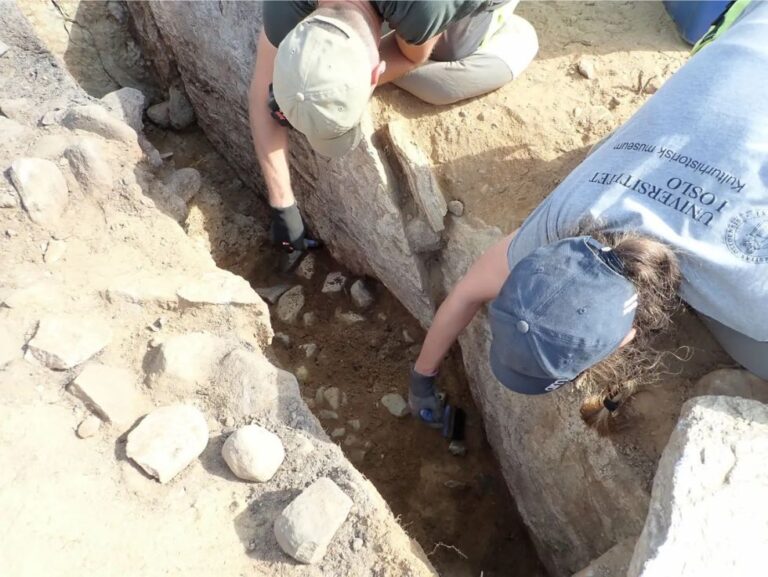
The Halden tomb was carefully constructed using large stone slabs, some weighing several hundred kilograms, with smaller stones arranged to form a floor.
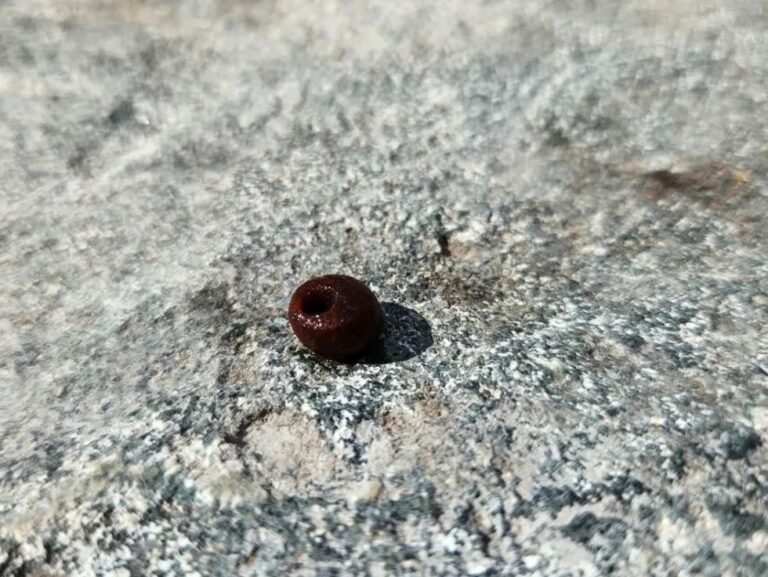
Archaeologists also recovered an amber bead (pictured below), an arrowhead and a fragment of pottery decorated with a cord-stamp pattern.
One thing they did not find was a flint dagger. Such daggers have been discovered in all other comparable Norwegian stone cists from the same period, while arrowheads are also common. Archaeologists have suggested that some of these graves may have been associated with warriors.
The Halden grave did contain an arrowhead, but no dagger, suggesting there may be something different about either the person buried here or the burial itself.
Questions remain about the burial
No identifiable human bones were found inside the tomb, but archaeologists discovered charcoal that could potentially include burnt bone.
That has raised the possibility that cremation may have taken place at the site, either when the grave was first constructed or during a later burial.
Samples have now been taken for analysis. If the material does contain burnt human remains, researchers may be able to establish a much more precise date for the grave.
Stone cists of this type are associated with a period when farming was becoming firmly established in Norway and communities were adopting more permanent settlements and new burial traditions.
A time of change
The wider period was one of considerable change in Scandinavia. During the third millennium BC, new groups arrived from farther south in Europe as farming became more firmly established.
According to archaeologist Morten Ramstad, they brought new burial customs, religious ideas and ways of organising society, along with new styles of housing.
Early farming communities lived in timber-built longhouses that differed from the homes used by earlier hunter-gatherers in Norway.
For now, exactly who was buried at Svinesund—and when—remains unknown. But with so few similar graves ever discovered in Norway, archaeologists hope further analysis could provide an unusually detailed glimpse into life and death in the country around 4,000 years ago.