
A New York mobster starting over in rural Norway sounds unlikely. Yet Lilyhammer turns that premise into a sharp, offbeat series that helped redefine global streaming television.
When Netflix began investing in original programming, it didn’t start with a glossy global hit or a big-budget drama.
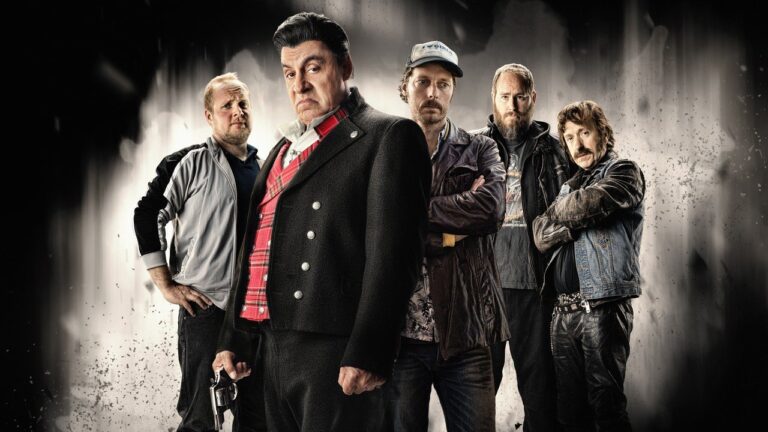
Instead, one of its earliest flagship shows was a quirky Norwegian-American crime comedy set in a small town best known for hosting the Winter Olympics. That show was Lilyhammer.
First released in 2012, the series arrived at a moment when international TV was only just beginning to travel widely across borders. Today, viewers are used to subtitles and global storytelling. Back then, it still felt like a novelty.
More than a decade later, Lilyhammer remains one of the most unusual and entertaining ways to experience Norway on screen. It is strange, dark, often funny, and occasionally violent. Most of all, it is unlike anything else.
What Is Lilyhammer About?
At its core, Lilyhammer tells the story of Frank Tagliano, a New York mobster played by Steven Van Zandt.
After testifying against his former associates, Frank enters the witness protection program. When asked where he would like to start his new life, he makes an unexpected choice: Lillehammer.
His reasoning is surprisingly simple. He remembers watching the 1994 Winter Olympics on television and recalls the town as peaceful, picturesque, and far removed from the chaos of New York.
What follows is a culture clash that drives the entire series. Frank attempts to reinvent himself as “Giovanni Henriksen,” but his instincts, habits, and connections make that far from straightforward.
Why Lilyhammer Is Worth Watching
Because it blends crime, comedy and culture clash into something genuinely distinctive, Lilyhammer offers a compelling, often surprising take on both storytelling and life in Norway.
A Culture Clash That Actually Feels Real
The central idea might sound like a gimmick, but it works because it is grounded in reality.
Frank does not just move to a new place. He collides with an entirely different way of life. Norwegian society is structured, rule-driven, and often quietly bureaucratic. Simple things such as opening a business, dealing with the welfare system, or navigating local politics become unexpectedly complex.
If you have spent time in Norway, much of this will feel familiar. If you have not, it offers a surprisingly accurate introduction to how the country functions beneath the surface.
A Unique Tone That Shouldn’t Work, But Does
Lilyhammer blends crime drama with dry humour and moments of outright absurdity.
One moment, you are watching a fairly serious storyline involving organised crime. The next, the tension is undercut by a deadpan joke, an awkward social situation, or a misunderstanding rooted in cultural differences.
It is an unusual mix, but that unpredictability is part of the appeal. The show never quite settles into one genre, and that keeps it engaging.
A Window Into Everyday Norway
Beyond the plot, Lilyhammer doubles as a snapshot of Norwegian life.
From snow-covered streets and long winters to small-town dynamics and social norms, the setting plays a central role. The series leans into the contrasts between Frank’s past and his new surroundings, but it also highlights the rhythms of daily life in Norway.
There are subtle details too. The role of the state, the importance of trust, and the understated nature of social interactions all come through in ways that feel authentic rather than exaggerated.
The Language Mix Adds Authenticity
One of the show’s most distinctive features is its use of both English and Norwegian dialogue.
Characters switch naturally between the two languages depending on the situation. Norwegian characters speak their native language with each other, while adapting when necessary to communicate with Frank.
This might seem like a small detail, but it makes a big difference. It preserves the identity of the setting and avoids the artificial feel that can come from forcing everything into English.
For international viewers, it also helped normalise subtitles long before they became mainstream.
The Cast And Characters
At the heart of Lilyhammer is Steven Van Zandt, whose performance carries the entire series.
Best known to many viewers as Silvio Dante in The Sopranos, Van Zandt brings a similar quiet intensity here, but with a more comedic edge. His portrayal of Frank Tagliano, later Giovanni Henriksen, balances menace with dry wit. He is convincing as both an outsider trying to adapt and a man unable to fully leave his past behind.
He is supported by a strong Norwegian cast that helps ground the show in its setting.
Trond Fausa Aurvåg and Steiner Sagen play Torgeir and Roar, two local brothers who become Frank’s unlikely associates. Their mix of loyalty, naivety, and occasional incompetence provides many of the show’s funniest moments.
Marian Saastad Ottesen plays Sigrid, Frank’s partner, offering a more stable and grounded counterpoint to his chaotic lifestyle. Meanwhile, Anne Krigsvoll delivers a memorable performance as the no-nonsense police chief Laila Hovland.
One standout role comes from Fridtjov Såheim as Jan Johansen, a well-meaning but often exasperating NAV employee tasked with helping Frank integrate into Norwegian society. Through this character, the show gently satirises Norway’s bureaucracy without ever feeling heavy-handed.
Why Lilyhammer Was So Important For Netflix
It is easy to forget just how early Lilyhammer arrived.
Today, Netflix is synonymous with global hits and big-budget productions. But in 2012, the platform was only beginning to experiment with original content.
Lilyhammer is widely regarded as Netflix’s first original series, although technically it was a co-production with Norwegian broadcaster NRK. That detail matters, because it reflects how uncertain the streaming model still was at the time.
What the show proved was that audiences were willing to embrace something different. A bilingual series set in a small Norwegian town, led by an American musician-turned-actor, was not an obvious global success story. Yet it found an audience.
In hindsight, Lilyhammer helped lay the groundwork for what would come next. International productions, subtitled content, and regionally specific storytelling are now central to Netflix’s strategy. At the time, this was far from guaranteed.
Filming Locations: Lillehammer And Beyond
The setting is not just a backdrop. It is a defining part of the show.

Most of Lilyhammer was filmed in and around Lillehammer, the town that hosted the 1994 Winter Olympics. That legacy still shapes its identity, and the series makes full use of its surroundings.
Snow-covered streets, wooden buildings, and quiet neighbourhoods create a striking contrast to Frank’s former life in New York. The slower pace and close-knit community add tension in a different way. In a small town, it is harder to stay anonymous.
For viewers who have visited Norway, the locations will feel instantly recognisable. For those who have not, the series offers a surprisingly grounded introduction to life outside the country’s major cities.
The landscape, particularly in winter, becomes part of the storytelling. Long, dark seasons and heavy snowfall are not just visual elements. They influence behaviour, mood, and daily routines.
Why Lilyhammer Ended After Three Seasons
Despite its popularity, Lilyhammer came to an end in 2014 after three seasons.
The reasons were less about ratings and more about the complexities of production. As a co-production between NRK and Netflix, the show sat between two very different systems.
Streaming economics were still evolving, and the costs of producing a bilingual, internationally distributed series were significant. Reports at the time suggested that disagreements over funding and future direction made a fourth season difficult to justify.
In many ways, Lilyhammer was a victim of its timing. It helped shape the future of streaming, but arrived before the model was fully established.
Where To Watch Lilyhammer Today
All three seasons of Lilyhammer remain available on Netflix in most regions.
For many viewers, it is now part of a growing catalogue of international series that can be easily discovered and watched from anywhere in the world. What once felt niche is now part of the mainstream viewing experience.
Final Verdict: Is Lilyhammer Worth Watching?
Lilyhammer is not a polished, big-budget drama in the modern Netflix mould. It is something more unusual.
It is a crime story, but also a comedy. It is a fish-out-of-water tale, but one grounded in real cultural differences. It is occasionally inconsistent, but often surprisingly sharp.
If you are interested in Norway, it offers a unique window into the country’s culture and everyday life. If you enjoy character-driven stories with a slightly offbeat tone, it is likely to appeal.
More than anything, Lilyhammer stands out because it dares to be different. Even now, that is surprisingly rare.


Absolutely love Lillehamer. Steve VZ is wonderful in it, scripting, acting, the works. Anyone who has lived in Scandiland will love the contradictions etc. (We lived 6 years in North Sweden!
Very norwegian humor, mostly circling around “humorous” jabs about how square and nordic norwegians are. For some reason this pseudo-self-supposed-irony seems to be a funny thing for norwegians – “look how silly we are (while everyone of course knows we are the best, in reality)” – it features as the carrying trait of many norwegian series. But for anyone else, it really gets old pretty fast. Little S plays his role good, and the actors are pretty decent – but to enjoy the humour after one or two episodes i do believe you have to be Norwegian. The most plausible explanation as to why this story was ever written is some kind og state/area/similar geographic allocation/grant to make a series.
I loved “Lilyhammer”….. absolutely everything about it. I feel like his character was more like him then what you. The gentle kindness, & that beautiful humble smile he flashes when he’d receive appreciation. There’s a shy side to him & a huge heart. The dry comedy was done really well & his acting was outstanding 💖