
Once you've lived in Norway for a while, the name Glomma starts to become familiar. Even if you have never knowingly seen the river, you may well know it from one simple fact: it is Norway’s longest river.
It is such a well-known fact that it was one of the questions on my Norwegian citizenship test. Even so, I was still surprised to encounter the river in Sarpsborg, far to the south-east of the country.
“Wait, isn’t the Glomma the river in Røros?” I said to a friend. A quick look at the map revealed the true scale of this remarkable waterway.
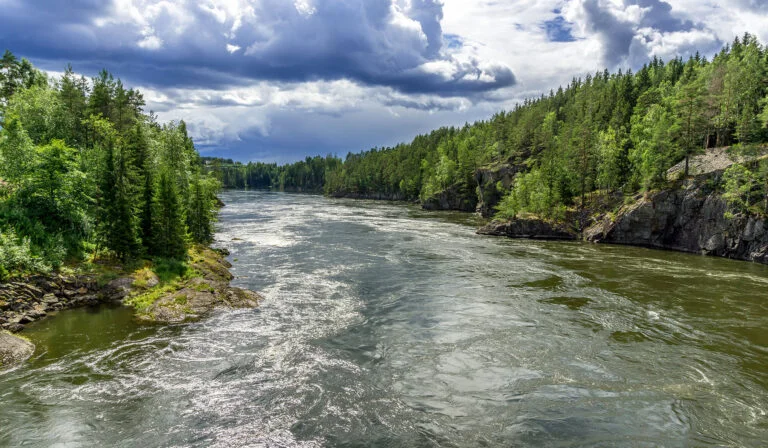
From the mountains near Røros to the Oslofjord, the Glomma runs through forests, valleys, farmland, industrial towns and historic settlements.
It is so much more than just a river on a map. For centuries, it has helped shape the landscape, economy and identity of eastern Norway.
Introducing the Glomma
In a country of mountains, valleys and fjords, it is no surprise that Norway has some long and powerful rivers. But none is longer than the Glomma.
The river runs for approximately 623 kilometres from the mountain areas near Røros to Fredrikstad, where it flows into the Oslofjord. Along the way, it drains a vast area of eastern Norway. Its catchment covers almost 42,000 square kilometres, including a small area across the border in Sweden.
That makes the Glomma river system the largest in Norway. The Norwegian part of the catchment accounts for almost 13% of mainland Norway’s total land area, which gives a sense of just how important the river is.
You may also see the river referred to as Glåma, especially in Norwegian sources and in the upper parts of the river. Both names are used, although Glomma is the form most commonly used in English-language contexts.
Where Does the Glomma Start?
The Glomma is often said to begin at Aursunden, a large lake near Røros in Trøndelag. This is a useful shorthand, and it is close enough for most travellers, but the full picture is more complicated.
Aursunden itself is fed by mountain lakes and streams from the highlands north and north-east of Røros. In that sense, the true source of the Glomma lies deeper in the mountains, while Aursunden marks a more recognisable starting point for the river as most people understand it.
This source area helps explain one of the most interesting things about the river. The Glomma begins in the uplands of central Norway, close to one of the country’s most historic mining towns, before gradually making its way south through the broad valleys and forests of eastern Norway.
By the time it reaches the lowlands closer to the Oslofjord, it has become something quite different: a wide, powerful river that has supported industry, transport, fishing, farming and hydropower.
A River Through Eastern Norway
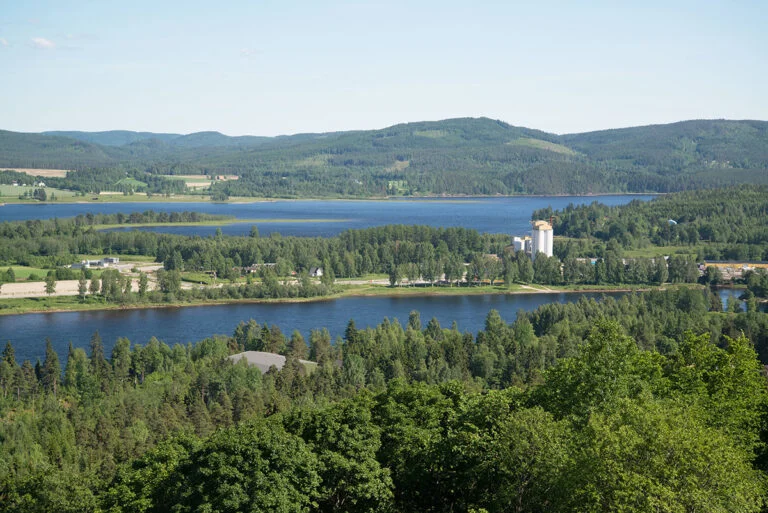
Much of the Glomma’s journey is through the long valley of Østerdalen. This is one of Norway’s major inland valleys, with forests, farmland, scattered settlements and long-distance roads that follow the shape of the land.
The upper and middle stretches of the Glomma offer a very different image of Norway from the dramatic fjord landscapes of the west. This is Norway of wide skies, pine forests, quiet riverside towns and a deep relationship between people and natural resources.
The river becomes especially significant as it gathers water from its major tributaries. One of the most important is the Vorma, which drains Lake Mjøsa, Norway’s largest lake. This connection helps explain why the Glomma becomes so much more powerful further south.
Although Mjøsa is not on the main course of the Glomma, it is part of the wider river system. Together, these waterways form a huge natural network across eastern Norway.
How the Glomma Shaped Norway
The Glomma’s importance is not just geographical. For centuries, it played a vital role in the development of communities and industries along its banks.
The river flows through heavily forested regions, and timber was once one of the great industries of inland Norway. Before modern road and rail transport, rivers were essential for moving logs from the forests to sawmills and export points.
For generations, timber was floated down the Glomma. Logs cut in the forests of Østerdalen and elsewhere were moved by water towards the lower river and the coast. This was dangerous, skilled work, and it helped sustain communities throughout the river valley.
One of the best places to understand this story today is Fetsund Lenser, the old timber booms near Lillestrøm. Timber booms were used to sort and control the vast quantities of logs moving along the river system. Today, the site is preserved as a museum and cultural heritage area.
The river also became an important source of power. Waterfalls and strong currents along the Glomma were used first for mills and later for industry and hydropower. Today, the Glomma river system remains significant for Norwegian electricity production.
Notable Places Along the Glomma
Because the Glomma is so long, it passes through or near many places of interest. Few visitors will follow the river from source to sea, but several towns along the route help tell its story.
Røros
Although the Glomma’s true source lies in the surrounding mountains, Røros is the best-known place associated with the upper river.
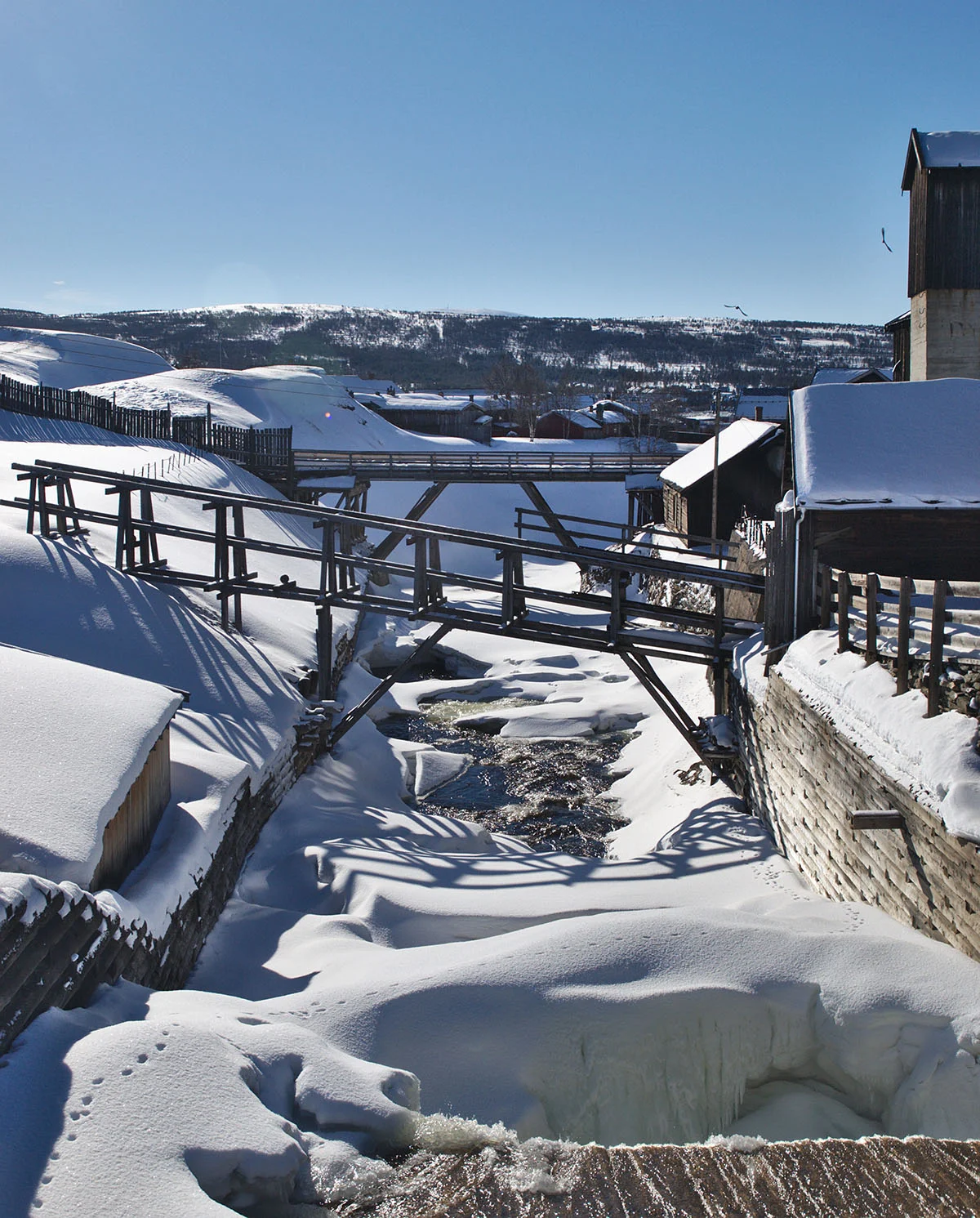
This former copper mining town is one of Norway’s most distinctive historic communities. Its wooden buildings, mining heritage and highland setting have earned it a place on the UNESCO World Heritage list.
Røros is not a river town in the same way as Elverum or Fredrikstad, but it gives context to the landscape from which the Glomma emerges.
The surrounding lakes, streams and mountain terrain are part of the wider water system that feeds Norway’s longest river.
Elverum
Further south, Elverum is one of the best places to understand the relationship between the Glomma and Norway’s forests.
The town sits on the river in Innlandet county and has long been associated with forestry, hunting, fishing and inland culture. The Norwegian Forest Museum is one of the major attractions here, telling the story of forestry, wildlife, hunting, fishing and the use of natural resources.
Nearby, the Glomdal Museum focuses on cultural history from the region, including traditional buildings and ways of life from the valleys of eastern Norway.
Kongsvinger
As the Glomma continues south, it approaches the Swedish border before turning west at Kongsvinger.
The town is best known for Kongsvinger Fortress, which stands on a hill above the river. Its star-shaped defensive walls and strategic position are reminders of a time when the border with Sweden carried military significance.
Today, the fortress offers fine views over the town, river and surrounding forests. It is a good example of how the Glomma was not only an economic route, but also a geographical feature of strategic importance.
Fetsund and Øyeren
North-east of Oslo, the Glomma flows into the wetland landscape around Øyeren, one of Norway’s important inland delta areas.
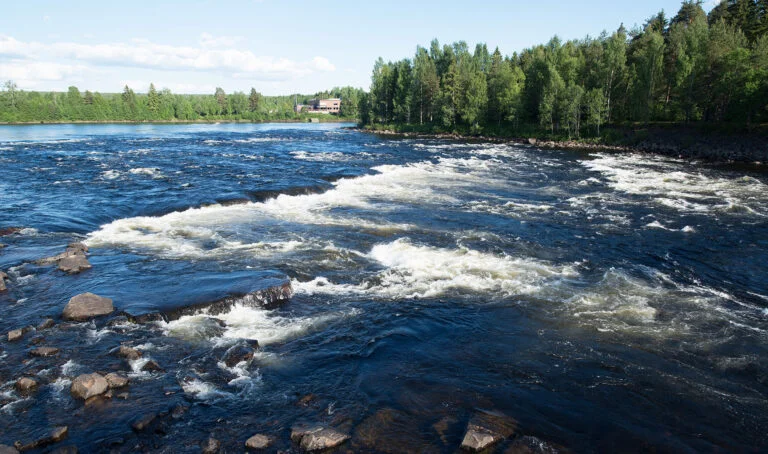
This part of the river system is especially interesting for birdlife, wetlands and cultural history. Fetsund Lenser, with its timber-floating heritage, is the standout visitor attraction here.
For anyone interested in the practical history of the Glomma, this is one of the most accessible places to visit. It shows how timber, water, engineering and hard physical labour were once tied together.
Sarpsborg
By the time the Glomma reaches Sarpsborg, it has become a powerful lowland river. Here, the river drops at Sarpsfossen, one of the most important waterfalls in Norway’s industrial history.
The power of the falls has been used for centuries, first for mills and later for modern industry and electricity generation. Sarpsborg grew in part because of this access to water power.
For visitors, the area around the falls is a striking reminder that Norwegian rivers are not just scenic. They have also been engines of economic development.
Fredrikstad
The Glomma finally reaches the Oslofjord at Fredrikstad, one of Norway’s most attractive historic towns.
Founded in 1567 by King Frederick II, Fredrikstad is best known for its old fortified town, Gamlebyen. This is one of the best-preserved fortified towns in Northern Europe, with cobbled streets, old walls, cafés, galleries and a relaxed riverside atmosphere.
The modern city developed on the western side of the river, while the old town lies to the east. Free city ferries still shuttle people across the water, making the river part of everyday life even today.
Fishing and Outdoor Life on the Glomma
Given its length and variety, the Glomma offers many opportunities for fishing, paddling and riverside recreation. But it is important to understand that rules vary significantly from place to place.
In the inland stretches, common fish species include grayling, trout, pike, perch and whitefish. The Glomma is especially well known among some anglers for grayling and fly fishing, particularly in parts of Innlandet.
In the lower parts of the river system, salmon and sea trout become more relevant. However, salmon fishing is tightly regulated, and seasons, zones and quotas can change.
Visitors are generally allowed to fish in Norway, but freshwater fishing usually requires a local permit. If you are fishing for salmon, sea trout or Arctic char, additional national rules and fees may apply.
Because the Glomma is so large and passes through many municipalities and fishing zones, it is best to check the local rules for the exact place you plan to fish. Local tourist offices, accommodation providers and fishing permit websites can usually point you in the right direction.
It is easy to think of the Glomma simply as a trivia answer: Norway’s longest river. But that does not do it justice. It is one of the great natural features of Norway.


Hallo, Navn min er Barry fra USA. Jeg har for glempt Norske min, menn jeg studert paa Elverum Folkehogskolen naer den Glomma siden 1984-1985.
Please does anyone know what rank the Glomma has, internationally as among the longest rivers. For instance, the Mississippi River, near my home in Minneapolis, Minnesota (MN), USA is the 5th longest river in the worls.
Thank you! Takk skal du ha!