
From basic mountain shelters without electricity to luxurious second homes, the Norwegian hytte comes in many forms. But the country's love of cabin life is about much more than the building itself.
On Friday afternoons throughout Norway, something predictable happens. Cars leave the cities loaded with skis, hiking boots, food, children and far too much outdoor clothing. Their destination? The hytte.
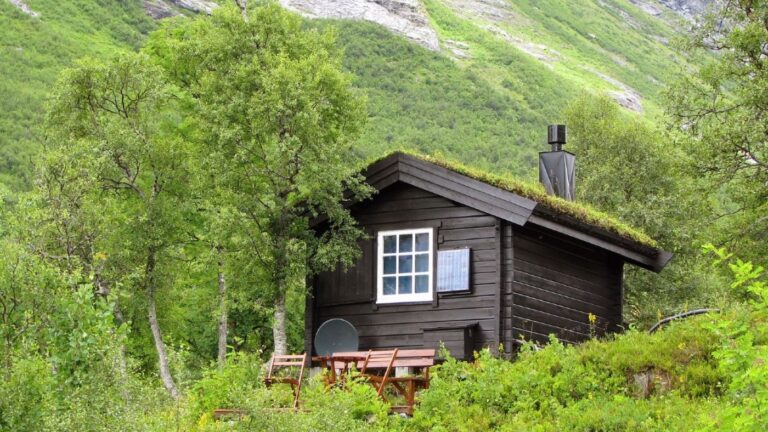
For some families, that means a small wooden cabin in the mountains with no running water. For others, it's a modern holiday home with Wi-Fi, underfloor heating and a kitchen better equipped than the one they have at home.
The details vary enormously. The attachment does not. Cabin culture is deeply embedded in Norwegian life. Weekends, the winter school holiday, Easter and the long summer break all provide excuses to disappear to the mountains, forest or coast.
The hytte is closely associated with friluftsliv, the Norwegian enthusiasm for spending time outdoors. But it is also about family, routine, nostalgia and the very Norwegian pleasure of deliberately making life a little simpler. At least, that's the theory.
What exactly is a Norwegian hytte?
Translating hytte simply as “cabin” gets you most of the way there, but it doesn't quite capture how broad the Norwegian word has become.
The traditional image is easy to picture: a small timber building somewhere in the mountains, heated by a wood-burning stove, perhaps lit by candles or gas lamps, with water carried in from outside. Plenty of cabins like this still exist.
But hytte is also routinely used for substantial holiday homes with electricity, indoor bathrooms, several bedrooms and every modern convenience.
Statistics Norway uses the broader category fritidsbygg for buildings intended for leisure use.
In 2026, Norway had 452,150 cabins and other such leisure buildings. SSB also counts almost 32,000 detached houses that are officially residential properties but are actually being used as holiday homes.
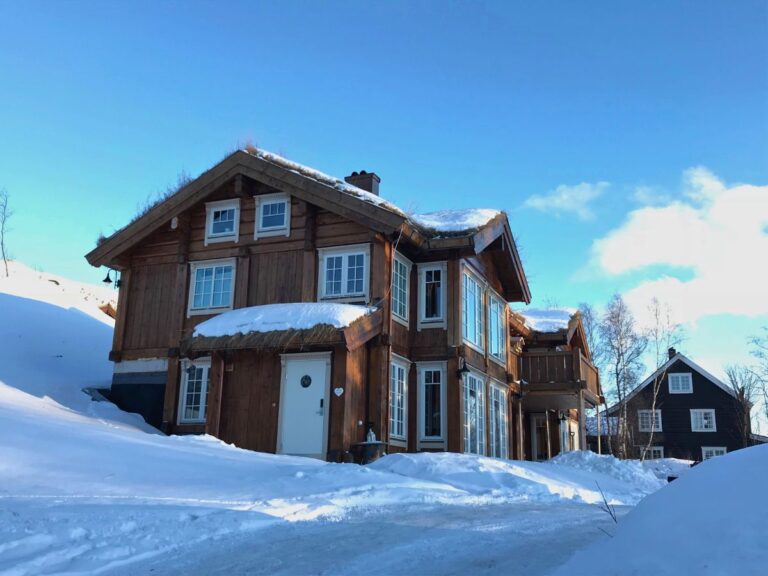
So there really isn't one standard Norwegian hytte. It might stand beside a fjord, among pine trees, on an island or high in the mountains. It might be reachable by car, or require an hour on skis carrying everything you need for the weekend.
In some families, part of the charm is precisely that the cabin isn't home.
Why do Norwegians love cabins so much?
The obvious explanation is access to nature. Norwegians are enthusiastic hikers and cross-country skiers, and a cabin provides a permanent base from which to do both.
Instead of planning a hiking holiday from scratch, the family can simply head to the same place they have visited dozens of times before.
The familiar nature of the experience is part of the appeal. There may be a favourite ski trail, swimming spot, fishing lake or mountain walk. Children grow up making the same journeys every year. Eventually, they bring their own children.
This helps explain why discussions about the family cabin can become surprisingly emotional. A hytte is a financial asset, but it may also contain decades of family memories.
For many Norwegians, “going to the cabin” doesn't necessarily mean doing very much at all.
Reading, playing cards, making waffles, chopping firewood, going for a walk and sitting in front of the fire are perfectly acceptable ways to spend a cabin weekend.
This is where hytte culture overlaps with another Norwegian concept: kos, that difficult-to-translate idea of warmth, comfort and enjoying simple time together.
Easter at the cabin
If there is one time of year when Norwegian cabin culture becomes impossible to miss, it is Easter. Schools close, many workplaces become noticeably quieter and huge numbers of Norwegians head for the mountains.
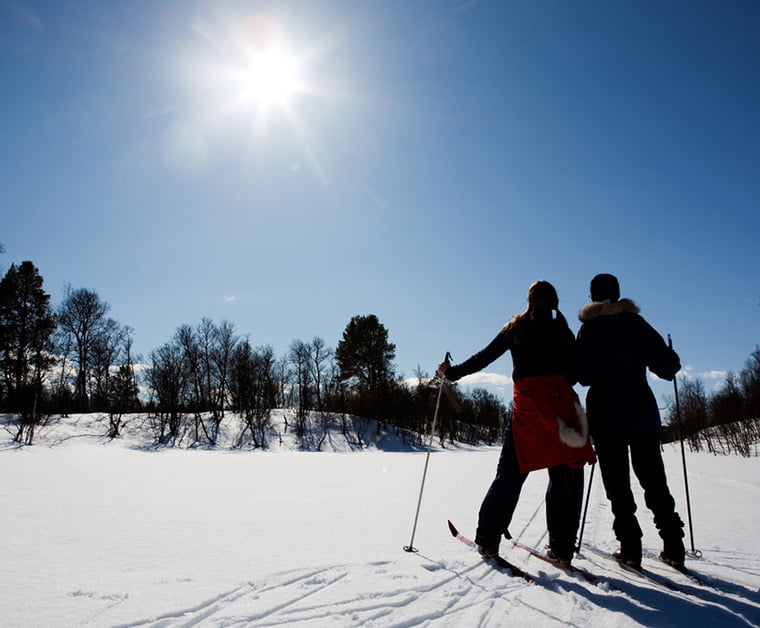
The stereotypical Norwegian Easter involves cross-country skiing under a bright spring sun, oranges and chocolate in the backpack, and crime fiction back at the cabin afterwards.
Naturally, the weather doesn't always cooperate. But the combination of longer days, lingering mountain snow and several public holidays makes Easter one of the most important periods of the year for cabin owners.
For many families, going to the hytte at Easter isn't really a holiday choice. It's simply what you do.
Norway's cabin culture in numbers
The scale of the phenomenon becomes clearer when you look at the statistics. As mentioned, Norway has more than 452,000 registered cabins and other leisure buildings. The total has increased by almost 7% over the past decade.
That's an extraordinary amount of recreational property for a relatively small population. But the character of cabin development is changing.
The lonely little cabin hidden in the wilderness remains the cultural ideal, yet most new cabins are no longer built that way. In 2025, 71.4% of newly constructed leisure buildings were located within established clusters of at least five such buildings.
New holiday homes aren't especially small, either. Those completed in 2025 averaged 98.9 square metres.
In other words, the romantic image of one tiny timber cabin surrounded by untouched wilderness tells only part of the modern story.
From primitive hut to second home
This has created something of a contradiction in modern cabin culture. Many Norwegians still talk fondly about the virtues of simplicity at the hytte: less screen time, fewer distractions and a closer connection to the outdoors.
Then they install fibre broadband.
Modern developments around popular ski resorts can resemble residential neighbourhoods. Large windows, multiple bathrooms, saunas, electric-car chargers and sophisticated kitchens are no longer unusual.
Some people deliberately resist this trend. For them, carrying water, lighting the stove and living without television or reliable internet aren't inconveniences. They are the entire point of going away.
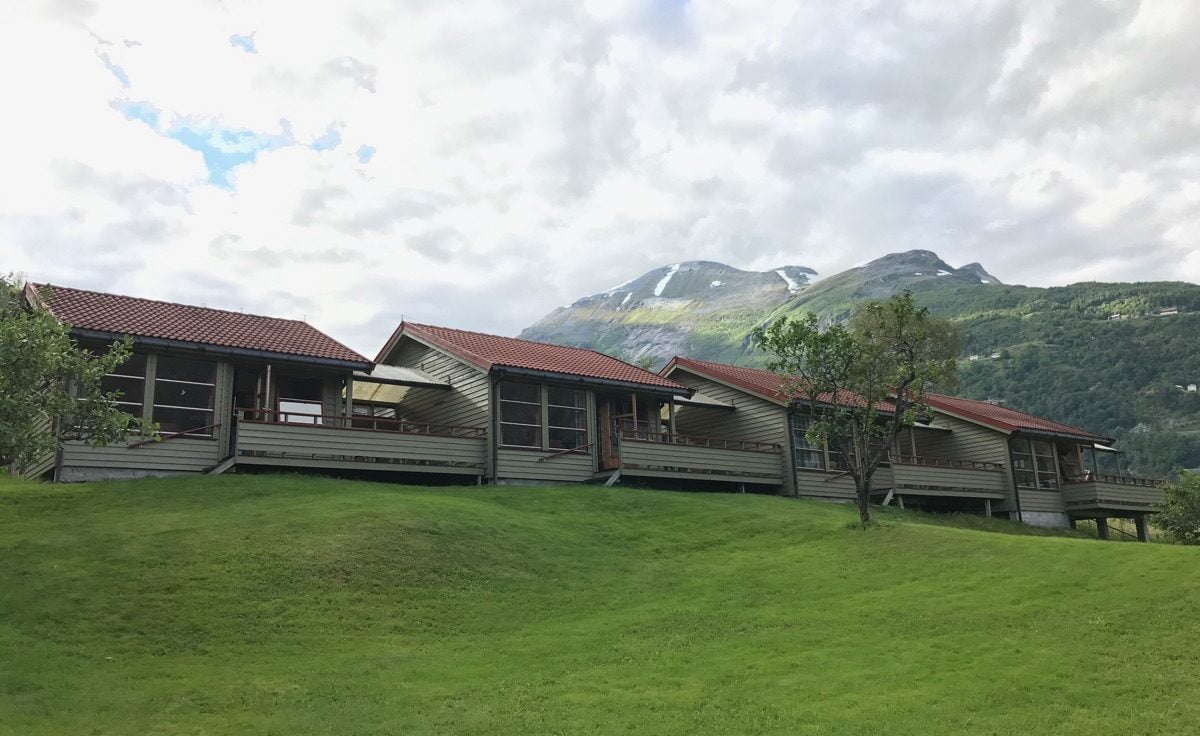
Others understandably see no reason why enjoying the outdoors should require giving up a hot shower. Both groups call the place a hytte. That flexibility is one reason the word can be difficult to explain to newcomers.
The environmental debate over cabin building
Cabin culture also raises a difficult question for a country that places such a strong emphasis on nature.
Building roads, water systems and hundreds of new holiday homes in mountain and forest areas inevitably changes the landscape that cabin owners are supposedly travelling there to enjoy.
Statistics Norway says fewer holiday homes are now being built than during the recent boom years. Just 2,950 were completed in 2025, the lowest annual total since 2010. Only 1,973 new holiday homes received construction-start permits that year.
There is still a substantial amount of land earmarked for potential future cabin development, although SSB says both actual construction and the designation of new development areas have declined in recent years.
That tension isn't going away. Norwegians want access to nature. Many also want a private house in the middle of it. Those two desires don't always sit comfortably together.
Family cabins passed through generations
Not every cabin enters the property market. Many remain within the same family for generations, passing from parents to children and sometimes becoming shared between several siblings or branches of a family.
This can be one of the joys of Norwegian cabin culture, and one of its complications. Who gets Easter? Who pays for the new roof? Who forgot to empty the water system before winter?
The practicalities may change, but the idea of returning to a place associated with childhood is central to the emotional pull of the hytte.
Cabins aren't necessarily grand family estates. Quite the opposite. An old cabin may be objectively inconvenient, badly insulated and full of furniture nobody would dream of putting in their actual home. And yet replacing any of it can somehow feel wrong.
The DNT cabin network
You don't need to own a hytte to experience Norwegian cabin life. The Norwegian Trekking Association, better known as DNT, operates a remarkable nationwide network of more than 600 cabins.
They aren't confined to remote mountain areas. DNT cabins can also be found in forests, beside the coast and close to towns and cities.
There are three main categories.
Staffed lodges are the closest to simple mountain hotels, usually offering meals and accommodation during their staffed season.
Self-service cabins are unstaffed but contain food stores from which guests can take provisions and record what they have used.
No-service cabins generally provide the accommodation and cooking facilities, but visitors bring their own food.
The standard varies enormously.
Some DNT cabins are substantial mountain lodges filled with hikers during the summer season. Others are tiny shelters in remote landscapes.
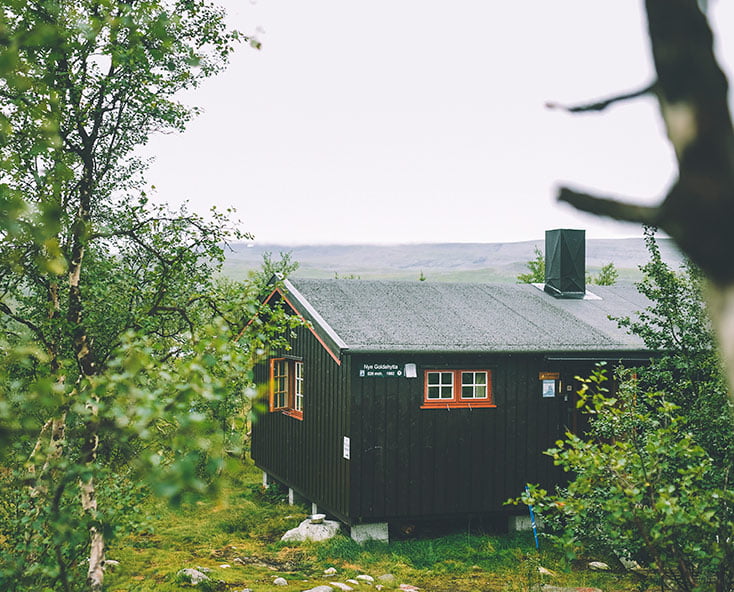
Booking and payment systems have become increasingly modern, and DNT now supports mobile payment at cabins, but the communal spirit remains important.
You may arrive knowing nobody and spend the evening cooking, eating and chatting with complete strangers.
It's a very different form of hytte culture from owning a private second home, but it comes from the same basic idea: a simple base makes spending time in nature much easier.
Free cabins from Statskog
There is an even cheaper option. Statskog, the state-owned company that manages vast areas of Norwegian land, maintains more than 130 open huts and cabins around the country that anyone can use free of charge.
These are generally very basic shelters rather than holiday cottages.
Some have historic connections to forestry, hunting or other former uses. Many operate on a first-come, first-served basis, so you shouldn't expect hotel-style certainty or comfort. But that's part of their appeal.
For anyone intrigued by the simple end of Norwegian cabin culture, spending a night in one is about as far removed from a luxury ski-resort chalet as you can get.
What about the rorbu?
Visitors to Norway may also come across another distinctive kind of cabin: the rorbu.
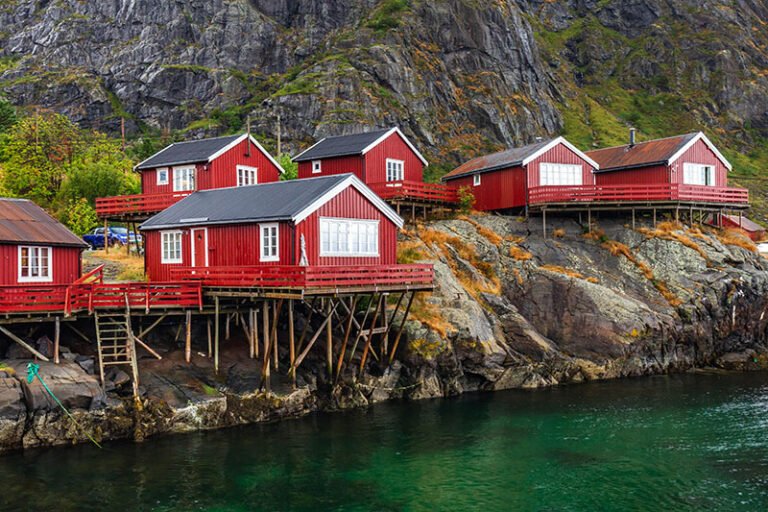
These traditional fishermen's cottages are particularly associated with Lofoten.
Historically, they provided seasonal accommodation for fishermen who travelled to the islands for the enormous winter cod fishery. Many were built right at the water's edge, often partly supported on wooden piles above the shoreline.
Today, countless former rorbuer have been converted into tourist accommodation. Some retain a deliberately rustic appearance, although the interior may now contain a thoroughly modern bathroom and kitchen.
A rorbu isn't quite the same cultural concept as the family mountain hytte, but staying in one gives international visitors another chance to experience Norway's long tradition of simple accommodation closely connected to the surrounding landscape.
Renting a cabin in Norway
Fortunately, you don't need a Norwegian grandparent to hand you the keys to the family hytte. Cabins are widely available as holiday accommodation.
Many Norwegian campsites offer hytter ranging from extremely basic rooms with bunk beds to self-contained cottages with private bathrooms and kitchens.
This can be one of the best-value accommodation options on a road trip, particularly for families. Private holiday cabins and high-end lodges are also widely available in mountain and coastal destinations.
The experience varies considerably, so check exactly what is included before booking.
If you choose a simple cabin, you may need to bring bedding or pay extra to rent it. Cleaning may be your responsibility. A bathroom may be in a separate service building.
At the other extreme, some modern rental cabins come with panoramic windows, hot tubs and saunas. Again, they're all cabins.
Buying a hytte in Norway
Of course, some international residents decide that renting is no longer enough.
Buying a hytte follows many of the same processes as buying other property in Norway, although buyers need to pay especially close attention to access, water and sewage arrangements, winter road maintenance and what the property is legally approved for.
The market has changed significantly since the pandemic-era boom. There were 11,353 open-market sales of leisure properties in 2025, up 12% from the previous year but still well below the record 16,707 sales seen in 2021.
Mountain areas accounted for more sales than coastal or forest municipalities in 2025, with Trysil, Hol and Øyer among the busiest mountain markets.
Interestingly, international interest has also increased. At least one overseas buyer was involved in 4.5% of open-market leisure-property sales in 2025, compared with 1.8% in 2020. Trysil was by far the most popular municipality among those buyers.
But owning a cabin isn't simply owning another house.
Depending on the location, it may mean clearing snow, maintaining a private access road, dealing with a well or septic system and discovering just how many things can go wrong in a building left empty through a Norwegian winter.
So, what is the Norwegian cabin dream?
Perhaps the best way to understand Norwegian hytte culture is to stop thinking about the building. A hytte is a place to go back to.
It offers an escape from everyday routines while simultaneously creating another set of routines: the same drive, the same ski trails, the same chair beside the same window.
For some people, that setting is a primitive wooden cabin reached on skis. For others, it's a designer property beside a ski lift. The Norwegian cabin dream has stretched enough to accommodate both.
What hasn't changed is the desire behind it: to have somewhere outside ordinary life where the pace slows down, nature is just outside the door and doing very little can feel like the entire point.
That is why, despite changing tastes and ever more sophisticated cabins, the humble hytte remains such an important part of Norwegian life.


We moved to Norway two years ago. When an opportunity came up to buy a hytte on a nearby mountainside overlooking a series of lakes, we jumped on it. No running water (except in a nearby creek) or electricity, but we wouldn’t trade it for the world!
We’ve been renting privately owned cabins (via Finn.no) for the winter holiday (with another family or two) for the past ten years. And the standard has just gone up and up to the point where we think each year, you can’t beat this! And yet the next year, we manage!
I think because we need a large cabin, sleeping often 12 or more, this limits the available cabins to the ‘posh’ ones, hence the super standard and locations.
We hope to continue doing this and although we do pay eye watering amounts for this week, divided up between more families it’s manageable AND when compared to actually owning a cabin and all the work that entails, I think this is a good deal, we get to stay in different places and it works great for us.
The best hytte in Norway are still the most basic. Keep in mind that part of the allure of cabin culture in Norway is to get away from all the trappings of modern life. The mantra is, keep it simple and easy! Pick blueberries, go fishing, take a hike, eat cake, drink coffee, stay up late… and just enjoy. That’s the Hytte experience.
We are from England and have been visiting Norway for over 40 years. During that time we have toured the country from Lindesnes to the Nordkapp, the eastern valleys to the Vestkapp. We have stayed at hotels and rented hytte in various places.
From 2001 we owned a hytte in Lindesnes kommune for 10 years. It was in a fabulous location high up and overlooking the fjord. We got to know all the neighbours and made many good friends. We had to sell the hytte due to personal circumstances but wish that we had retained it.
The times that we spent in our hytte we rate as some of the best times of our lives. We still visit Norway every year and rate it as the best country in the world.
med vennelig hilsen,
Norway is a wonderful country and we have been visiting it now for 60 years, yes 60 years! Sixty years ago, Norway had not even been picked up on my radar, and our connection with it was started in a most unusual manner, unknown to me, by two people who didn’t even know each other. Work that one out!
In 2011 at the 50 year point I wrote a small book about some of our times there. A few years later, this was turned in to an enlarged version as a video, which if you are interested to see it, can be viewed on Youtube at https://www.youtube.com/watch?v=w0JJMyphDEo . This covered another 10 years to the 60 point. Whether we can make 70 years, we will have to wait and see, but you never know!
Mvh
Hi Roger, thoroughly enjoyed your story. My Wife and I moved to Norway from London in 2017 and have been living in Østfold ever since. I am South African British (born and raised in South Africa from English descent) and my wife is From Finland. Recently we have been looking at getting a cabin up in the mountains and your story has been a great encouragement to do so. Appreciated what you shared, really sense the human connections made over all those years. Wonderful
We are in England and currently purchasing a cabin in Ostfold. We have been many times to different parts of Norway but now want somewhere to regularly stay and be based. My wife is doing well learning Norwegian and just needs more practice speaking. I have just started. My wife is an author and is looking forward to completing her WW2 about Norway in 2025.
Love this website.
Thanks so much and best wishes for the relocation!
Hei Alan,
My Husband and I both have Scandi ancestory, from a long time ago and have a long standing love of Norway. We have visited around 3 times over the last few years and are now chasing the Hytte dream as a holiday home. So far we have tried to make contact with local estate agents by email and have not had any replies, I did translate these emails into Norwegian too. How did you go about your purchase? We have looked on Finn.no but this requires a bank ID to bid. We are due back to Norway in July/August on a 12 day cruise and are hoping that visiting estate agents will have the desired effect. I am currently learning Norwegian, but I’m slightly worried about my ability to hold a full conversation. Any tips would be amazing. Takk
Hei David,
Any advice on the comment above would be very welcome. Norway is such a stunning country. Your website is a really goood find for us.
Takk