
From spectacular scenery with fewer crowds to nature’s phenomenal light show, here is why you should plan a trip to Norway this winter season.
Norway has become one of Europe’s most sought-after travel destinations. The fjords, the big nature, the bright summer evenings and the promise of fresh air draw more visitors every year.
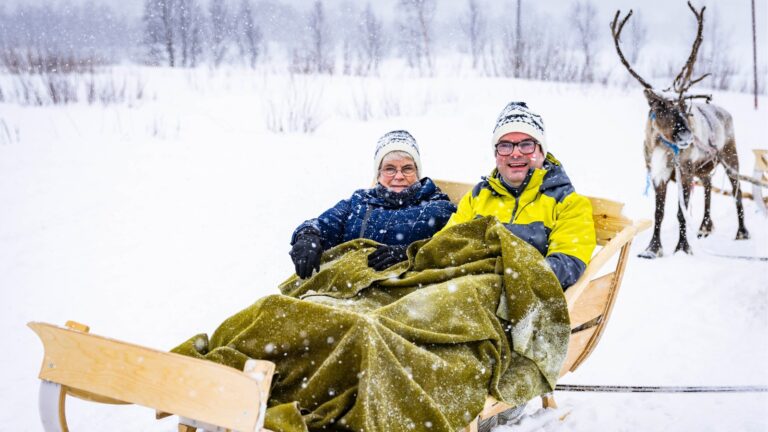
Yet this growing popularity causes real challenges, especially during the short, intense summer season.
The Lofoten islands and the western fjord region receive numbers they were never built to handle, leading to pressure on local infrastructure, queues at viewpoints and that odd feeling of being somewhere incredible but constantly surrounded by other travellers doing the same thing.
Winter in Norway offers something different. The pace slows. Days are shorter but calmer. The light itself changes, with a softness that feels almost luminous.
Snow gathers in city parks and along harbour quaysides. Cafés glow a little warmer. Norwegians do not hide indoors for the season: we continue to walk, ski, meet friends, and head outdoors.
Travel here in winter and you’ll find a version of Norway that feels more relaxed, more local, certainly more authentic, and often more rewarding. Here are five reasons to consider planning your trip for the winter season.
1. Winter Affordability in Norway
Let’s address the long-standing reputation first: Norway has never been considered a budget destination. In summer, accommodation prices in popular towns like Bergen, Ålesund and Tromsø can rise dramatically, simply because demand outstrips supply.

In winter, the dynamic changes. Hotel occupancy drops, and you’ll often find significantly better rates, particularly in the cities and smaller fjord towns. Ski resorts can be the exception, as this is their peak season, but elsewhere the savings are noticeable.
There’s also the exchange rate to consider. The Norwegian krone has been weak for several years now. A US dollar buys almost twice as many kroner as it did a decade ago. British visitors and travellers from the Eurozone benefit too.
If you are able to book flights, accommodation and even some transport in advance, you’ll lock in favourable prices before any seasonal fluctuations.
Eating out still carries a cost, as it always has here, but winter makes it easier to spend smarter. Many hotels include breakfast as standard.
Bakeries are everywhere, and a bowl of hot fish soup or reindeer stew in a local café after being out in the cold is a pleasure in itself. Winter makes Norway more accessible, not just more beautiful.
2. Enjoy the Winter Fjord Scenery
Images of the Norwegian fjords in summer are everywhere. Clear water. Green hillsides. Cruise ships and kayakers. Winter, however, has a completely different mood.
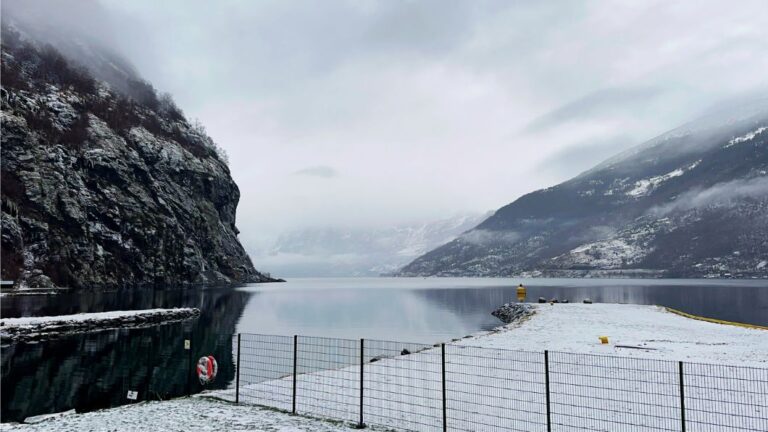
The landscape settles into a quiet that feels almost ancient. Snow lies on the mountain ridges above, and the water below takes on deep, reflective colours. On certain days in January and February the light is extraordinary: low, gentle sunlight that washes over entire valley walls in soft gold.
Travelling the fjords in winter does require a little planning. Some mountain roads, including the famous Trollstigen and the road down into Geiranger, close for the season due to snowfall and avalanche risk. Check Statens Vegvesen for info.
Public transport timetables are slightly reduced. But that does not mean the region closes. Far from it.
If you do not want to drive on winter roads, the Flåm Railway is one of the easiest ways to experience fjord scenery in winter. You can travel by train from Oslo or Bergen to Flåm and stay in the village for a few nights.
Boats still operate on the UNESCO-listed Aurlandsfjord and Nærøyfjord, and the journey feels almost private in winter. You stand on deck, wrapped up in warm layers, and the only sound is the fjord’s quiet echo. It is a different kind of travel. Slower. More attentive. More memorable.
3. Embrace Norway's National Pastime
Norway’s unofficial motto could easily be: we are born with skis on our feet. While downhill skiing is popular, the true national pastime is cross-country skiing, and it is one of the most affordable ways to enjoy the outdoors in winter.
There are thousands of kilometres of groomed trails across the country, and many of them are free to use. You can rent skis in most cities, and there is no need for lift passes or queueing.
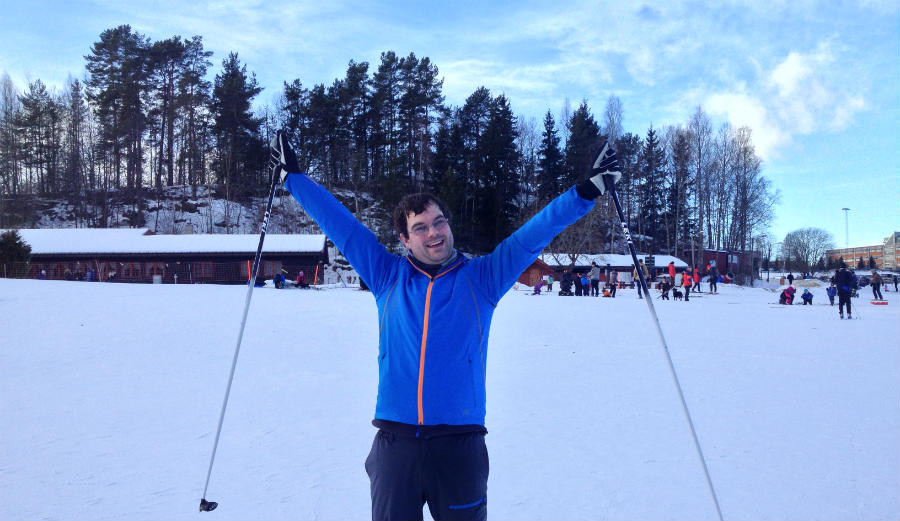
If you stay in Oslo, you can take the metro from the city centre to the edge of Nordmarka in under half an hour. Suddenly you are in a forest filled with snow-covered trails, wooden cabins serving waffles and hot chocolate, and Norwegians of all ages gliding past, some gracefully, some very much beginners.
The same is true in Trondheim, where Bymarka becomes a snowy playground throughout the winter. I walk there most weekends, and every time I’m reminded of how close nature sits to everyday city life in Norway.
Of course, if you prefer downhill skiing, there is plenty of choice. Norwegian ski resorts like Trysil, Hafjell, Kvitfjell and Oppdal offer well-maintained slopes, good snow and a friendly, unpretentious atmosphere.
It does not need to be an adrenaline holiday. It can simply be a day outdoors, moving at your own pace, satisfying and uncomplicated.
4. Northern Lights Season in the Arctic North
The aurora borealis is one of nature’s great shows, and northern Norway is one of the best places in the world to see it. The lights are most commonly visible from September to early April, but the sweetest spot tends to be the shoulder seasons in autumn and late winter, when the skies are clearer.
That said, I have seen magnificent auroras in the depths of January, when the long nights give you more hours of opportunity.
Tromsø is the easiest place to base yourself. It has regular flights from Oslo and a lively mix of cafés, museums and viewpoints to fill your days. Guided aurora tours leave the city in the evening and head into the surrounding fjords, where the skies are much darker.
A good guide does more than drive; they explain how the lights form, read the weather, and set a calm tone for the experience. There's plenty of storytelling thrown in, too.
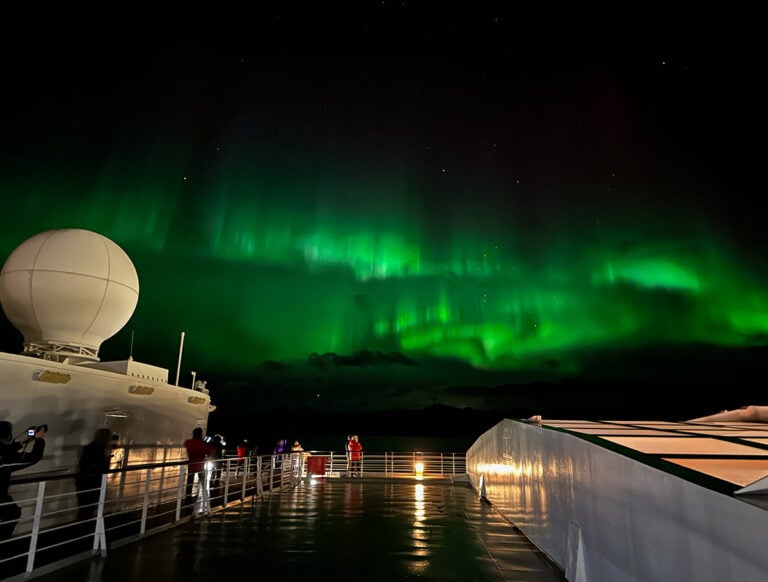
Seeing the northern lights do their thing is not guaranteed, and that is part of the appeal. When they do appear, they can begin as a faint green arc and then suddenly ripple, twist and stretch right across the sky. The cold becomes irrelevant. The moment holds you completely.
5. Christmas Markets and Winter Traditions
Norway’s Christmas season has a charm that is difficult to describe without stepping into sentimentality, but it is real. Town and city centres fill with small wooden stalls, the smell of spiced buns and roasting almonds drifting on the air.
Daylight is short, so the warm lighting feels particularly cosy. People gather in scarves and hats with mugs of gløgg, talking, browsing, slowing down a little as December progresses.
Some of Norway's Christmas markets are especially atmospheric. The Christmas fair in Røros, held in a historic mining town with preserved wooden streets, feels almost like stepping back in time. Bærums Verk, just outside Oslo, is a lovely place to wander among craft shops and old barns.
Here in Trondheim, the market opens on the main square just down the street from Nidaros Cathedral, and I always stop by at least a few times to see what is new. Even on snowy days, people linger.
Planning a Winter Visit to Norway
Winter travel in Norway rewards preparation. Days are shorter the further north you go, particularly around the solstice in December.
Dress in layers, not one heavy coat. Trains and domestic flights run year-round, and most towns function as normal. You simply move a little slower. You look up more. You notice the light changing hour by hour.
A winter trip here is not just cheaper than summer. It is quieter, more atmospheric and often more meaningful. Are you thinking of visiting Norway this winter? I would love to hear where and when you are considering. You can share your thoughts or questions below.