
Snow transforms Kristiansand’s Dyreparken into a quieter, more reflective experience, where Nordic wildlife thrives, familiar attractions feel different and visitors can enjoy the zoo without the crowds of high summer.
Most people picture Dyreparken in Kristiansand as a summer destination filled with families, noisy shows, and the sound of children racing between rides.
In July and August that’s absolutely true, but my most recent visit took place in the middle of winter, with snow crunching underfoot and a quiet calm hanging over the entire park.
It felt like a completely different experience, and in many ways a surprisingly rewarding one. It was certainly a very different side to Kristiansand than many people see.
I wasn’t alone in wondering what a southern Norwegian zoo looks like in the depths of winter. Would it feel empty? Would the animals be indoors? And is it strange or even ethical to watch lions or camels wander around in the snow?
These questions stayed with me throughout the day, and the visit answered more of them than I expected.
A Different Kind of Dyreparken
The first thing I noticed after stepping through the entrance was the silence. In summer the soundscape is constant: children, music, seagulls, the distant shrieks from the water flume. In winter the park feels almost meditative.
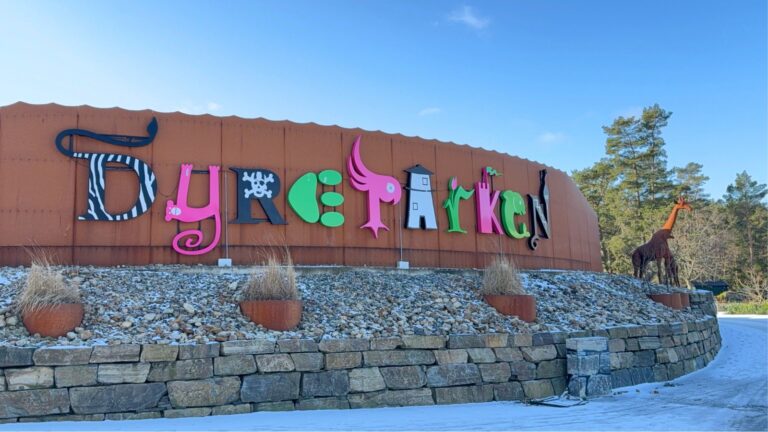
Snow covered much of the ground, softening the colours of the buildings and the walkways. The famous sign at the entrance looked as playful as ever, but everything around it suggested a much slower pace.
Most of the Captain Sabeltann area was closed for the season, and the pirate ships stood frozen in place like a stage set waiting for its actors to return. Kardemomme by, however, was open.
Without its summertime residents wandering the streets in costume, the little town felt more like a quiet film set, but still charming, especially with a dusting of snow on the rooftops.
This peaceful atmosphere extended into every part of the park. Winter strips Dyreparken back to its core: a place to observe animals in spacious enclosures and enjoy long, unhurried walks between them.
The Nordic Animals at Their Best
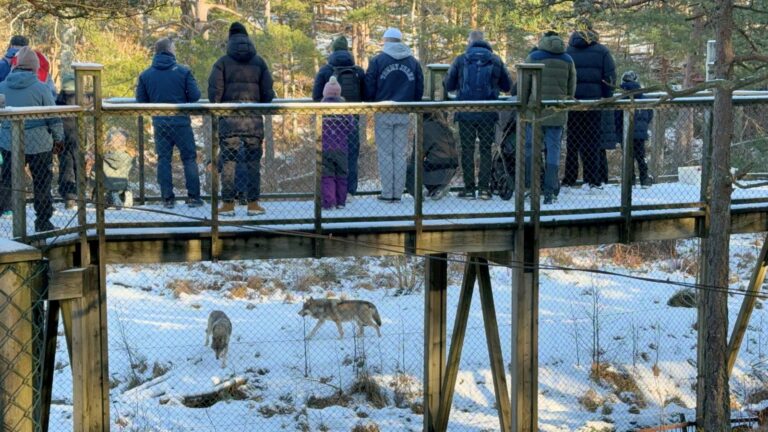
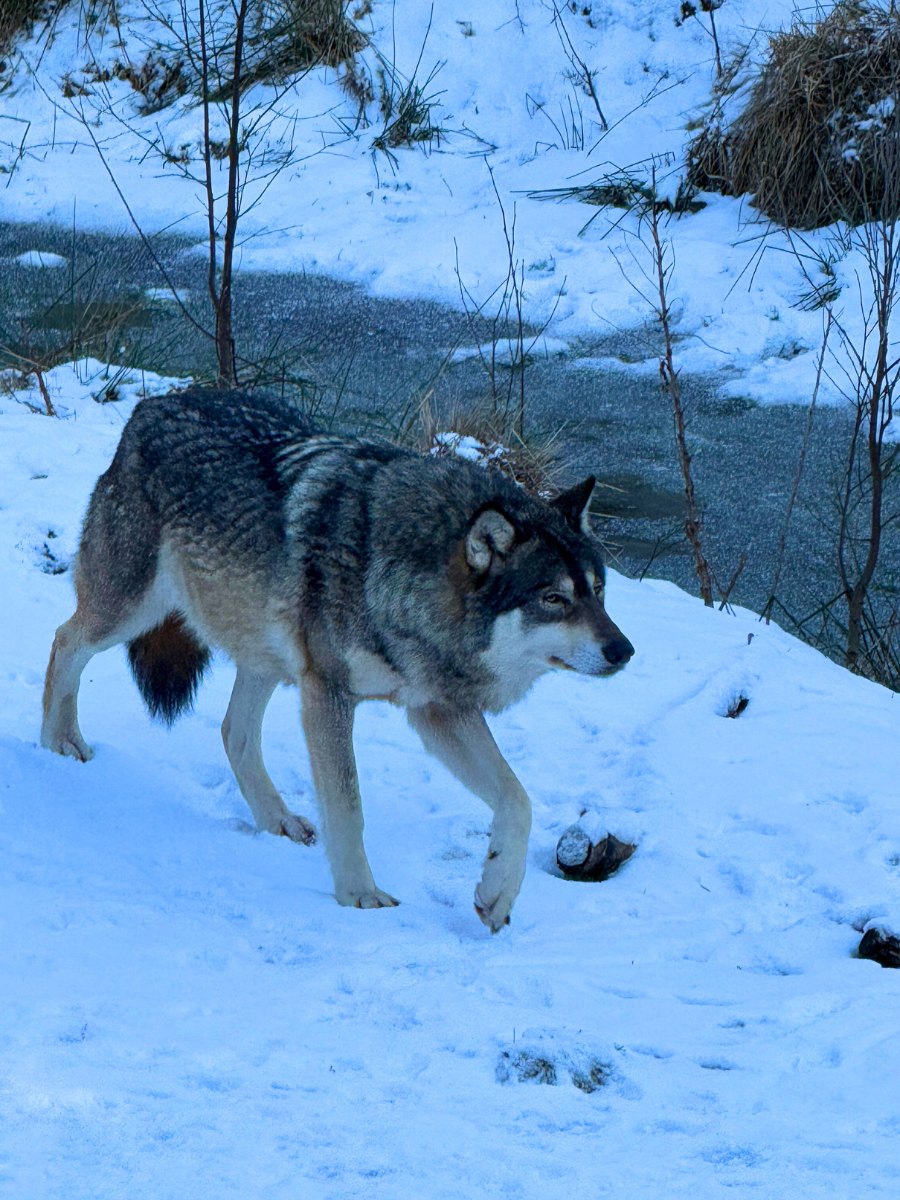
Snow suits the Scandinavian animals. The wolves were particularly active, pacing across their large enclosure before stopping to stare up at the guests gathered on the viewing platform.
A guide delivered the daily feeding commentary, a highlight even in the colder months. Other residents of the wilderness park seemed perfectly at home, moving silently across the snow-covered ground.
These species simply look right in winter. Their thick fur blends beautifully with the frosty landscape, and the colder air brings out a liveliness you don’t always see on warm summer afternoons.
Camels and Lions in the Snow
The contrast came when I walked towards the savannah exhibits. It’s one thing to admire wolves in February; it’s quite another to round a corner and find a group of Bactrian camels chewing contentedly in a snowdrift.
Moments later I found myself staring at lions lounging on frosty grass as if nothing was out of the ordinary.
It does feel surreal at first. These are animals associated with heat and desert landscapes, after all. But Dyreparken, like other modern European zoos, designs its enclosures and care routines around the animals’ needs rather than visitors’ expectations.
The camels at Dyreparken are a cold-adapted species with thick winter coats, and the lions always have access to warm indoor shelters should they want them.
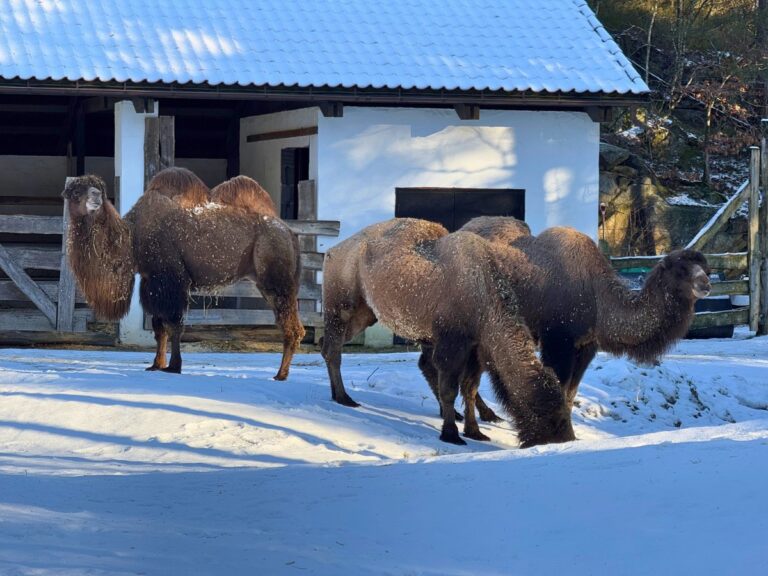
Staff emphasise that the animals choose where to spend their time, and during my visit they opted for the sunshine and crisp winter air.
Watching them move through the wintry landscape reinforced something important: visiting a zoo in winter invites you to think more about animal welfare than spectacle.
You see the care infrastructure more clearly, you ask more questions, and you take in the experience at a slower pace.
Warming Up Indoors
When the cold starts to pinch, Dyreparken’s indoor areas become very welcome indeed. The tropical house was a sudden hit of humidity and colour, like stepping through a portal into another climate.
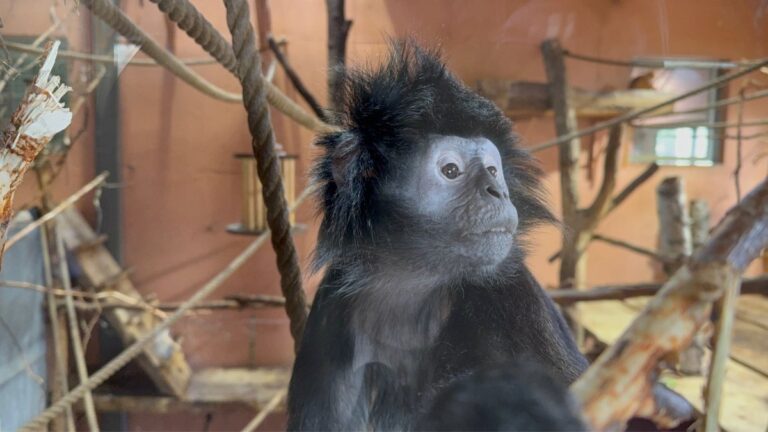
Reptiles, birds, and primates were as lively as ever, and I found myself staying longer than planned simply because it was such a stark contrast to the snowy paths outside.
Practicalities: Getting to Dyreparken in Winter
Dyreparken is a short drive from central Kristiansand, and the roads are usually well-maintained even after snowfall. Parking is plentiful at this time of year.
Travelling without a car is straightforward too, with local buses running regularly from the city centre, although the stop is a short walk from the park entrance.
Just remember that Dyreparken is vast, so take the advice the park gives year-round: dress warmly and wear shoes with good grip. Even a thin layer of ice can make certain paths slippery.
🇳🇴 Read more: Learn your options for travel between Oslo and Kristiansand
Food options are much more limited in winter, but a handful of cafés and shops remain open to keep you supplied with hot drinks, snacks, and light meals.
Should You Visit in Winter or Summer?
Winter at Dyreparken is calm, peaceful, and surprisingly atmospheric. You can move freely, take your time with the animals, and enjoy the Nordic species in conditions that suit them perfectly. If you enjoy slow travel, photography, or simply avoiding crowds, it’s a delightful day out.
That said, Dyreparken is designed as a full family experience. Many of its best-known attractions from Captain Sabeltann’s universe to the waterpark only come alive in summer.
If you’re visiting from abroad or want the complete “Kristiansand experience,” summer is still the best choice. Just be prepared to share the space with thousands of others.
Winter feels like Dyreparken stripped back to its essentials. Summer is the park in full performance mode. Both have their appeal, depending on what you want from the day.
Kristiansand in Winter
Kristiansand sells itself as Norway’s summer city, famous for its beaches, ice cream kiosks, and long bright evenings by the water. Winter tells a quieter story.
The old town, Posebyen, feels especially cosy under fresh snow, and the cafés around the harbour are warm refuges on cold afternoons. Walking along the waterfront in winter sunshine can be just as memorable as a July beach day, only in a more understated way.
My winter visit to Dyreparken reminded me how much Norway’s so-called summer destinations transform in the colder months. The atmosphere changes, the pace slows, and you notice details that would be lost in the busier season.
If you’re already in southern Norway in winter, or simply curious about seeing the park from a different perspective, it’s well worth the trip.