

Planning a Norwegian-inspired Christmas this year? These are the dishes that fill homes across the country throughout the festive season.
Moving to Norway taught me that food is never just food. It is memory, ritual and a way of anchoring yourself in the darkest weeks of winter.

Nowhere is that more obvious than at Christmas, a season when traditions run deep and the whole month fills with the smell of roasting meats, warming spices and sweet baked treats.
Norwegian Christmas traditions are different from what I was used to in England. First and foremost, Norway celebrates on the evening of 24 December. Families gather around the table, gifts appear under the tree and the main Christmas meal takes centre stage.
Christmas Day tends to be quieter and more relaxed. Yet December is full of festive meals long before Christmas Eve, from office julebord to family gatherings and community events. It all contributes to one long celebration that blends old customs with modern tastes.
What follows is a closer look at the dishes you are most likely to encounter during a Norwegian Christmas. Some are hearty and rustic. Others are delicate and full of nostalgia. All of them help explain why food plays such a central part in the Norwegian winter.
Table of Contents
Ribbe
Ribbe remains the most popular choice for Christmas Eve in Norway and it is easy to understand why. The dish uses pork belly seasoned with salt and pepper, often days in advance so the flavour has time to settle.
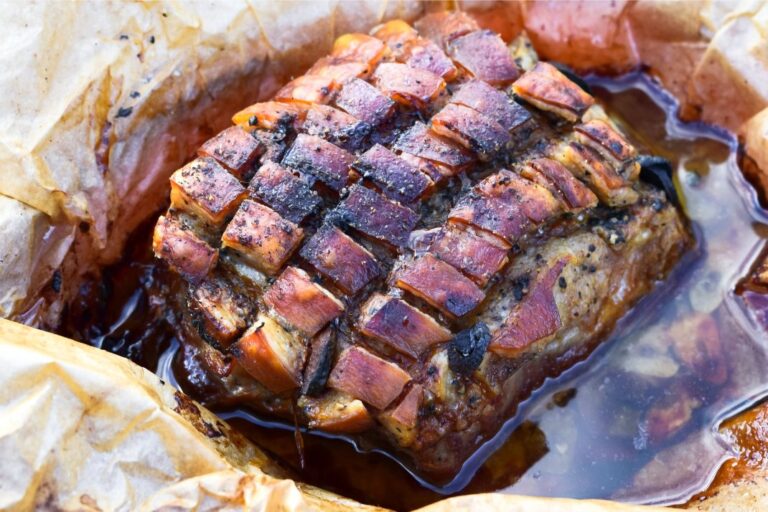
When the meat goes into the oven it cooks slowly until perfectly tender. The real star of the show is the crispy rind.
Norwegians take this seriously and supermarkets fill with guides on how to achieve that perfect texture. When it works, the crackling shatters under a fork and contrasts beautifully with the soft rich meat underneath.
Ribbe is served with a set of accompaniments that create a balance of sweet, sour and savoury.
Surkål and rødkål bring gentle acidity. Small Christmas sausages add richness. Many families serve caramelised apples or prune compote for an extra note of sweetness. A glossy brown gravy ties everything together and varies from home to home. Some cooks keep it simple while others add wine, cranberries or juniper.
Pinnekjøtt
Pinnekjøtt is a dish that feels deeply rooted in the Norwegian landscape. It consists of lamb ribs that have been salted, dried and sometimes smoked before the cooking begins.
The preparation concentrates the flavour and gives the meat an unmistakeable aroma that fills a kitchen as it steams.
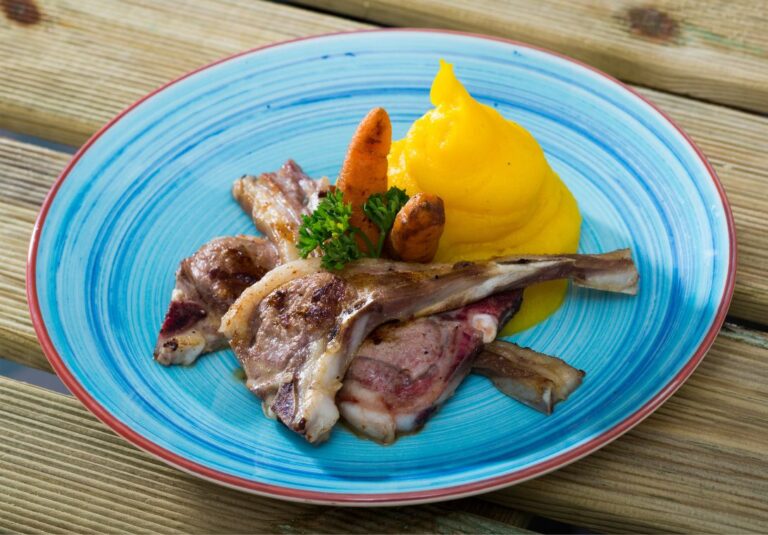
The name is thought to refer to the birch sticks that line the bottom of the pot in the traditional method. These allow the ribs to steam rather than boil and they give a slight woody note to the final dish.
The ribs are cooked until the fat softens and the meat pulls cleanly from the bone. The result is salty, tender and incredibly satisfying on a cold December night.
Most families serve pinnekjøtt with mashed swede or potatoes. In some regions people add sausages or enjoy a small bowl of broth from the pot on the side.
Although pinnekjøtt originated in western Norway it is now found nationwide and many Norwegians enjoy it at least once during the season, sometimes at a julebord long before Christmas Eve arrives.
Cod
Fresh cod is a classic in many coastal communities and provides a lighter alternative to ribbe or pinnekjøtt. The fish must be genuinely fresh to taste its best. When cooked gently it flakes apart into large pearly pieces that almost melt in the mouth.
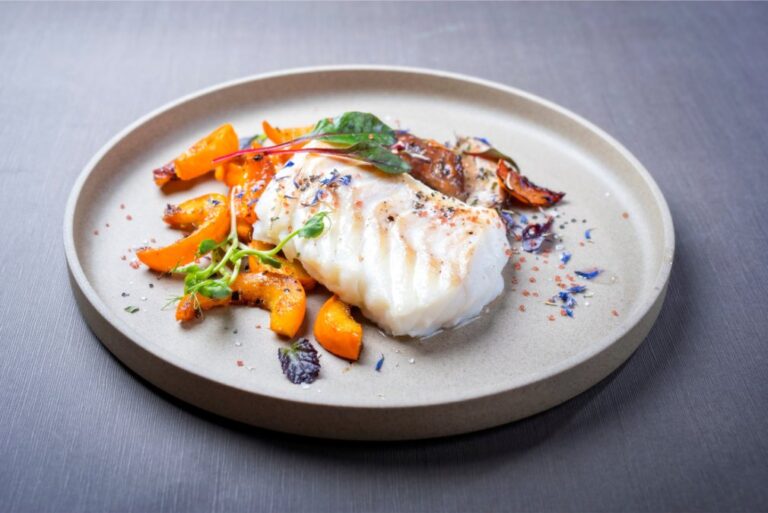
The flavour is clean and delicate. Most families keep the accompaniments simple so the cod can shine. Boiled potatoes, carrots and a modest white sauce are the usual choices.
Some people add crispy bacon or a spoonful of melted butter for extra richness.
Cod on Christmas Eve feels especially appropriate in fishing villages and island communities where the sea has shaped life for centuries. It is a reminder that Norway’s holiday traditions are tied not only to history but also to place.
Lutefisk
Few dishes spark stronger opinions. Lutefisk begins life as dried stockfish which is soaked in water, then lye, then water again until it reaches its familiar translucent form.
The texture divides people. Some adore it and insist it should be cooked barely long enough to hold its shape. Others prefer it firmer. The flavour is mild and relies almost entirely on what you serve alongside it.
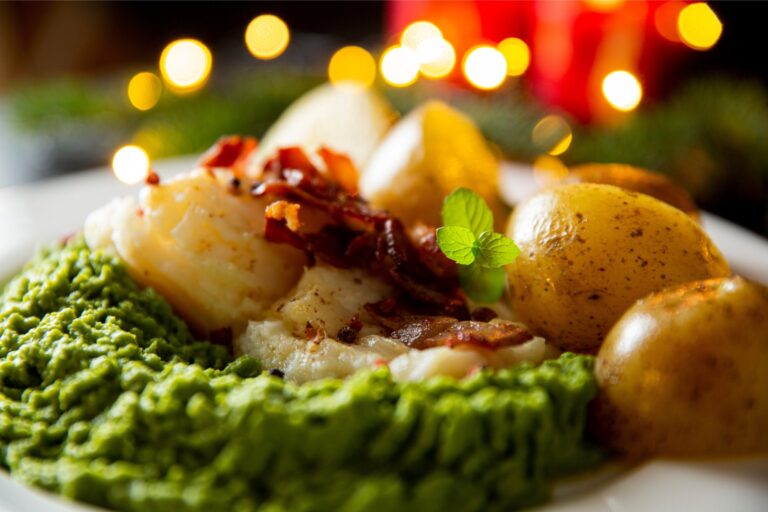
Most Norwegians choose peas, bacon, mustard and a generous amount of melted butter. The combination turns a gentle fish into something far more characterful.
Lutefisk is most often eaten during November and December rather than on Christmas Eve itself. Even so, a few families still bring it to the main table.
According to forskning.no, lutefisk has been a common Christmas dish for a lot longer than people realise. It was eaten on Catholic holidays as long ago as the mid-16th-century.
Christmas Porridge and Rice Pudding
Rice porridge is a comforting dish at any time of the year but it takes on a special role during December.
Many families serve a creamy pan of julegrøt on the afternoon of 23 December. The porridge is topped with cinnamon, sugar and a knob of butter that melts slowly into the centre. It is thick, warming and remarkably filling.
Tradition says that one almond should be hidden in the pot. Whoever finds it wins a small prize, often a marzipan pig.
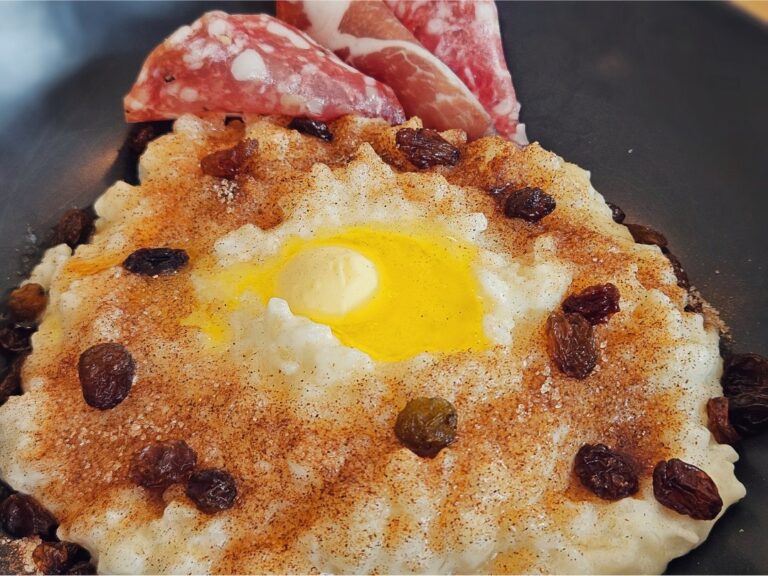
Leftover porridge often becomes riskrem. The cold rice is folded with whipped cream and served with a vibrant red sauce made from berries. This is a common dessert on Christmas Eve or Christmas Day.
It is light enough to follow heavy main courses and full of simple familiar flavours that appeal to all ages.
Christmas Cakes and Biscuits
Baking is an essential part of the Norwegian Christmas season. Families fill tins with an assortment of biscuits known as the seven sorts.
There is no universal agreement on which biscuits count as the official seven. Every region has its own ideas and every generation seems to add something new. What matters is the variety and the sense of abundance.
‘Pepperkaker' are impossible to avoid. Supermarkets fill their shelves with them in October and the spicy scent appears at every gathering.
‘Krumkaker' bring a softer sweetness. They are made from thin wafers that are wrapped into cones while still warm. Fill them with whipped cream and they become an elegant festive treat.
‘Sirupsnipper' have a darker deeper sweetness that comes from syrup in the dough. The almond pressed into the top adds a gentle crunch. Some families add fattigmann, sandkaker, goro or smultringer.
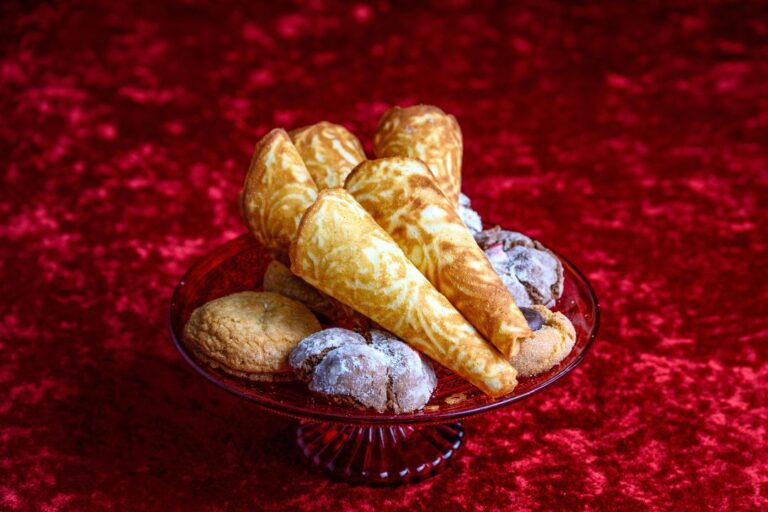
All have long histories and all help create that unmistakable December atmosphere.
Drinks of the Season
Breweries across Norway release their special ‘juleøl' during November and December, a tradition that feels almost as important as the food itself.
These seasonal brews are usually darker and richer than the everyday varieties, although the exact flavour profile changes from region to region. Some brewers lean into spices and caramel notes. Others focus on smooth malty beers that pair beautifully with ribbe or pinnekjøtt.
The rise of non alcoholic ‘juleøl' has been striking in the last few years. Many breweries now offer at least one alcohol free option and these have become a familiar sight at Christmas tables.
‘Julebrus' brings an entirely different kind of nostalgia. This Christmas soda appears once a year and vanishes again in January which seems to make Norwegians love it even more.
The most common version is bright red with a sweet berry flavour. In some regions a golden variety dominates instead. Children adore it and plenty of adults quietly do as well.
‘Gløgg' rounds out the season. This is the Scandinavian cousin of mulled wine and is best enjoyed steaming hot with cinnamon, cloves, raisins and almonds. Many Christmas markets serve their own recipes.
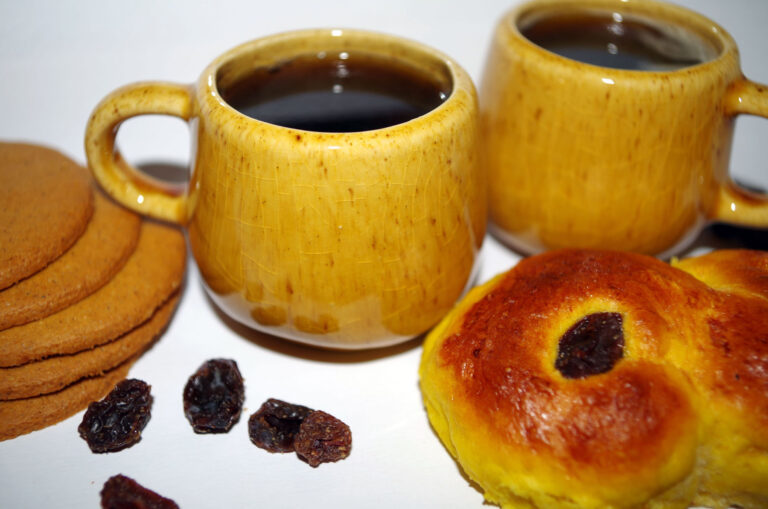
A cup of gløgg does more than warm your hands. It creates a little pocket of comfort that makes even the coldest December evening feel inviting.
Vegetarian Christmas Options
Traditional Norwegian Christmas food leans heavily towards meat and fish. Vegetarian options are slowly improving although they remain less central to the season than they are in many other countries.
Some supermarkets now sell plant based versions of Christmas sausages or roast alternatives to ribbe and pinnekjøtt.
Fish eaters will have no problems at all. Pure vegetarians may need to rely on creativity or bring their own dish if invited to a family gathering. This is changing gradually as younger Norwegians adopt new food habits.
The December Season as a Whole
Christmas Eve might be the focal point but much of the festive food is enjoyed long before the big night.
Julebord season lasts for weeks. Companies, sports clubs and local associations gather in restaurants and community halls for evenings of traditional food and lively conversation.
The menus vary but ribbe, pinnekjøtt or lutefisk often appear. These events encourage Norwegians to dress up and enjoy themselves which gives December a celebratory feel even before the holiday begins.
The days between Christmas and New Year feel different again. This period is called ‘romjul' and it brings a slower pace. Families enjoy leftovers, cold buffets and relaxed meals that make the most of the festive ingredients. It is a gentle way to close the year.
What Is Your Favourite Christmas Dish?
Norwegian Christmas food may seem unusual if you grew up elsewhere but it creates a vivid sense of season. The dishes are shaped by geography, climate and centuries of habit.
Whether you prefer the crisp crackling of ribbe, the salty depth of pinnekjøtt or the comfort of a bowl of risengrynsgrøt, there is a place at the Norwegian Christmas table for every taste.
Which dish would you choose? And if you live outside Norway, what appears on your table on Christmas Eve?


Lefse & Medisterdeig, cod fish ( Norwegian cod tastes so much better than any other cod fish), kranse kake, rice pudding & sutsuppe. But lefse is my favorite. My 2 yr. old granddaughter was so angry that we weren’t buying lefse in the store. Here Mexican tortillas are stacked up to buy, but not lefse.
I am from MN but spend the winters in FL! Lefse and Lutefisk are not to be found here in FL!
I ordered Lutefisk from Ingebretsen’s in Mpls. & Lefse from Countryside Bakery in WI!
God Jul!
Greetings Michele,
I almost fell off my chair when I saw your post. Hope all is well in FL.
I, too, live in MN and attended my first lutefisk dinner of the season in WI last November. I will have my second at Marine-on-St Croix in January. Missed several others including the one at Mindekirken. Better luck next year.
Making krumkake today.
My aunt was the family expert in making romegrot. Everyone made lefse and all of the Norke pastries.
God Jul
We used to be able to buy fish balls in our local grocery store and they were sooooo good! I would drain them and brown them in butter. However, I can’t find them any more and people give me a weird look when I ask about them. Do you know if they are still available and where I might find them?
We haven’t had them for about 5 years!🤔 My mom would by cans when the visited Norway for years but she is gone now.😞
I love fiskabøls! I found them on the web last time I searched..I need to buy some more..I have had any in years😥. I miss my mom’s Ribbe though hers was more of a roast but we would beg for a piece of the crispy seasoned rind..I could literally eat my self sick I was blessed and was able to visit my Mor-Mor in Norway a few times and treasure those memories and all the wonderful food and drink…thank you for sharing.
My Norwegian Grandparents would always host Christmas Eve family feast. The main dish was oyster stew. Of course served with many other Norwegian Holiday foods. Lefse!
So how is the fish done in lutafisk ,here in MN its boiled and looks like jello i won’t touch it done up that way,is there any way to get cookie recipes for the holidays ?
My husband’s family is Norwegian and he steams our lutefisk in a steamer. We buy a frozen version from a Swedish market. He thaws it, then steams it and serves it with boiled potatoes, lefse, salt and pepper and PLENTY of melted butter over all. I add a lettuce salad for something green with texture. It is quite tasty that way, retains its shape and is not at all “gloopy” or gelatinous.
My mother, 100%Norwegian American, would start the Christmas Eve meal with oyster stew or fruit soup, with herring and crackers.Then we would move on to Swedish Meatballs, lease, some vegetable, with julekage and norwegian sugar cookies ( or rosettes, pepperkake, or sanbakkels).yum.
I meant lefse!
Very interesting! I would love a cookbook if you have one. My in-laws are Norwegian and I would love to cook something to surprise them!
I am from Oregon but my Father’s family is all Norwegian and came from Norway via Minnesota. Our family celebration was always at my great grandfather’s home. My grandmother and her 3 sisters would make lefsa on the wood burning stove while all 13 grandchildren would line up to get one of these delicious treats. The lefsa was spread with butter and sprinkled with sugar, then rolled and shared with all of us. As soon as we had one in our hands, it was back to the back of the line to get another one. It was quit an assembly line and I think it was my favorite part of Christmas.💜💜💜 Love and miss you, Grama
Thank you for sharing this memory. You were so lucky to have this. My great grandfather past before I was born and great grandmother when I was small. I have a memory of a Christmas dinner, which luttefisk centered, and her Siamese cat that forever ran away from us. She sang and spoke Norwegian but never enough, I loved listening to her. I miss her, a lot.
Has anyone heard of Hugletta (probably misspelled)? My mother used to make it and I can’t find a recipe anywhere. I know it was made with eggs and had a custard consistency.
I started learning Norwegian this year so I love reading about the culture and food. I can’t afford to travel there yet but I hope to someday
This was fun to read! My mother’s family came from Norway, but it’s enough generations back that the culture wasn’t handed down as far as me.
BTW, I think you’ve got England and the US conflated. Americans tend toward turkey or a Christmas ham, and some might do a roast if they read the fancy food magazines…but goose isn’t quite the thing here that it has been in the UK.
Tusen Takk for your great columns! Recently you mentioned the gingerbread display in Bergen and that there was also one in Duluth, MN. I was going to respond then and didn’t get it done. In Minneapolis(MN) Norway House has one also. This is the seventh year and draws over 15,000 people. It is wonderful and fun to see all the creative buildings that they bring in each year.
They are in the process of expanding the building and it will be known as the ‘Norwegian Center of America!’ Mindekirken Lutheran Memorial Church is also located there and they are celebrating their 100 years this year!
For Lauri – Hagletta. Simmer 1 gallon of whole milk til reduced by half, about 2 hours. Beat two eggs, then beat in 2 cups buttermilk, 1 and 1/2 cups sugar, good dadh salt. Slowly stir into simmering milk. Cook a minute or two til it clabbers.
Yes, my Grandmother cooked this.
My paternal grandmother was Norwegian. Loved making Kringla cookies with her. Loved Kumla too. Miss those days.
My Swedish grandmother always made Lefse for her Norwegian husband and our Swedish/Norwegian family. No Christmas was complete without it. I have such wonderful memories of our love affair with that food, but never made it myself. I can taste it just by thinking about it!
Every year at St. Olaf, I would dutifully attempt to eat Lutefisk. I mean, I would really try to eat the stuff. And every year, I would go back for the Swedish meatballs. Unfortunately, Lutefisk tastes like fish jello, which is NOT my idea of a lovely Christmas dinner.
I remember having Pinne Kjøtt as a child in Bergen as well as Fiske Boller. My dad would steam the Pinne Kjøtt ove birch sticks. I didn’t encounter Lutte Fisk till we came to Chicago, and all the Norwegian clubs would have it at Christmas. Folks either loved it or hated it. I couldn’t eat it. Legend has it that half the immigrants who left Norway did so to get away from Lute Fisk, only to find it again in the Norwegian American clubs in the States.