

From what's on the dinner table to the work party, let's take a closer look at the Norwegian take on the festive season.
Christmas in Norway is often imagined as something out of a winter postcard. Snow-covered streets, glowing markets, reindeer somewhere just out of sight, and a sense that the festive season feels more authentic the further north you travel.

The reality is quieter, more restrained, and far more home-focused.
After many years of living in Norway, I have learned that Christmas here is not built around spectacle. It unfolds slowly, mostly behind closed doors, shaped by routine, repetition, and a strong pull towards home.
Snow may or may not arrive. Markets come and go. What matters most happens around the kitchen table, in front of the television, and during long walks taken simply to get some air.
Norwegians call the season jul, a word that refers not to a single day but to a period of weeks. It stretches from the gradual anticipation of Advent through Christmas Eve, into the quiet lull of romjul, and finally towards the New Year.
Some traditions are centuries old, others surprisingly modern, but together they form a Christmas that feels deeply rooted in everyday life rather than performance.
Whether this is your first Christmas in Norway, your fifteenth, or you are simply curious about how the festive season is celebrated here, understanding Norwegian Christmas traditions means letting go of a few assumptions and tuning into a slower rhythm.
Table of Contents
Jul as a Season, Not a Single Day
In Norway, Christmas is not something that suddenly begins on the 24th of December. It arrives gradually.
The word jul is used to describe the entire festive period, not just Christmas Day. Advent marks the beginning, with candles lit week by week and decorations appearing slowly rather than all at once.
Compared to some countries, Advent in Norway feels relatively restrained. There is anticipation, but not urgency. The emphasis is on preparing the home and the calendar, not on constant celebration.
Many of the customs tied to jul predate Christianity. Long before Christmas became a church festival, midwinter was a time of feasting, light, and community in the Nordic countries.
Those older traditions still echo through modern celebrations, sitting comfortably alongside Christian elements in what is now a largely secular society.
Saint Lucia Day on 13 December (Luciadagen) is one such example. While not as prominent as in Sweden, Norwegian children often take part through schools and kindergartens, wearing white robes and carrying candles as a symbol of light returning to the dark season. It is a gentle ritual, more atmospheric than religious.
As the days shorten and workplaces begin to wind down, jul becomes less about public life and more about the private sphere. This shift is key to understanding how Christmas works in Norway.
The Loud Part Comes First: Julebord Season
Paradoxically, the noisiest part of Norwegian Christmas comes before Christmas itself.
December is the month of julebord, literally “Christmas table,” the traditional pre-Christmas party held by workplaces, sports clubs, volunteer organisations, and social groups. Almost everyone attends at least one, and many attend several. Partners are sometimes invited, meaning the calendar fills quickly.
Julebord matters socially in a way that can surprise newcomers. Norway is generally informal, with flat hierarchies and relaxed dress codes.
Julebord is one of the rare exceptions. People dress up. Suits and dresses appear. There is a sense that this is the one sanctioned moment to let loose before the long quiet of Christmas.
Alcohol plays a central role, sometimes uncomfortably so. NRK published this article all about this trend, in which six out of ten people surveyed said they'd experienced colleagues getting uncomfortably drunk.
Traditional Christmas food is often served, followed by speeches, dancing, and late nights. For a country known for moderation, December can feel unusually intense.
This early release is not accidental. Once Christmas Eve arrives, the social door closes. The noise belongs to December. Christmas itself belongs to the home.
Christmas Markets Add Atmosphere
Christmas markets do exist in Norway, and they have become more common over the past decade. From late November and early December, towns and cities host seasonal markets offering local crafts, festive food, and warm drinks.
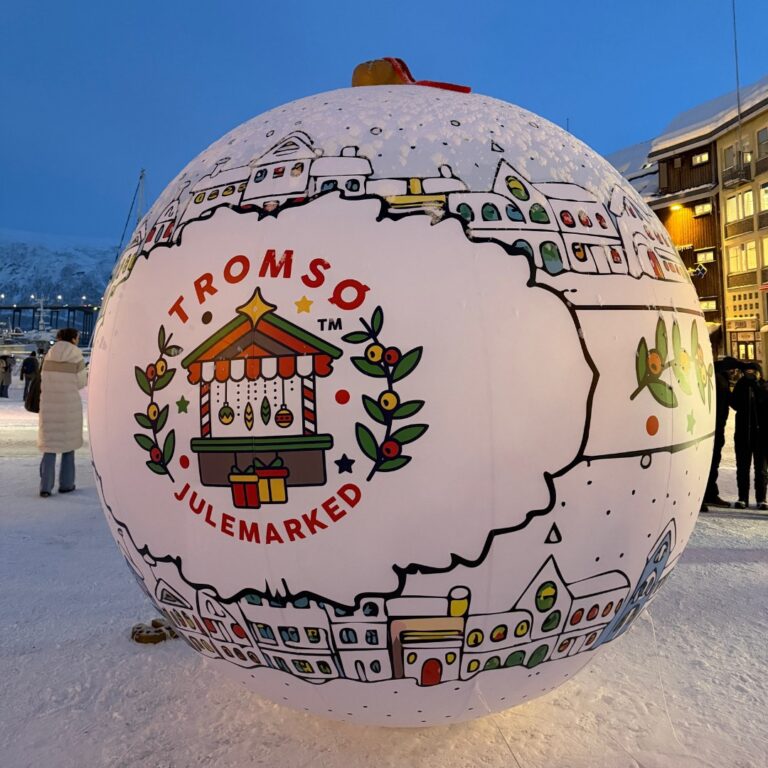
On a cold evening, with lights strung overhead and steam rising from mugs of gløgg, they can feel properly atmospheric. What they are not is the centre of Christmas life.
Unlike in parts of Germany or Central Europe, Norwegian Christmas markets are brief, occasional, and often treated as a social outing rather than a seasonal ritual. People might visit once, meet friends, buy a small gift, and move on. They rarely structure their December around them.
In many places, weather plays a role. Snow is not guaranteed, and winter darkness arrives early, limiting opening hours and scale.
More importantly, Christmas in Norway has traditionally been something that happens indoors. The emphasis has always been on the home rather than the public square.
Christmas Eve Is the Heart of Christmas
For anyone raised in the UK, the US, or much of Europe, this is the single most important thing to understand about Christmas in Norway. Christmas Eve, not Christmas Day, is the main event.
The 24th of December is when families gather, presents are exchanged, and the most important meal of the year is eaten. The entire rhythm of the season builds towards that evening, and once it has passed, the emotional high point of Christmas is already over.
The day itself unfolds slowly. Shops close early. Streets grow quiet. Inside homes, televisions are switched on and familiar programmes play in the background.
Church bells ring in the late afternoon, even for those who will not attend a service. It is a signal as much as a sound, marking the transition from ordinary time into Christmas.
Dinner is formal but not flashy. It is eaten at home, usually with close family only. Presents follow, often one by one, rather than in a frenzy. Children may dress up as nissen, the Norwegian Christmas figure, or someone may disappear briefly and return as a visitor from the barn.
By the end of the evening, there is a sense of closure. Christmas has happened. The anticipation is complete.
Christmas Food as Cultural Identity
Christmas food in Norway is not about novelty. It is about continuity. Most families eat the same dish every year, and that choice is often tied to geography as much as taste.

Ribbe, seasoned pork belly with crispy crackling, dominates in eastern Norway. Pinnekjøtt, cured and steamed mutton ribs, is the traditional choice in the west. In coastal regions, cod or other fish still holds its place on the Christmas table.
What matters is not which dish is eaten, but that it is the same one, year after year.
Changing the Christmas menu is surprisingly controversial. For many families, the food is an inheritance, passed down without much discussion.
It connects the present celebration to previous generations, reinforcing the idea that Christmas is not something to reinvent annually.
If you want a deeper look at what Norwegians eat at Christmas and why, you will find a full guide in our dedicated article on Norwegian Christmas food.
Christmas Drinks: Juleøl and Julebrus
Alongside food, Christmas has its own drinks. In the weeks leading up to Christmas, breweries across Norway release juleøl, Christmas beers that are typically darker, richer, and spiced compared to their regular offerings.
Discussing which juleøl is best can become surprisingly passionate, often along regional lines.
For those who do not drink alcohol, or simply prefer something sweeter, there is julebrus. This bright red or brown soda is a nostalgic favourite, particularly among children, but just as beloved by adults. Which version is best is another debate guaranteed to divide opinions.
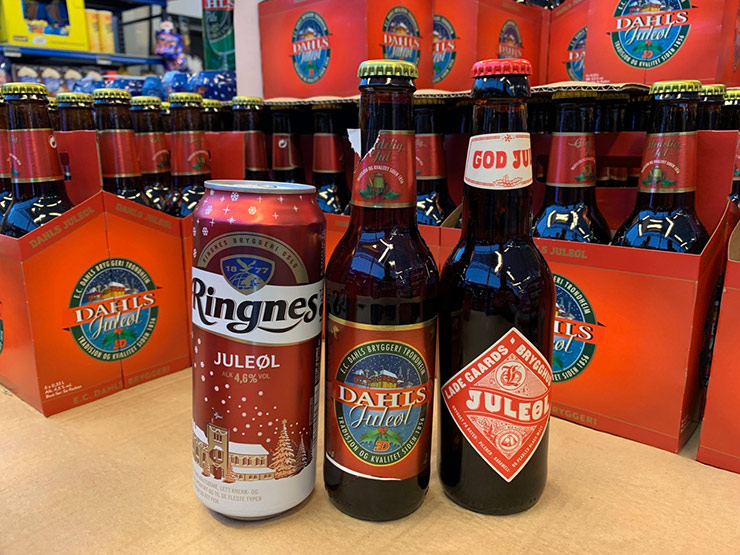
As with food, these drinks are seasonal markers. Their arrival signals that jul has begun.
Music, Television, and Shared Moments
Norwegian Christmas culture is held together as much by shared media as by shared meals.
The same Christmas songs return every year, played on the radio, in shops, and at home. The same television programmes appear in the schedule, watched simultaneously across the country.
These traditions create a sense of national synchronicity, a feeling that everyone is experiencing the same moments at the same time.
This repetition is intentional. Comfort lies in knowing what comes next. Christmas in Norway is not the time for experimentation, musically or otherwise.
If you are curious about which songs define the season and why they matter, our guide to Norwegian Christmas music explores this in more detail.
Christmas Day: Quiet by Design
After the intensity of Christmas Eve, Christmas Day itself is subdued.
The 25th of December is usually spent at home, resting, eating leftovers, and perhaps going for a walk. Shops remain closed. Social obligations are minimal. For many newcomers, this quietness can feel anticlimactic or even isolating at first.
Over time, it begins to make sense. Christmas Day is not meant to compete with Christmas Eve. It exists as a counterbalance, a pause that allows the celebration to settle rather than continue endlessly.
Romjul: The In-Between Time
One of the most distinctive Norwegian Christmas concepts is romjul.
Romjul refers to the period between Christmas and New Year, a stretch of days that exist slightly outside normal time. Many people take the entire period off work. Offices close or operate at minimal capacity. Expectations are lowered.
This is when Norwegians retreat to cabins, go for long walks, read books, and eat the same meal for the fourth time in a row without apology. There is no pressure to be productive or social. Simply being is enough.
Romjul has no direct equivalent in English, and perhaps that is fitting. It reflects a cultural acceptance that rest does not need justification.
Old Traditions in a Modern Country
Norway is a modern, highly secular society, yet Christmas traditions remain remarkably stable.
This is partly because they are no longer framed primarily as religious obligations. Instead, they function as cultural anchors, linking people to place, family, and season. Pagan roots, Christian calendars, and contemporary life coexist without much tension.
Christmas in Norway is less about belief and more about belonging.
For those coming from more extroverted Christmas cultures, it can feel strange at first. Over time, many find themselves appreciating the quiet, the boundaries, and the permission to stop.
That, perhaps, is the essence of Norwegian Christmas. God jul!


I enjoyed your posts. I am president of Gulf Coast Vikings, sons of Norway Lodge in Estero, Florida ( southwest Florida on the Gulf of Mexico).
Would it be alright with you if I share your posts in our Gulf Coast Vikings Page on Facebook. Most of our members were not born in Norway. Their parents, grandparent or great grandparents are from Norway. Harriet
Of course, Harriet!
Thank you David! Merry Christmas!!!!
Nope
I am a Norwegian living in Dublin atm and wow, did this give me a longing for home. I will go home for Christmas and I am looking tremendously forward to it.
Another tradition is the movies on Christmas eve morning/afternoon (the same movies EVERY year – they tried to change it one year and basically got death threats), and the Christmas calendar on TV with one new episode every day. Without the snow, julebrus and juleøl the NRK calendar is all I have to try to get into the holiday spirit (that, and winter sports).
And aquevit, of course. I hate the stuff but it’s a Christmas tradition for a lot of people.
God jul!
Sorry for the double post, but just some trivia for those interested: The “nisse” tradition in Norway goes back centuries and centuries. In many ways it is connected to old beliefs of elves, gnomes etc. Norwegians used to believe nisse families lived in barns etc. connected to the farms. They believed the nisse families would help them with the farm during the spring and summer and sometimes did pranks. A lot of Norwegians to this day swear the farm nisse on their family farm exists (some even that they’ve seen it). Because of this tradition a lot of Norwegians put out Christmas porridge on the porch at Christmas Eve for the nisse families to eat.
So the nisse is much older than Santa Claus! 🙂 That being said, Norwegians also celebrated Christmas long before Christ, which is why Christmas is called jul (yule) here. It was a celebration of the winter solstice and the sun turning and light coming back, a festival of light in the darkest part of the year. Which is probably also one of the reasons Christmas Eve became the most important day here, as the 24th is closer to the solstice than the 25th.
my grandmother came to America at the age of 16. all my life we left a saucer of milk for the missed to bring us luck through the year my family 3 generations later keep it alive. thank you for your post.
I suppose you mean “we left a saucer of milk for the Nisse”.
Sooo interesting, thank you! I do remember being in Norway at Christmas and everybody seemed to watch. an old. comedy skit on t.v. about a wealthy old lady and her butler, and the butler takes a swig of everybody’s liquor as he. goes around the table, starts to slur his words, trips over the rug a few times, it was funny! Christmas was very koselig in Norway.
Thanks for this site David and for the time you put in to it. I’m an 82 year old first generation Norwegian/American born in Bayridge Brooklyn (more Norwegians lived there than in Bergen, Norway’s second largest city) in 1932. My mom, Solveig, held fast to the holiday traditions as did our neighbors. The most delicately delicious krum kakke, Fattig man, hazelnut cookies, sand kakke and various other delicacies were baked the whole week preceding Julaften. I had it better than other Americans who celebrated on the 25th in that after the depression we had big Xmas Day roasts as well and went visiting our relatives for “coffee & cake” and leftover turkey and such. A real treat was to sample the other Norwegian Cookies that folks from different home towns in Norway had baked with great variation and whipped cream fillings of rum and fruit ‘saft’. Mom had anold hah ‘hexe’ woman riding a broom hanging over the fire place opening and if she faced in it was to be bad weather and vice versa if facing out. She was surrounded by Jule Nisser all hanging by silken red threads. To my Dad’s shagrin, she strung lines of tiny Norwegian flags hanging on lines of red thread spiraling down around the Xmas tree. He’d say, in Norwegian, We’re in America now and what do patriotic flags have to do with Xmas? I guess she was very home sick at Xmastime.
Very interesting to read your family traditions first hand, George! You could make an oral history project with any other American Norwegians you know. Good yule!
I am not quite sure what you re trying to say but I suppose you mea “we left a saucer of milk for the Nisse” since that makes sense.
More than likely, the misspelling was caused by auto-correct.
Spelling: “an old heks riding a broom” and Krumkake with one “k”, and sandkake. No a at the end and one k.
My grandparents were also first gen. Norwegian Americans in Bay Ridge! So lovely to read your reminiscenses!
I grew up with all the same traditions, as well as listening to their stories of the holiday season!
I love these stories, thank you George! My. great-grandparents came to Brooklyn from Bergen in the early 1900’s, Martin Iversen and Hedwig Andresson. I have Norway in my blood and. bones, and am teaching myself norsk. now. When I am in. L.A. visiting my son I attend jul festivities at the Sjømannskirken.
God jul!
I am so happy to read your post! Thank you for bringing my grandparents and our Juls back to me! My great grandmother julie larsen came to America alone as a teenager in the 1890s. Her older sister Anne was already here. They lived in Bayridge, of course! My grandfather met my Norwegian mormor there, and my dad and his siblings grew up there and in Flushing, Queens. We had some of the food and decoration traditions, which i loved then and now. My tante solveig and uncle vincent (grandfather’s bro.) met in Bayridge, too. I even had to get my krumkake iron from Bayridge decades later!
Again, tusen takk!
Wonderful to read your remarks, having been born into a very Norwegian family in Bay Ridge, shopping at the Norwegian stores, attending the very Norwegian Trinity Lutheran Church/46th Street, & annually participating in what was then the largest Syttende Mai Constitution Day parade outside of Norway until I married & moved away. It brought back good memories & some homesickness. Thank you for sharing!
Hi David, I’m enjoying reading your Christmas in Norway posts! We will be int Tromso for Christmas this year (with a 12 yo and a 10 yo who both still believe in Santa Claus) and expect it to be a very, very different type of Christmas than we have here in tropical Queensland (in Australia).
I’m wondering what you, or your readers, might recommend we do for our Christmas celebration. I understand most restaurants will be closed….. thanks!
Sounds lovely! But yes, you can expect shops and restaurants to be closed. I’ve never been to Tromsø at Christmas so can’t pass on specific advice, but I would suggest contacting hotels to see if they are offering a Christmas dinner/event (which will be on Christmas Eve, not Christmas Day). Enjoy!
Great post. My husband & I are both descendants of Norwegians (I was an Olson, he is a Sande). My in-laws never touched a drop of alcohol, but surely made and ate wonderful lefse, krumkake and lutefisk. You’ve inspired us to make some of these old favorites this year. Thank you.
You’re welcome! God jul 🙂
God Jul.
Merry Christmas from Las Vegas ! Many lost Norwegians live here.
We had non-alcoholic gløgg at work last week (a couple of hours north of Trondheim) and fresh lefse with lots of fillings (cheese/local salmon/jam/rømme). I have made lussekatter for the first time and discovered that it’s traditional to make about 7 different types of biscuits (but apparently people make less in recent years). Here a different meal each day of Christmas is enjoyed apparently. It’s interesting to learn about different traditions and we’re trying to figure out how our English-Trøndelag Christmas will be for our children. As Santa comes to the front door and delivers a present each on Christmas Eve afternoon to local children (apparently a neighbour or relative dressed up) , I don’t know if they will adjust to such a big change 😁 Seasons greetings everyone
At our Sons of Norway Lodge 3-515 we had a major Julefest celebration which included salmon, ham, fruit soup, rice soup, cucumbers, beets, lefse, krumkakke, sunbakkels, and lots of other cookies and cakes. Unfortunately no lutefisk or aquavit but we did have gloog, from Ikea store. We had a presentation from a immigrant Norwegian, sang songs and reminded me of my childhood. I have two nissers that didn’t want to leave the workshop to go to the party cause they had beer and porridge.
I am enjoying your articles. It takes me back to a time when I lived in Stavanger for 9 years. My daughters grew up in this wonderful place. Their children do not know the wonderful traditions of Norway so my next children’s storybook, Farting Four-toed Troll, will give them an insight to the beauty and goodness. The children will learn in a fun take on the Julenisse that it is good to be kind, call people by the correct name and help feed the animals.
Sounds like fun. Nothing like some farting, fourfooted trolls to teach about beauty and goodness. Classy, too, for Christmas Eve.
Hey hey, i’m kim and i’ am a vlogger from the Philippines and you gave ideas on my next video but i have to ask you first if i can film some of the facts you wrote here cause i don’t want to be a thief of ideas so maybe you’ll allow me get some of your idea, so that i can film my video about norway christmas and how they celebrate it.
Thank you
Kimberly Dagsland
Christmas celebrates the birth of Jesus Christ in Bethlehem, so where is Jesus in the above customs and
Celebrations?!
This is a good beginning, but there is so much more. How about the tree in Washington, D.C.? That is a tradition going back a bit. How about the tradition of baking seven types of cookies for Christmas? Getting the house ready? Etc. etc. etc. Thanks.
Seems like you know this stuff pretty well – maybe you should write your own blog post?
Just to let you know ,here in Scotland, Edinburgh receives an annual Christmas tree from Norway too
Just to let you know ,here in Scotland, Edinburgh receives an annual Christmas tree from Norway too.
Gifted by Hordaland County, for Scots support for the over 7000 exiled Norwegians during World War 2.
I enjoy your stories. I lived in Norway for over 3 years and have a daughter and son-in-law and 3 grandchildren that live in Trondheim. I played music in Norway for most of those years and had other jobs when I wasnt on the road. I miss Norway and all the friends I made. Have a great holiday season. Gary Burns
We eat lyefish christmas eve, so Does many people in the farming communities in innland norway were fish from the sea, was a rare treat. Lutefisk, eggbutter, potatoes and lefse. Never addition is bacon bits. It is alsopractical when You came home rom church it is a quick meal. Pork belly is NOT eaten with red currant sauce, it is eaten with sauerkraut, wild cranberries jam, medisterkake ( big meatballs made of sausage meat) and sausages of different sorts,potatoes «almond potatoes» or ringerikspotet (potatoes from Ringerike- special variety that is only available at christmas) caramelized apples, cooked prunes and sauce made from panjuices from cooking the pork belly. Crackling is an esssential part of the pork belly eating, if crisp crackling is not present- indicates terrible Cook. Has brought many mothers to nervous breakdowns as they have failed the crackling test.
Can you supply an address to acquire Norwegian Cheese, either Norway or U.K.
I married a man from Washington state. I am from gulf coast of Texas.learned a lot of Swedish , Norse and Denmark while stationed. We made our own pickled herring (very good), lutefisk and a lot of other dishes from my mother in law. I actually liked the lutefisk. Acquired a selection of the Tomte’s. Still put out mostly around Christmas. Really enjoyed learning the traditions of Scandinavia.
Hi to all Norwegians out there! Thank you David for your Life in Norway read!
Correct me if I’m wrong but currant jelly may be served with sour kraut but Lingonberry jelly or jam is the ultimate Queen on a Julebord! How many different kinds of lefse are there in Norway? There’s most likely one for each county and potato lefse is usually wrapped around a hotdog as a bun. Good lefse is honored with butter and other ‘goodies’. Let’s not forget Risgrøt which is served on New Year’s Eve in some regions.
Happy Holiday to all!
Hi again David.
I’m here again to bother you! You spoke of many ways of celebrations of Christmas in Norway but you left out the one for children- ‘Julebukk’ in which
kids go to neighbors and ask for ‘gotter’ (candy) Their mask worn is a goat w/horns and goats beard. I did this myself when I was young- maybe it’s out of fashion by now. Also on the 2nd day of Christmas, the kids have their juletre fest ,where they dress in their finest and celebrate at their school ,going around the tree and enjoy, singing xmas songs etc.
David please have a great holiday and love my Country!!!
Hi David, thanks for your Norway writings.
I have a grandson living in Oslo for the last 7 years with his Slovenian partner.
I don’t hear such a lot of Norway from them but your letters are wonderful.
I’m original German and some of our Christmas customs are similar, especially celebrating on Christmas Eve.
Cheers and Christmas wishes
Monika from very hot Brisbane Australia