
Vigeland Park may be world-famous, but Norway’s capital is home to several sculpture parks that reward curious visitors willing to look beyond the obvious.
When people think of outdoor art, they tend to picture Florence, Rome or perhaps a grand Parisian square.
Oslo rarely makes that list. Yet spend time in Norway’s capital and you begin to notice something unusual.
Sculpture is everywhere. A bronze tiger greets passengers outside Central Station. Historic kings and politicians stand watch over city squares. Contemporary installations appear beside office blocks and waterfront promenades.
But beyond these scattered works, Oslo also offers something more deliberate: dedicated sculpture parks that function as open-air galleries.
Some are world-famous. Others are quietly local. All of them are free to visit. And together, they say something important about how Norway approaches public space, art, and accessibility.
Let’s begin with the one that draws the crowds.
🇳🇴 Oslo Travel Resources
Make the most of your trip to Norway's capital city with our recommended travel resources:
👣 Things To Do In Oslo: My top recommendations.
🚲 Book Tours & Experiences: Led by local experts.
🛏️ Search and Book Hotels: Get the best rates in advance.
🚂 Day Trip Ideas: If you want to look beyond Oslo.
🚘 Car Rental in Oslo: Find the best rates in advance.
🤒 Travel Insurance: Make sure you're covered. Just in case.
Vigeland Park
No sculpture park in Scandinavia is more recognisable than the Vigeland installation in Frogner Park.
Featuring more than 200 sculptures by Norwegian artist Gustav Vigeland, the park is not simply a collection of artworks. It is a unified artistic vision, designed as a whole.

Vigeland himself planned the layout of bridges, fountains, stairways and lawns to frame his sculptures exactly as he intended. That level of control is rare.
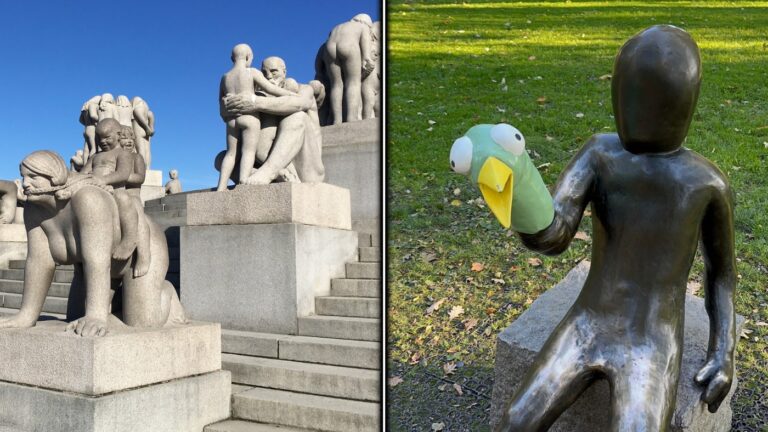
The result is dramatic. Human figures in bronze and granite wrestle, embrace, mourn and celebrate across sweeping lawns. The sculptures depict all stages of life, from infancy to old age, often in raw, unfiltered form. There are no idealised marble gods here. These are ordinary people, shown in all their vulnerability and intensity.
The centrepiece, the Monolith, towers above the park. Carved from a single block of granite, it consists of dozens of intertwined bodies climbing skywards. It is imposing, symbolic, and frequently photographed.
In summer, the park is busy. Tour groups gather on the bridge. Visitors pose beside the famous Angry Boy statue. Yet even at peak times, the atmosphere rarely feels oppressive.
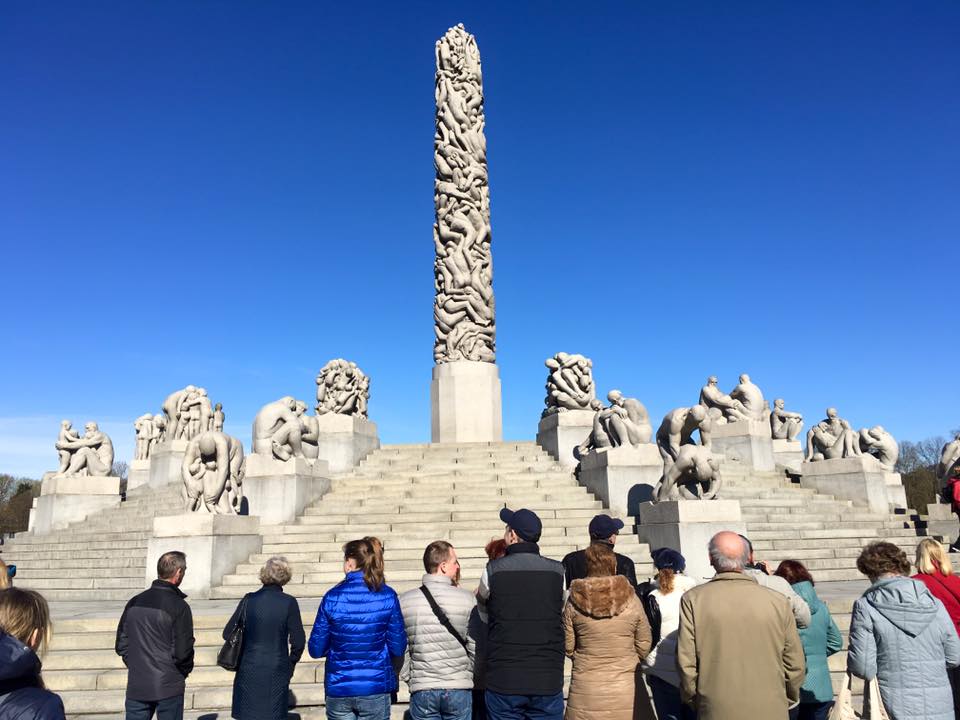
The park is large enough to absorb the crowds, and Norwegians treat it as an everyday space. People jog past the sculptures. Families picnic on the grass. Children play nearby.
That combination of world-class art and ordinary life is part of its charm.
Vigeland Park is easy to reach by tram or T-bane, and it is entirely free. If you have limited time in Oslo, this is the sculpture park to prioritise. But it is far from the only one.
Princess Ingrid Alexandra Sculpture Park
Many visitors admire the Royal Palace from Karl Johans gate, take a few photographs, and move on. Few explore the surrounding Palace Park in depth.
That’s a shame, because hidden within the trees is one of Oslo’s most distinctive artistic spaces: the Princess Ingrid Alexandra Sculpture Park.
Opened in 2016 and named after the daughter of Crown Prince Haakon and Crown Princess Mette-Marit, the park was created to celebrate the 25th anniversary of King Harald V’s reign.
The sculptures were a gift from Sparebankstiftelsen DNB, and the concept was deliberately different from traditional royal art collections.
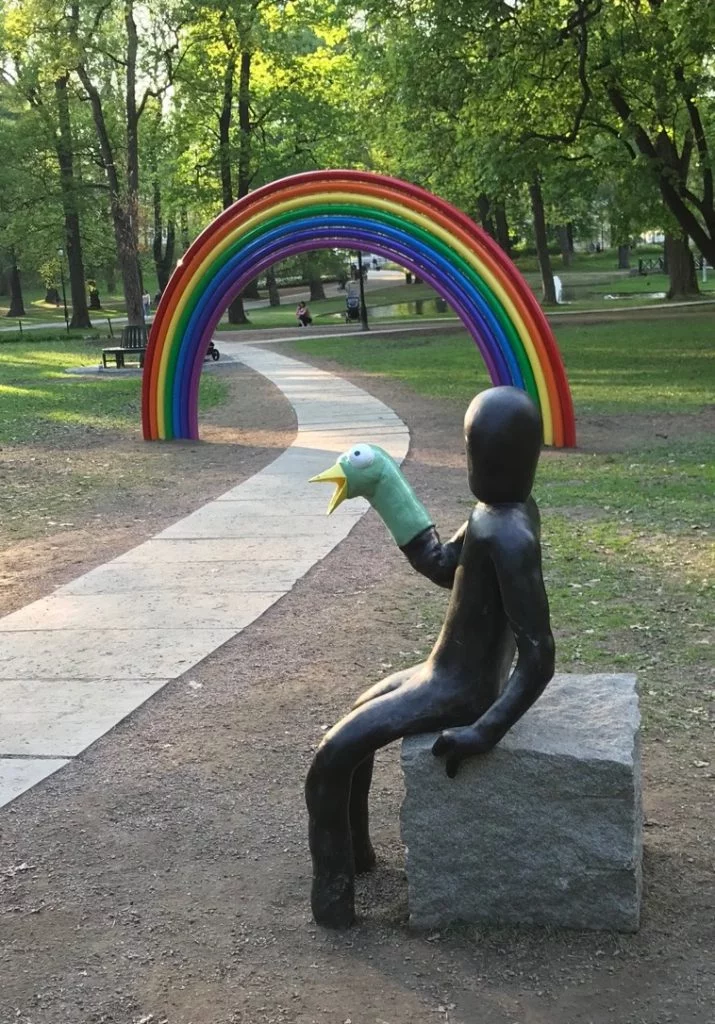
This park was designed for children. Several of the works were created with input from young people, and the tone is playful rather than reverential.
Bright colours, imaginative forms and interactive elements dominate. There is a fairytale quality to the setting, particularly in winter when snow settles on the sculptures and the surrounding trees.
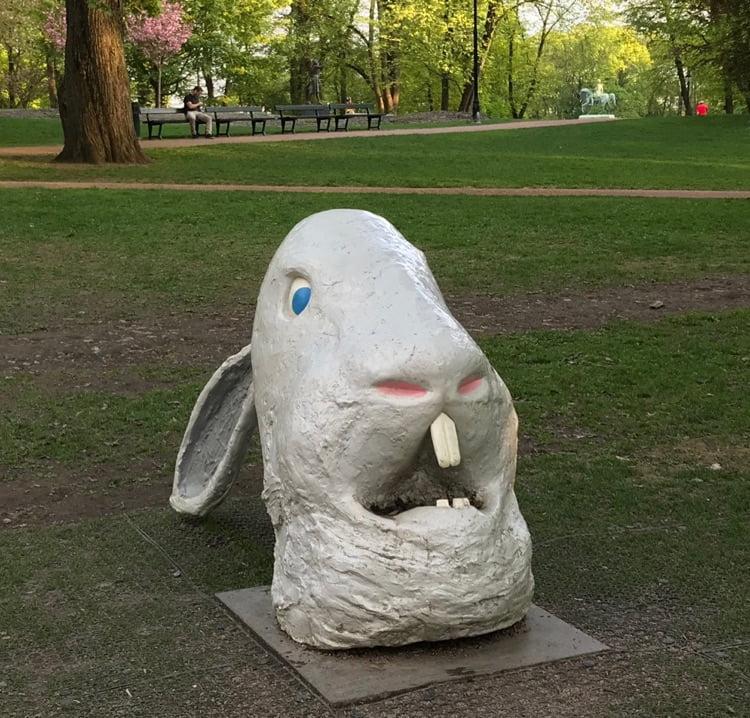
Unlike Vigeland’s intense exploration of the human condition, this park feels light-hearted and optimistic. It reflects a typically Norwegian belief that public art should be accessible, inclusive and woven into everyday life.
It is also remarkably central. Just minutes from the city’s busiest shopping street, you can step into a quiet green space filled with contemporary sculpture.
If you are visiting Oslo with children, this park is an excellent stop. Even without children, it offers an interesting contrast to the more serious tone of other sculpture parks in the city.
Ekeberg Park
If Vigeland represents tradition and unity, Ekeberg Park (Ekebergparken in Norwegian) represents variety and debate.
Perched on the hillside above Oslo, Ekebergparken combines woodland walking trails with large-scale international art. The views alone make the journey worthwhile. From several points, you can see across the Oslofjord, the harbour, and the city centre skyline.
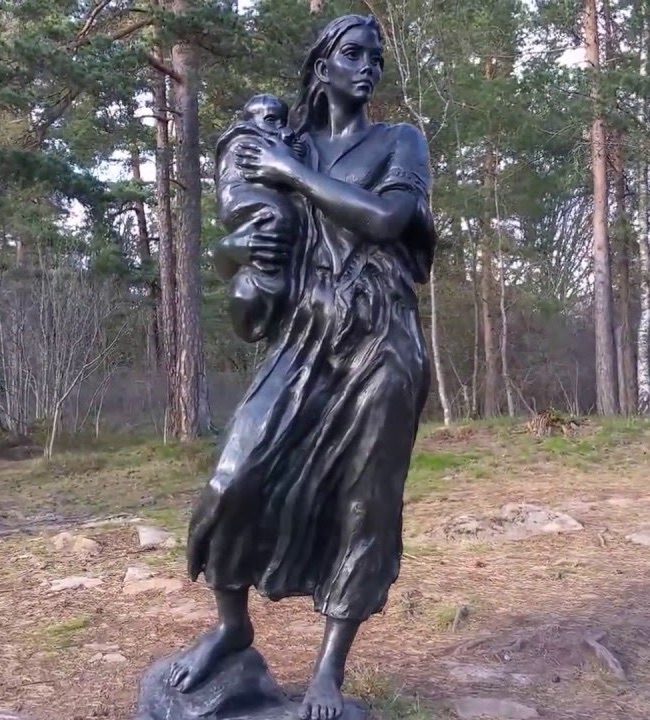
The park features more than 30 sculptures scattered across a 25-acre forested area. Unlike Vigeland Park, this is not the work of a single artist. Instead, it is a curated collection featuring international names and contemporary voices.
One of the most recognisable works is Salvador Dalí’s surrealist interpretation of the Venus de Milo, complete with drawers emerging from her form. Other pieces are more abstract, occasionally provocative, and sometimes controversial.
The park was developed through collaboration between the City of Oslo and a foundation established by investor and art collector Christian Ringnes.
Its funding model has sparked debate in Norway about private influence in public cultural spaces. Some critics questioned the choice of artworks. Others welcomed the ambition and international scope.
That discussion is part of what makes Ekebergparken interesting.
Public art does not have to be comfortable. It can provoke, divide and challenge expectations. Walking through the park, you may find yourself impressed by one sculpture and puzzled by the next. That unpredictability adds to the experience.
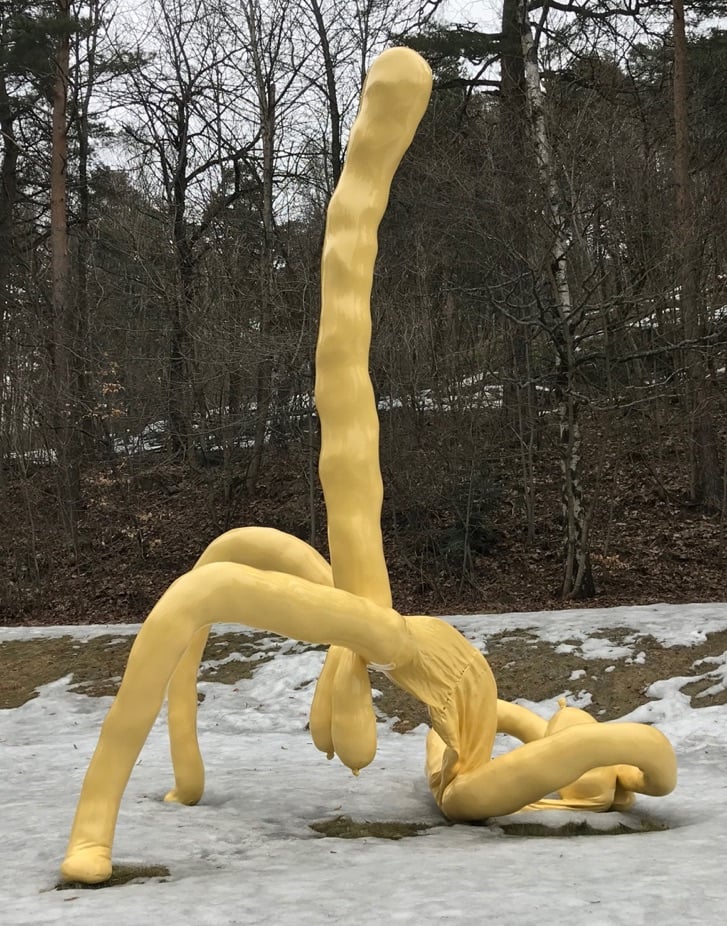
Ekebergparken is easily reached by tram, and the woodland setting makes it feel far removed from the city centre despite being only a short ride away. There is also a small museum building, café and gift shop, making it possible to spend several hours exploring the area.
For those willing to venture slightly off the main tourist trail, this is arguably Oslo’s most rewarding sculpture experience.
Tjuvholmen Sculpture Park
At the opposite end of the spectrum lies Tjuvholmen. This small waterfront sculpture park forms part of the grounds surrounding the Astrup Fearnley Museum of Modern Art.
The area itself is one of Oslo’s most contemporary districts, filled with sleek apartment buildings, galleries and restaurants.
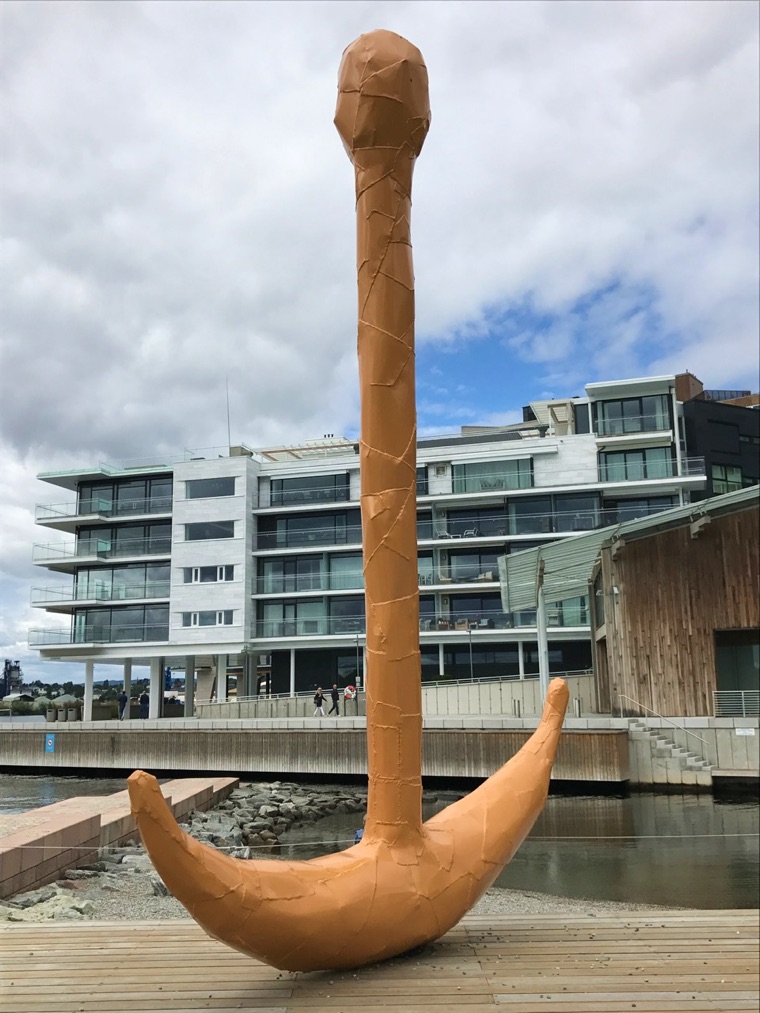
Designed in collaboration with architect Renzo Piano, the museum complex blends glass, wood and curved roofing to striking effect. Outside, sculptures by internationally renowned artists sit against the backdrop of the fjord.
Works by Louise Bourgeois, Antony Gormley and other contemporary figures appear throughout the space.
Unlike the immersive woodland experience of Ekebergparken, Tjuvholmen’s sculptures feel integrated into an urban waterfront environment. Boats drift past. Swimmers gather at the nearby sea baths in summer. Office workers eat lunch on the rocks.
It is not a large park, and it would not justify a long detour on its own. But if you are already visiting the museum or exploring Aker Brygge, it provides an enjoyable addition to your walk.
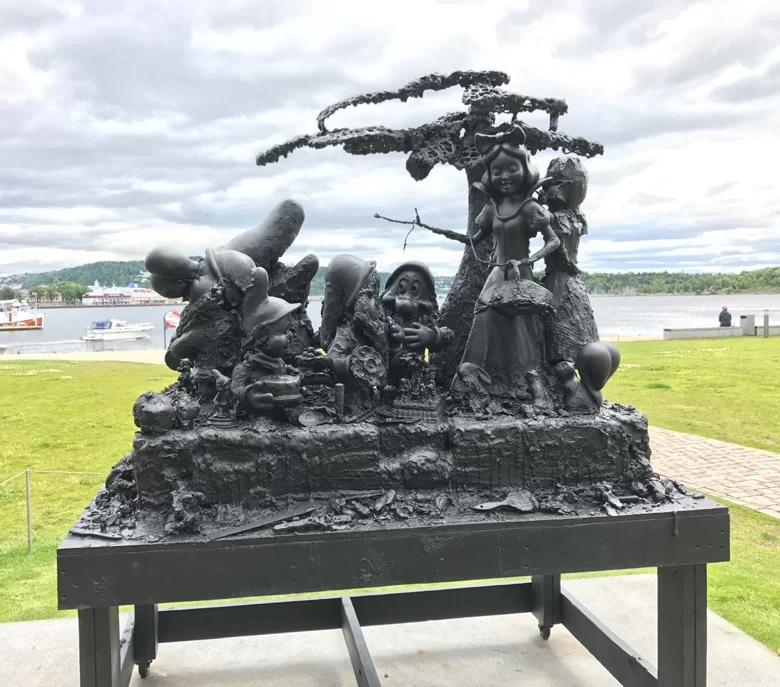
On a sunny day, it is one of the most pleasant stretches of waterfront in the city.
Beyond the Parks
While these four parks are the most defined sculpture destinations, they are far from the full story.
Oslo’s commitment to public art extends across the entire city. From Grünerløkka’s urban installations to statues in historic squares and modern works integrated into new residential developments, sculpture is part of the everyday landscape.
That integration reflects something broader about Norway. Public space matters here. Access matters. Whether you are a local resident, a curious tourist or simply someone passing through, you are free to engage with art in your own time and in your own way.
In many cities, world-class art requires advance booking and an entry fee. In Oslo, you can stumble across it while walking to dinner.
🇳🇴 Oslo Travel Resources
Make the most of your trip to Norway's capital city with our recommended travel resources:
👣 Things To Do In Oslo: My top recommendations.
🚲 Book Tours & Experiences: Led by local experts.
🛏️ Search and Book Hotels: Get the best rates in advance.
🚂 Day Trip Ideas: If you want to look beyond Oslo.
🚘 Car Rental in Oslo: Find the best rates in advance.
🤒 Travel Insurance: Make sure you're covered. Just in case.
Which Oslo Sculpture Park Should You Visit?
If you have time for only one, choose Vigeland Park. Its scale and ambition make it a must-see.
If you prefer contemporary art and panoramic views, head to Ekebergparken. If you are travelling with children, the Princess Ingrid Alexandra Sculpture Park offers a more playful experience. And if you are already by the waterfront, take a relaxed wander through Tjuvholmen.
Better still, treat them as part of a wider exploration. Oslo is a compact city, and it rewards walking. You might begin your day with the intensity of Vigeland, pause for lunch in the city centre, then finish with a quiet hillside stroll above the fjord.
However you approach it, Oslo’s sculpture parks reveal a side of the city that many visitors overlook. They show that art here is not ornamental. It is integrated. Democratic. Sometimes controversial. Often surprising. And always free.
If you're planning a trip to Norway's capital city, don't forget to check out our guide to the very best things to do in Oslo.


I loved soooooo muchhh this text. I will soon visit Norway and try to visit Oslo. Thanks.
What about doing an article on the WWII bunkers? I’ve photos of one I came across on a walk at Flam. The Tourist Information Centre didn’t seem to know about it. It appeared undisturbed with a chimney on the concrete centre table. I was told it is possible to take a WWII bunker tour in Norway.
There are not a lot of bunkers that you can access in Oslo proper. I know that there are a few and there is one that was turned into a church near Nordstrand. Most bunkers here have locks on them so not much to see except the entrance. There is a bunker/museum near Solli in Oslo but I never see it as being open its under a school and connects to a hotel. It was the headquarters of the General in charge of the troops in Norway.There are plenty of bunkers in other parts of Norway and coastal guns which were part of the Atlantic wall. There is a plane museum near the airport which has some German planes, weapons and vehicles
When we were in Oslo we admired a sculpture of an older lady sitting on a bench waiting for the bus. When I returned to Oslo I couldn’t find the sculpture to take a photo. Does anyone have an idea how I might get info on. The sculpture?