

Norway’s mountains, fjords and long coastline make flying a practical option for many journeys. Here’s how domestic air travel works, which airlines to use, and when you should still slow down.
Norway is a big country. That may sound obvious, but the scale often catches visitors by surprise once they start planning an itinerary.
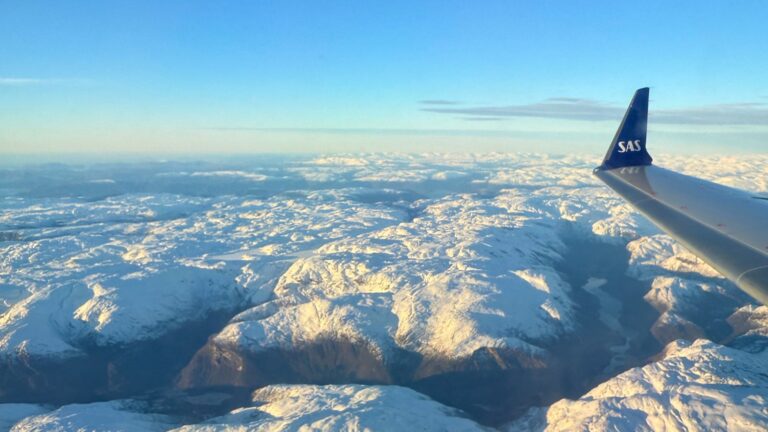
On a map, Bergen and Trondheim may not look especially far apart. In practice, driving between the two cities can take anything from 10 to 15 hours, depending on the route, ferry timetables, weather, road conditions, and how often you stop.
The journey by coach takes most of the day. The train is possible, but only by travelling via Oslo, which makes it a long and indirect journey. The coastal ferry is by far the most scenic option, but it takes almost two days.
A direct flight from Bergen to Trondheim takes less than one hour. Even when you add in airport transfers, security, boarding, and baggage collection, flying is still the fastest option by quite some distance.
That is why domestic flights play such an important role in Norway, not just for tourists, but for people who live and work here too.
When flying in Norway makes sense
For visitors with limited time, domestic flights can make a Norway itinerary much more realistic.
This is especially true if you want to combine southern Norway with the north. Travelling from Oslo, Bergen or Trondheim to Tromsø, Bodø, Lofoten, Alta, Kirkenes or Svalbard is usually much quicker and often more practical by air.
Flying can also make sense if your trip is focused on a specific destination rather than the journey itself. If you only have a week in Norway and your priority is to see Bergen, Ålesund, Tromsø or Lofoten, a domestic flight can help you avoid losing one or two full days to transport.
There is another important point. Norway’s road and rail network does not always connect the places you might expect. Fjords, mountains, winter weather and long distances make some journeys slow, even when the places look close on a map.
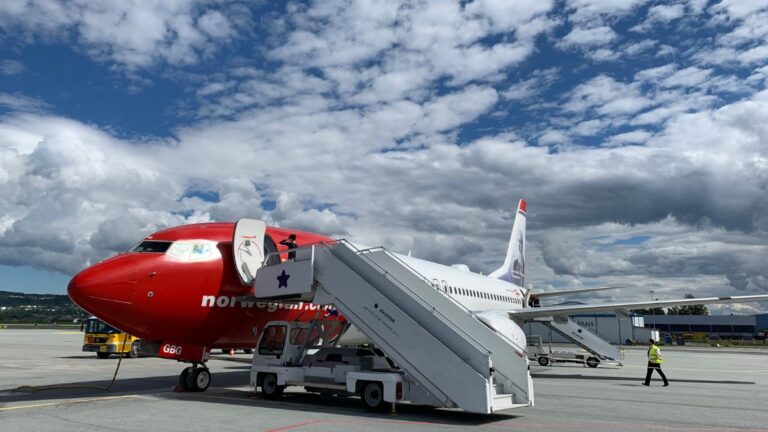
This is particularly noticeable in northern Norway. Distances are vast, the rail network stops at Bodø, and driving times can be much longer than visitors expect.
A flight from Oslo to Tromsø takes around two hours. Driving the same journey would take several days if you wanted to do it sensibly.
When not to fly
That said, flying is not always the best choice. In fact, whenever my consulting call clients ask me itinerary questions, I usually encourage them to at least consider slow travel.
Driving from Oslo to Bergen can take as little as six or seven hours in good conditions, but the journey can also become a memorable part of your trip. You could take two or three days to cross the mountains, visit the Hardangerfjord, stop at stave churches, or enjoy one of Norway’s scenic routes.
The train between Oslo and Bergen is another good example. It takes much longer than flying, but it crosses the mountain plateau and connects with the Flåm Railway and fjord excursions. For many first-time visitors, that journey is not wasted time. It is one of the highlights.
The same applies to the coastal route between Bergen and Trondheim, or Trondheim and Bodø. The coastal ferry is slow, but it offers a completely different perspective on Norway’s islands, skerries and small coastal communities.
Why Norway has so many airports
Norway’s geography explains the importance of domestic aviation.
The country is long, narrow and mountainous. Its coastline is cut by deep fjords and scattered with islands. Many communities are separated not by great distances on a map, but by water, mountains or roads that take a long time to navigate.
Because of this, Norway has invested heavily in a network of airports, including many small regional airports with short runways.
These airports are especially important in western and northern Norway, where flying can be the difference between a same-day journey and an overnight trip.
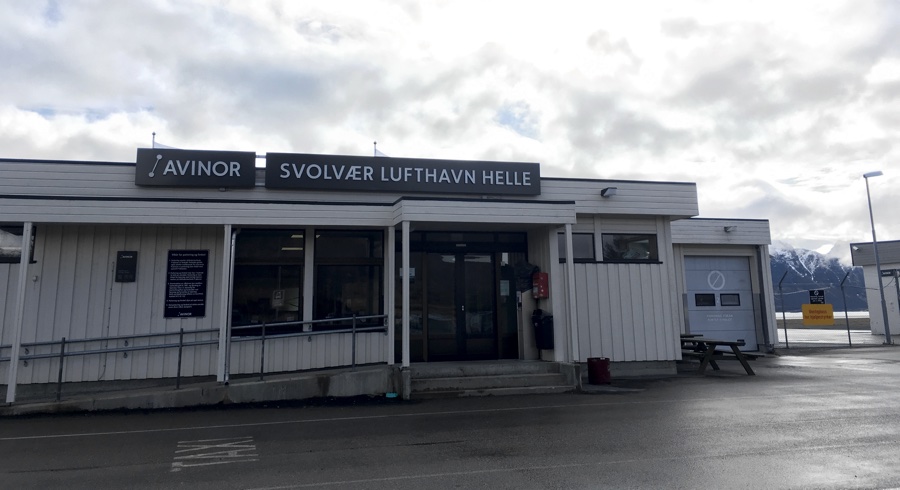
Most international visitors will only use the larger airports in Oslo, Bergen, Trondheim, Stavanger, Tromsø or Ålesund. But Norway’s domestic aviation network goes much deeper than that.
There are airports serving places such as Sogndal, Førde, Sandane, Ørsta/Volda, Brønnøysund, Sandnessjøen, Leknes, Svolvær, Røst, Hammerfest, Honningsvåg, Mehamn, Vadsø and Vardø.
For residents, these are part of everyday life, not novelties. They connect people to hospitals, education, work, family and national transport hubs.
The main domestic hubs
Oslo Airport at Gardermoen is the main hub for domestic flights in Norway. From Oslo, there are frequent departures to Bergen, Trondheim, Stavanger and Tromsø, along with regular flights to many other cities and towns.
For many visitors, Oslo Airport is the easiest place to connect from an international flight to a domestic one. However, it is not the only useful hub.
Bergen is important for flights along the west coast and to some smaller airports in western Norway. Trondheim is a useful hub for central Norway and onward travel north. Bodø is especially important for Lofoten and Helgeland, while Tromsø acts as a hub for much of Troms and Finnmark.
Stavanger, Ålesund, Kristiansand, Haugesund, Alta and Kirkenes also have important domestic and regional roles, depending on where you are travelling.
If you are planning a trip to Lofoten, for example, do not assume that the best option is always to fly to Tromsø. Bodø, Evenes, Leknes and Svolvær may all be relevant depending on your itinerary.
Domestic airlines in Norway
The main names to know are SAS, Norwegian, Widerøe and, on a smaller number of routes, DAT.
SAS and Norwegian operate many of the major trunk routes between the largest cities. These are the flights most visitors are likely to use, such as Oslo to Bergen, Oslo to Trondheim, Oslo to Stavanger, Oslo to Tromsø, or Bergen to Trondheim.

Widerøe is the name to know for regional Norway. It operates many routes to smaller airports, particularly in western and northern Norway. Widerøe aircraft are a familiar sight at short-runway airports where larger jets cannot operate.
DAT, short for Danish Air Transport, also operates a small number of domestic routes in Norway, including routes between Oslo and places such as Florø, Røros, Stord and Ørland.
SAS in Norway
SAS has long been one of the major players in Norwegian domestic aviation. It operates many services from Oslo and other Scandinavian hubs, including domestic flights to several Norwegian cities.
For travellers who collect airline points, SAS is also relevant because of EuroBonus. One recent change worth knowing is that SAS is now a member of SkyTeam rather than Star Alliance. That may matter if you are planning connections from international flights or hoping to use frequent flyer benefits.
On domestic routes, SAS is often strongest for business-heavy city pairs and connections through Oslo.
It is not always the cheapest option, but it can be competitive, especially when travelling with baggage or when flight times matter more than the lowest fare.
Norwegian in Norway
Norwegian is the other major airline on the busiest domestic routes. It is often thought of as a low-cost airline, although the final price depends on what you need.
As with many airlines, the cheapest fare may not include everything. Seat selection, checked baggage and flexibility can all change the final cost. When comparing Norwegian with SAS or Widerøe, check the total price rather than just the headline fare.
Norwegian is especially useful on major routes from Oslo to Bergen, Trondheim, Stavanger, Tromsø, Bodø and other larger destinations. It also has a large international network from Norway, which can make it convenient for visitors connecting from elsewhere in Europe.
A major change in the Norwegian aviation market came in 2024, when Norwegian completed its acquisition of Widerøe. For passengers, the two brands still appear separate, but the ownership change is important because it brings Norway’s biggest low-cost airline and its most important regional airline into the same group.
Widerøe and regional Norway
Widerøe is essential to understanding domestic flights in Norway. While SAS and Norwegian dominate many of the busiest routes between larger cities, Widerøe connects much of regional Norway.
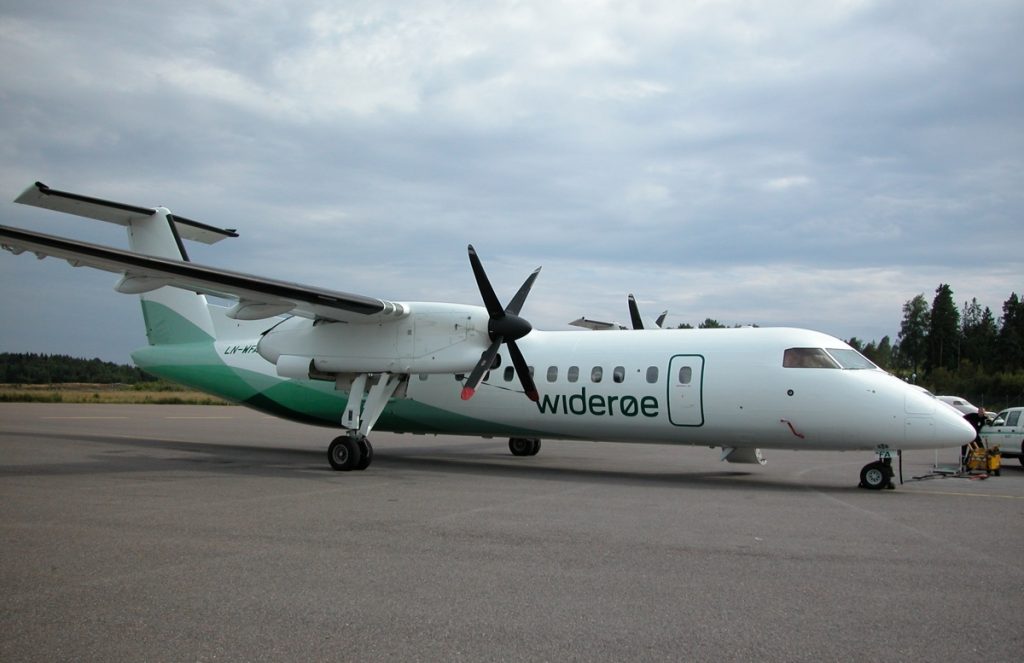
Its network includes many smaller airports where short runways and challenging weather are part of normal operations.
This is especially important in northern Norway. If you want to fly to places such as Leknes or Svolvær in Lofoten, Røst, Hammerfest, Honningsvåg, Mehamn, Vadsø or Vardø, Widerøe is likely to be involved.
Many of these routes are part of Norway’s public service obligation system. In simple terms, the government subsidises certain routes to ensure that remote communities have a reliable air service at reasonable prices.
For visitors, the practical takeaway is simple. If you are heading beyond Norway’s main cities, always check Widerøe. Sometimes the best itinerary is to fly SAS or Norwegian to a hub such as Bodø or Tromsø, then connect onto a Widerøe flight.
The Wizz Air and Flyr years
Norway’s domestic aviation market has seen plenty of turbulence in recent years.
In late 2020, Wizz Air entered the Norwegian domestic market with flights on major routes from Oslo, including Bergen, Trondheim and Tromsø. It later expanded its plans, but the experiment did not last.
Wizz Air pulled out of Norway’s domestic market in 2021, less than a year after entering it. Its brief presence is still worth mentioning because it showed how attractive, but also how difficult, Norway’s domestic market can be for new entrants.
Flyr was another short-lived attempt to shake up the market. The Norwegian airline launched in 2021, competing on domestic and European routes from Oslo. For a while, it offered another option on routes such as Oslo to Tromsø, Bodø, Bergen and Trondheim.
However, Flyr struggled financially and announced in January 2023 that it would file for bankruptcy. All flights and ticket sales were cancelled.
These examples are a useful reminder that Norway may appear to have strong demand for domestic flights, but the market is challenging. Costs are high, competition is intense on the main routes, and regional flying depends on a very different model from big-city aviation.
Flying to Lofoten
If you're planning to travel to Lofoten, understanding Norway’s domestic flight network can really help.
Many visitors first think of Tromsø when planning a northern Norway trip, but Tromsø is not especially close to Lofoten. It can work as part of a wider northern itinerary, but it is not the most direct gateway.
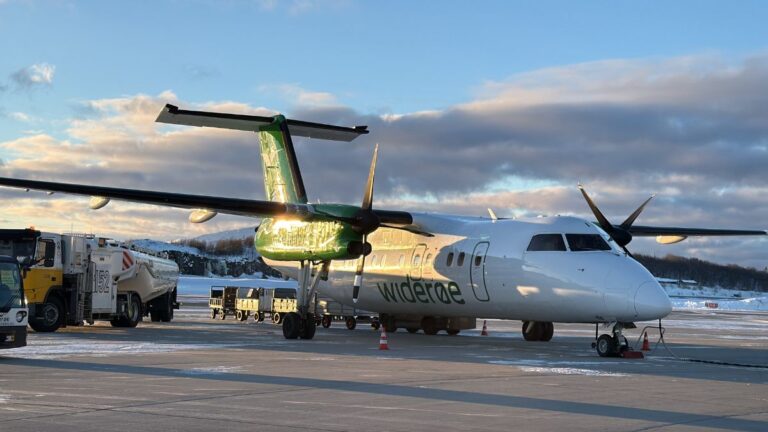
The main airport for many Lofoten trips is Leknes or Svolvær, both served by Widerøe, usually via Bodø. Another option is Harstad/Narvik Airport at Evenes, which is on the mainland and often used by travellers renting a car.
Bodø is also important. You can fly to Bodø from Oslo or Trondheim, then continue to Lofoten by Widerøe flight, ferry, or express boat depending on your exact plans.
This is a good example of why you should plan the route before booking flights. The cheapest flight to “northern Norway” may not be the best one for your itinerary.
Flying to Svalbard
Flights to Svalbard are a special case. Longyearbyen is part of Norway, but Svalbard is outside the Schengen Area. That means identity control applies when travelling to and from the archipelago, including for Norwegians.
Flights to Longyearbyen operate from Oslo and Tromsø, usually with SAS or Norwegian. The flight from Oslo takes about three hours, while the flight from Tromsø takes around an hour and a half.
If you are travelling to Svalbard, do not treat it like an ordinary domestic trip. Bring a valid passport or national ID card, and check the latest travel document requirements before departure.
Connecting from international to domestic flights
This is one of the most common things that trips up international visitors. If you arrive in Norway from abroad and connect to a domestic flight, the baggage and customs rules depend on your airport, airline, ticket and route.
At Oslo Airport, there is a domestic transfer system for some through-ticketed passengers, notably with SAS and Norwegian.
If your journey qualifies, and your baggage is tagged to your final destination in Norway, you can follow the signs for domestic transfer rather than collecting your bag in the arrivals hall.
However, this does not apply to every airline, every route, or every booking. It also only operates during set hours. If your journey does not qualify, you must collect your baggage, clear customs, and go through security again for your domestic flight.
At other Norwegian airports, the rules are generally simpler: if you arrive internationally and continue domestically, you should expect to collect your checked baggage and clear customs at the first airport in Norway.
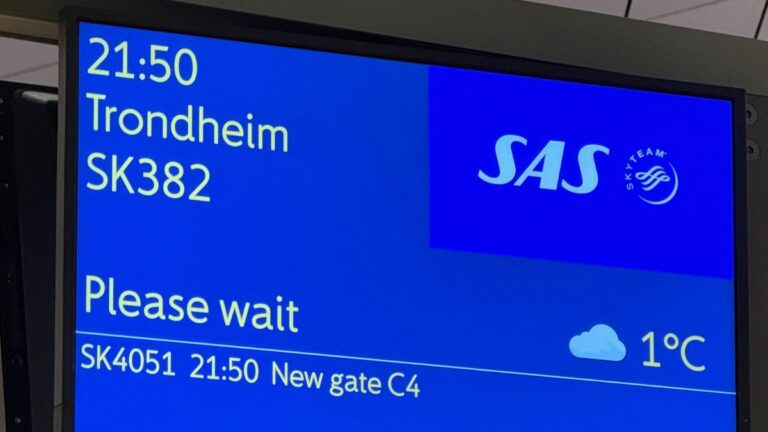
This is especially important if you have booked separate tickets. If your London to Oslo flight and your Oslo to Tromsø flight are on separate bookings, the airlines may not treat it as one journey. In that case, allow plenty of time between flights.
As a rule of thumb, do not rely on gate staff at your departure airport outside Norway to know the exact Norwegian transfer rules. Check with your airline and with Avinor before travelling.
Booking tips for domestic flights in Norway
Domestic flights in Norway can be good value, especially when booked in advance, but prices vary a lot.
The busiest routes between Oslo and Bergen, Trondheim, Stavanger and Tromsø usually have multiple departures each day, so it is worth comparing times as well as prices. Early morning and late afternoon flights can be more expensive because of business travel.
For regional flights, flexibility may be more limited. Smaller airports may only have a few departures per day, and some routes involve a connection at a hub such as Bodø, Tromsø, Trondheim or Bergen.
Always check baggage rules carefully. A cheap fare may look attractive until you add checked baggage, seat selection and other extras. This matters even more in winter, when you may be travelling with heavier clothes or outdoor gear.
If you are travelling in winter, build in extra time where possible. Norwegian airports are used to snow and ice, but storms, fog and strong winds can still cause delays, especially at smaller coastal and northern airports. The mandatory de-icing of planes can also cause knock-on delays.
Airport transfers
Most Norwegian airports are well connected to their nearest city or town, but the options vary.
Oslo Airport has excellent train connections to Oslo and other towns in eastern Norway. Bergen has the Bybanen light rail into the city. Trondheim Airport is served by train and bus. Stavanger, Tromsø, Bodø and Ålesund have airport buses, taxis or local transport options.
At smaller airports, transport can be more limited. In some places, taxis or rental cars may be the only practical options, especially if you arrive late in the evening.
Do not assume that every Norwegian airport works like Oslo or Bergen. Before booking a flight to a smaller airport, check how you will get from the airport to your accommodation.
Domestic flights are not the romantic way to travel in Norway. They will not give you the same experience as the Bergen Railway, a coastal ferry, or a slow road trip through the fjords. But they are often the most practical option.


Hi David,
Planning a camper trip from Manchester.
Hull – Rotterdam ferry.
Want to drive as far as the troll wall and leave our campers (Motor homes) at nearby airport ?
Then return flight to near Lofoten islands.
(Thinking of hiring a car to tour islands)
The flight back to airport and pick up campers – return.
Thanks for your help
Martin