
Scandinavia is one of those regions that feels familiar long before you ever visit. Denmark, Norway and Sweden share so much history and culture, yet remain distinct Kingdoms.
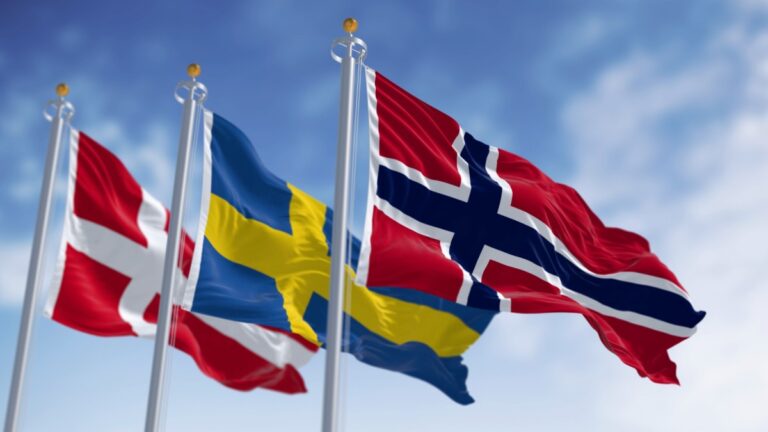
Denmark, Norway and Sweden share similar flags, closely related languages and a reputation for good design, outdoor living and high quality of life. From the outside, it is easy to assume they are essentially variations of the same place.
That assumption leads to a question that resurfaces from time to time: if Scandinavia is already so close, why isn’t it one country?
The idea is not new. In 2016, Norwegian hotel entrepreneur Petter Stordalen remarked, “Think what a great country we could have been together.”
It was a throwaway line, but it resonated because it captured something many people already feel. Scandinavia often looks and behaves like a unified region. But beneath the surface, the story is far more complex.
Denmark, Norway and Sweden are three distinct countries, each shaped by different historical experiences, geographies and national priorities. They have spent centuries moving in and out of unions, sharing rulers and institutions, yet never fully merging into a single nation. And perhaps most tellingly, they no longer feel the need to.
To understand why, it helps to look at how Scandinavia grew up together, why the three countries took different paths, and how a shared culture continues to bind them closely today.
Scandinavia and the Nordic Countries
Before going any further, it is worth clarifying what is meant by Scandinavia.
In English, the term Scandinavia is most commonly used to describe three countries: Denmark, Norway and Sweden. It is a cultural and historical term rather than a political one, rooted in shared language, history and long periods of union.
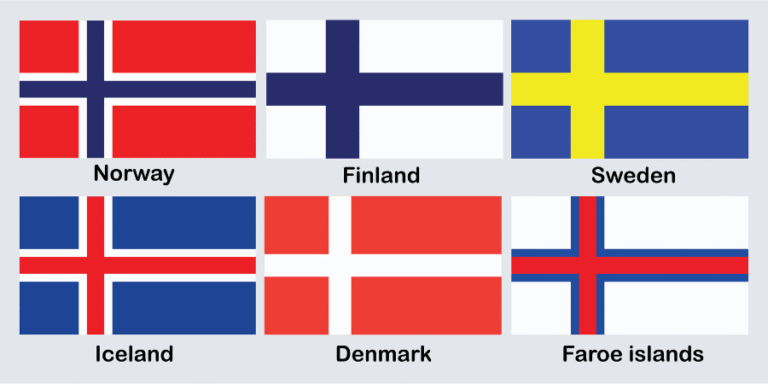
The term is often confused with the Nordic countries, which is a broader grouping. In addition to Denmark, Norway and Sweden, the Nordic countries include Finland and Iceland, along with the autonomous territories of Greenland, the Faroe Islands and the Åland Islands.
Interestingly, within the region itself, people are more likely to talk about the Nordics than Scandinavia. In Scandinavian languages, the word Norden is commonly used to describe the wider Nordic world.
This distinction matters. While the Nordic countries cooperate closely and share many values, this article focuses on Scandinavia specifically, where the historical, linguistic and cultural ties are especially deep.
Understanding that narrower scope helps explain both why Scandinavia feels so unified, and why later cooperation through Nordic institutions developed in the way it did.
Scandinavia Grew Up Together
For much of its history, Scandinavia was not a collection of clearly defined nation-states.
The region has been inhabited for thousands of years, but political borders shifted constantly. Kingdoms expanded and contracted, alliances formed and dissolved, and power moved between royal families rather than modern governments.
For long stretches of time, Denmark, Norway and Sweden were linked through personal unions rather than separated by firm borders.
The most famous example is the Kalmar Union, which from the late 14th century brought the three kingdoms under a single monarch. Later came the long Denmark–Norway union, followed by Norway’s union with Sweden, which lasted until 1905.

The details matter less than the pattern. Scandinavia spent far more time governed together, or at least entangled, than it did as fully independent states.
Institutions, elites and cultures overlapped. Languages evolved side by side. Trade, travel and family ties crossed what would later become national borders.
In other words, the Scandinavian countries did not simply neighbour each other. They grew up together.
That shared upbringing helps explain why the region still feels unusually cohesive today, even though the political unions are long gone.
Three Countries, Three Paths
Despite their shared past, Denmark, Norway and Sweden did not emerge from history in the same way. Geography, timing and circumstance pushed them along different paths, shaping three distinct national identities.
Denmark is often described as the quiet overachiever of Scandinavia. With relatively stable borders and one of Europe’s oldest continuous monarchies, Denmark developed a strong tradition of administration, planning and governance.
Over time, this produced a society that values efficient systems, functional design and institutions that simply work.
Norway followed a very different trajectory. Long ruled by others and independent only since 1905, it entered the modern era as the poorer sibling in Scandinavia. For much of the twentieth century, Norway was a country of fishing, shipping and self-sufficiency rather than wealth.
The discovery of oil in the North Sea transformed its economy, but more importantly, it transformed its self-confidence. Modern Norway is often described as reserved, even introverted, yet deeply self-assured. It is comfortable doing things its own way.
Sweden, by contrast, learned to operate at scale. Historically the dominant power in the region, it developed large institutions, strong industries and an outward-looking mindset.
Sweden became exceptionally good at exporting ideas, culture and products, from manufacturing and technology to music and fashion. It is the most internationally oriented of the three, and often feels the most global.
These different paths explain why Scandinavia can feel both familiar and varied at the same time. Shared roots produced common instincts, but different experiences shaped distinct national characters.
A Shared Culture
If history explains why Scandinavia is connected, culture explains why it still feels united today.
Across Denmark, Norway and Sweden, there is a shared set of values that visitors often notice instinctively. Scandinavian design is a good example. It is not really about furniture or aesthetics, but about values.
Function is prioritised over status. Simplicity matters more than decoration. Quality is expected to last. Design is meant to work for everyone.
The same philosophy appears in Scandinavian architecture. Many public buildings are designed to be used, not merely admired.
Oslo’s Opera House, for example, invites people to walk across its roof and experience the city and fjord together. Similar ideas can be found across the region, in libraries, cultural centres and public spaces that act as shared living rooms rather than monuments to power.
Nature also plays a central role. Across Scandinavia, the outdoors is not treated as a luxury or an escape, but as a normal part of everyday life.
Hiking, skiing and spending time outside are woven into daily routines, supported by traditions that emphasise shared access to nature rather than private ownership.
Underlying all of this is a strong emphasis on society working well as a whole. Trust in public institutions, high participation in communal life and a belief that systems should support everyone are common threads. Individual success is not discouraged, but it is balanced by a deep concern for social cohesion.
This shared culture does much of the work that political union might otherwise be expected to do.
Cooperation Without a Single State
After centuries of union and separation, Scandinavia did not drift apart. Instead, the countries made a deliberate choice to cooperate without becoming one nation.
Together with Finland and Iceland, they formed the Nordic Council, which provides a framework for cooperation on everything from labour mobility and education to culture and foreign policy.
Citizens can move, work and study across borders with remarkable ease. Professional qualifications are often recognised. Practical cooperation is deeply embedded.
What makes this arrangement notable is that it preserves national sovereignty while delivering many of the everyday benefits people associate with political union.
Borders remain, but they are light. Identities are protected, but collaboration is normal. Scandinavia did not fall apart when its unions ended. It evolved.
Why Scandinavia Never Became One Country
Given all of this, the question is no longer why Scandinavia failed to unite, but why it never needed to.
Each country has strong reasons to remain independent. Norway’s management of its oil wealth is closely tied to national sovereignty. Sweden’s size and population would dominate any unified state, making genuine balance difficult. Denmark’s orientation toward continental Europe gives it a different strategic focus.
More importantly, national identity still matters deeply. Shared culture does not erase the importance of self-determination. Scandinavia’s strength lies precisely in the fact that cooperation is chosen, not imposed.
The region already achieves many of the outcomes that political union promises: stability, mobility, trust and a high quality of life. Creating a single state would add complexity without clear benefit.
United Where It Counts
Scandinavia is not one country, and it never truly has been. Yet it feels unusually cohesive because of a shared past, related languages, common cultural values and a long tradition of cooperation.
Denmark, Norway and Sweden took different paths, but they did so from the same starting point, and they continue to walk alongside one another.
In the end, Scandinavia did not fail to unite. It simply found another way to stay together.


Check your facts… 21 million people wouldn’t make a united Scandinavia the 28th largest country by population!
Sorry, my bad!
It should have been 58th. Article now corrected.
Thanks for your help 🙂
Really interesting. Thanks!
“Either way, the only people who get to decide what happens are the people of the Scandinavian countries themselves.”
The people don’t decide anything. The political-economic class decides, then influences the people’s thought through mass media.
Personally I do see a powerful point in closer unification. I wouldn’t go as far as making a single country but I do think Nordic countries should share a common foreign policy and military and close integration in other fields, because we have so similar views and threats.
I’m very much wondering why we aren’t closer already (For example I can relate to a Norwegian as well as I can relate to another Finn, if you set aside the language issue.
– a Finn
As a Norwegian I have always dreamed of a united Scandinavia, and i can understand Swedish good enough to live their. This idea reminds me of the kalmar union and i think we could really improve Scandinavia as a whole if we united. I think we should start a petition to see if we could ever make it a reality and see what people think.
As a Swede, I am all for it. Start a petition. Anton for president (or emperor may sound cooler)!!!
Very interesting indeed. Who knows how the world looks like in 5-10-20 years, post COVID-19, Donald Trump, China, Brexit, etc (writing this early January 2021) Maybe we have developed different concepts of how a traditional nation is constructed. Maybe a thing as one parlament, one capital, etc has evolved….One thing is for sure…I can easily relate to both Norwegians and Swedes since I already have a lot of friends in both great nations. Bottom line…if we are to unite in the near future why not unite with very close friends?
One dane with an open mind
It’s not an new idea:-)
from 1820 to 1864 the idea was tested and different people supported it.
https://en.wikipedia.org/wiki/Scandinavism
İ think this opportunity before it will be useful both this countryes and World.Discussion between scandinavian countryes will be helpfull .
It would serve the people of all the Nordic countries well. It could start by implementing the things they already have in common and slowly working out differences and resolving them. I don’t understand why Norway’s sovereign wealth fund is a problem for other countries, it works very well for them and keeps them from incurring a huge debt liability like the Swedes have. Some of the objections to a united Nordic nation are not based on anything other than a false sense of pride, which is a detriment to all concerned.
Way late to the conversation here! LOL
As an outsider my input will not count for much , but the way I see it Scandinavia and the Nordics are working pretty well as they are.
I’m not sure that a big change is needed.
The most that I could suggest might be a formal but loose association that basically acknowledges what is already present. Maybe a Confederation or defense co-operative…but I think even that is mostly in place already.
Bottom line: “If it ain’t broke, don’t fix it!”