

Buying even the most everyday items can be confusing when moving to or visiting a different country. Here’s our complete guide to shopping in Norway.
From everyday groceries to furniture, electronics and household basics, shopping in Norway can be a surprisingly confusing experience when you first arrive.
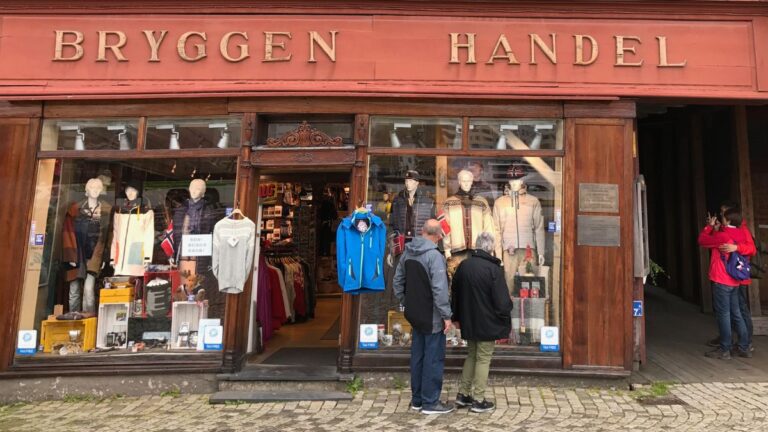
For visitors, there are different questions. Where can you buy a good Norwegian souvenir that isn't the usual tourist tat? Can you use cash? And why does the supermarket suddenly refuse to sell you that beer even though the store is still open?
Of course, we can't go too far into a guide about shopping in Norway without talking about the elephant in the room: cost.
Norway is an expensive country, especially if you're visiting with pounds, euros or dollars. A relatively high VAT rate is one contributing factor, although Norwegian salaries and the country's wider cost structure also play a role.
But once you understand where to shop, which loyalty schemes are worthwhile and how the rules work, things become much easier.
So, whether you're moving to Norway or just visiting, here's what you need to know.
Table of Contents
Paying for things in Norway
Let's start with the easy part. Cards are accepted almost everywhere in Norway.
Contactless payment is widespread, as are mobile wallets such as Apple Pay and Google Pay. For most visitors, there is little reason to carry large amounts of Norwegian cash.
But Norway isn't actually cashless. Consumers have a legal right to pay with cash in most staffed physical shops and other permanent sales premises, provided the amount is not more than NOK 20,000.
There are exceptions, including unmanned shops, vending machines and some other situations. In everyday life, though, it's entirely possible to spend weeks in Norway without handling a single banknote.
What is Vipps?
If you live in Norway, you'll quickly start hearing people say: I'll Vipps you.
Vipps is Norway's hugely popular mobile payment service. It is used for everything from splitting a restaurant bill between friends to paying at shops, donating money to charity and buying waffles at a school event.

Small businesses, sports clubs and market stalls often use Vipps too. For residents, it becomes part of everyday life very quickly. For tourists, however, Vipps is much less useful.
To sign up for Norwegian Vipps, you generally need Norwegian identification and BankID, a Norwegian phone number, a Norwegian bank account and a payment card issued by a Norwegian bank.
For tourists, things have improved considerably. Since February 2025, visitors from Sweden can use their Swedish Vipps app to pay participating Norwegian businesses, while visitors from Denmark and Finland can use MobilePay.
However, visitors from countries such as the UK and United States generally cannot register for Norwegian Vipps without Norwegian ID and banking credentials.
Some businesses using Vipps can also accept ordinary contactless card payments directly on their smartphones, making things easier for international visitors.
So if you're visiting Norway for a week, don't worry about not having Vipps. A normal payment card will be far more useful. One exception worth bearing in mind is small unmanned stalls or local events where Vipps may be the only obvious payment method.
VAT in Norway
Norway's standard VAT rate, known as merverdiavgift or mva, is 25%. Food has a lower VAT rate of 15%, while some other goods and services have different rates.
For ordinary shoppers, you don't generally need to think about this. The price displayed in a Norwegian shop is normally the price you actually pay, including VAT.
This is different from countries such as the United States, where sales tax can be added at the checkout.
Opening hours in Norway
Norwegian shop opening hours have become much more generous over the years.
Supermarkets in larger towns and cities commonly open early in the morning and remain open until late in the evening. Many regular shops open at around 10am and close somewhere between 6pm and 9pm, depending on their location.
Shopping centres typically stay open later than individual high street stores. Saturday hours are often shorter. The big difference comes on Sundays.
Sunday shopping in Norway
Most ordinary shops are closed on Sundays. That includes most shopping centres, clothes shops, electronics stores and large supermarkets.
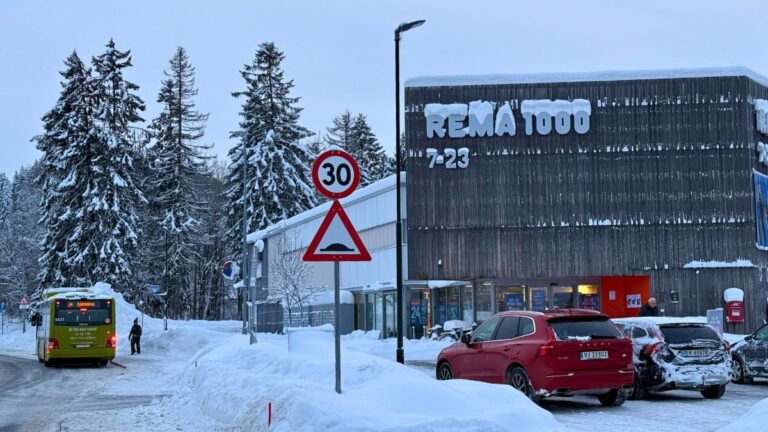
However, there are several exceptions. Small grocery shops with a sales area of no more than 100 square metres can open on Sundays, as can qualifying petrol stations and some other types of business.
This is why you'll sometimes see a supermarket that appears to be open on Sunday but only allows customers into a tiny section of the normal store. The main shop is closed, while a smaller legally compliant area remains open.
Convenience stores such as Narvesen and 7-Eleven are another option, although prices and selection aren't usually comparable with a full supermarket. I'd also recommend carefully checking sell-by and use-by dates here.
Some places officially designated as tourist destinations can have more generous Sunday opening.
That's why you'll sometimes find shops open on Sundays in popular resort towns while similar businesses elsewhere remain firmly closed. The safest advice is simple: don't leave any important shopping until Sunday.
How to read Norwegian opening hours
Norwegian opening hours are usually written using the 24-hour clock. For example: 10–20 (10–18)
Usually, the first set of hours refers to weekdays and the hours in brackets to Saturday. Sunday hours, if there are any, are often shown separately.
Other words you may also see:
stengt – closed
søndag – Sunday
hverdager – weekdays
lørdag – Saturday
åpent – open
Google Maps is useful, but around public holidays I would always check the shop's own website.
Supermarkets in Norway
If you're moving to Norway, one of the first things you'll want to figure out is which supermarkets are nearby.
Norway has several major grocery chains, but they fall into surprisingly few ownership groups. Rema 1000, Kiwi and Extra are among the chains most associated with discount grocery shopping.
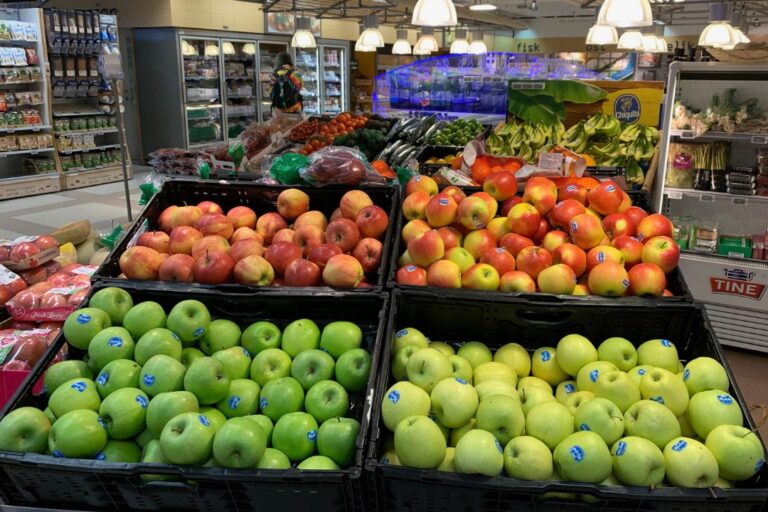
Meny generally offers a broader range, larger fresh food sections and more specialist products, but prices are usually higher.
Other familiar names include Coop Prix, Obs, Spar, Joker and Bunnpris. The exact mix varies depending on where you live. Smaller towns may have only one or two options, while cities offer much more choice.
Grocery stores can be surprisingly small
One thing that surprises some new arrivals is the size of Norwegian supermarkets. In residential areas, many are much smaller than the giant supermarkets familiar from the UK, United States or elsewhere in Europe.
Part of that reflects Norway's geography and settlement pattern. Lots of relatively small supermarkets are spread through residential neighbourhoods rather than everyone driving to one enormous out-of-town grocery store.
Larger stores certainly exist, especially Obs hypermarkets and bigger branches of Meny and other chains. But your nearest supermarket may have a noticeably limited range.
International food shops
One of the biggest improvements in Norwegian shopping over recent years has been the availability of international food.
Most large towns and cities now have independent grocery stores specialising in foods from Asia, the Middle East, Africa, Eastern Europe and elsewhere.
These can be fantastic places to shop. Not only will you find ingredients unavailable in mainstream supermarkets, but fresh herbs, spices, rice, lentils, beans and vegetables can often be considerably cheaper.
If you've recently moved to Norway and think a particular ingredient doesn't exist here, check an international supermarket before giving up.
Save money with supermarket loyalty schemes
If you live in Norway, grocery loyalty programmes are worth investigating. Rema 1000 has its own app with personal offers and bonus benefits. One longstanding benefit is bonus on fresh fruit and vegetables.
Kiwi is linked with the Trumf loyalty scheme, which is also used by other stores within the NorgesGruppen family. Coop has its own membership and bonus system.
These programmes change regularly, so I wouldn't choose where to live based on a supermarket app! But if you shop at the same chain every week, failing to sign up can mean leaving money on the table.
Weekly offers are also a much bigger part of Norwegian grocery shopping than many newcomers initially realise. Look for the kundeavis, the weekly promotional leaflet available digitally or in store.
Where do I buy everyday things in Norway?
This is something I wish I'd had explained to me when I first moved here. You need a USB cable, a frying pan, some storage boxes or a new duvet. Where do you go?
For general household goods, tools, small electronics and useful bits and pieces, stores such as Clas Ohlson, Jula and Biltema are good places to start. Europris sells a broad mix of household goods, cleaning products, seasonal items and food.
Normal is useful for toiletries, cleaning products, snacks and branded household products, while Nille focuses more on home accessories, candles, celebrations and seasonal products.
For furniture, the familiar IKEA is joined by Norwegian and Scandinavian chains including Bohus, Skeidar and JYSK. For consumer electronics and major appliances, Elkjøp and Power are two of the biggest names.
Once you've lived in Norway for a while, you'll build up your own mental map of which chain is best for what.
Shopping centres in Norway
Shopping centres are common throughout Norway. You'll find them in city centres, suburbs and out-of-town locations.
In smaller Norwegian towns, the local shopping centre can be the main retail hub, containing clothes shops, pharmacies, cafes, electronics stores and often a supermarket.
Typical opening hours might be around 10am to 8pm or 9pm on weekdays with shorter Saturday hours. Most are closed on Sundays.
In winter, there is an obvious advantage to the shopping-centre model. You can browse twenty stores without putting your coat back on.
Online shopping in Norway
Online shopping in Norway is now straightforward when buying from Norwegian retailers. Most major chains have online stores, and many offer click-and-collect. That's useful, because delivery to your actual front door isn't always the default.
Packages are commonly sent to a nearby collection point, often located inside a supermarket or convenience store.
Parcel lockers are also increasingly common. You'll receive a notification when the package is ready and then collect it using the relevant app, code or identification.
Norwegian delivery is generally reliable, although anyone moving from a country accustomed to same-day or next-day delivery everywhere may need to adjust their expectations somewhat!
Also, if you're wondering, Norway doesn't have its own Amazon store. You can order some products from Amazon's international sites, but availability and shipping vary enormously.

But before ordering anything from abroad, whether from Amazon or elsewhere, check whether the retailer handles Norwegian VAT through the VOEC scheme. That can make a substantial difference to the experience.
The VOEC system explained
VOEC stands for VAT On E-Commerce. For most eligible products costing less than NOK 3,000 per individual item, foreign online retailers registered with VOEC charge Norwegian VAT when you make the purchase.
That means the tax side is dealt with at checkout and the package should normally arrive without an additional VAT bill or customs handling charge.
The NOK 3,000 limit applies to each individual item, not necessarily to the entire parcel. There are exceptions to the scheme, including food, alcohol, tobacco, medicines and some goods subject to special taxes.
If you regularly shop from abroad, checking whether a retailer is VOEC-registered is well worth doing.
What happened to the NOK 350 import limit?
If you've lived in Norway for a long time, you may remember the old rule that allowed low-value packages from abroad to enter free of Norwegian VAT.
Forget it. The NOK 350 exemption has been abolished. VAT is now payable on purchases from abroad regardless of how cheap the item is.
If the store is VOEC-registered, that VAT is normally taken care of when you buy.
If it isn't, you can face Norwegian VAT when the package enters the country, along with possible customs duty and a handling or customs-clearance charge from the delivery company.
Those fees can make a cheap overseas purchase suddenly look much less attractive.
Do you pay customs duty on everything?
No. This is another common misunderstanding. Norwegian VAT and customs duty are two different things. VAT applies widely to imported goods. Actual customs duty applies only to certain types of products.
Some clothing, for example, can attract customs duty, while many other consumer products do not. Food and other regulated products have their own rules.
When ordering something expensive or unusual from abroad, check the Norwegian Customs website before clicking buy.
Norwegian consumer rights
Norway has relatively strong consumer protection. One particularly useful word to learn is reklamasjon.
This is not simply a shop's optional warranty. If a product has a fault for which the seller is responsible, Norwegian consumer law gives you a statutory period in which you can complain.
For purchases from a professional seller, that period is generally two years, or five years for products expected to last substantially longer.
Furniture, mobile phones and major household appliances are examples of products that can fall into the five-year category. That can apply even when the manufacturer's commercial guarantee has expired.
Keep some evidence of your purchase, although an original paper receipt is not necessarily the only acceptable proof.
Can you return something because you changed your mind?
This is where things are slightly different. If you simply change your mind about something bought in a physical shop, you don't automatically have a legal right to return it for a refund.
Many stores offer exchanges or returns as a customer-service policy, but the conditions are set by the retailer. Keep the receipt and check the rules.
For online shopping, consumers normally have a 14-day right of withdrawal under Norway's distance-selling rules, although exceptions apply.
So don't confuse bytterett—the shop's exchange policy—with reklamasjon, your rights when something is actually wrong with the product.
Buying alcohol in Norway
Alcohol shopping catches out an enormous number of visitors. Ordinary supermarkets can sell alcoholic drinks containing up to 4.7% alcohol by volume. That covers most mainstream Norwegian beers and some ciders.
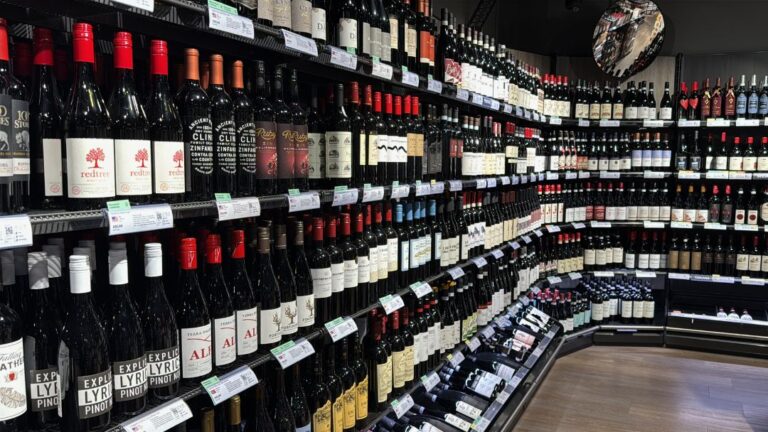
Anything stronger must generally be bought from Vinmonopolet, Norway's state alcohol retailer. That means you won't ever find wine, spirits and stronger beers stacked next to the groceries in your local supermarket.
Vinmonopolet stores are found throughout the country and also offer an extensive ordering system.
Alcohol sales stop before the supermarket closes
Here's the important part. A supermarket may remain open until 11pm, but that doesn't mean it can sell beer until 11pm. Alcohol sale times are set by municipalities within national limits.
The latest permitted time is normally 8pm on weekdays and 6pm on Saturdays and other days before Sundays or public holidays. Local rules can require sales to stop earlier.
Supermarkets cannot sell alcoholic drinks on Sundays and public holidays, nor on May 1 or Norway's Constitution Day on May 17.
Vinmonopolet has its own opening hours and typically closes earlier than the supermarket. Always check before making a last-minute dash for a bottle of wine.
Pharmacies and medicines
Pharmacies are called apotek in Norwegian. You'll find them in most towns and shopping centres. Some basic over-the-counter medicines can also be sold outside pharmacies, including in supermarkets, but the range is restricted.
For anything more specialised, head to an apotek. Norwegian pharmacies can feel expensive, especially for toiletries and products that you might buy cheaply in a supermarket or chemist elsewhere.
For ordinary shampoo, toothpaste, skincare and other everyday items, compare prices with supermarkets and chains such as Normal before buying at the pharmacy.
Second-hand shopping in Norway
Norway has a thriving second-hand market. For people moving into an unfurnished apartment, it can save an enormous amount of money.
FINN.no is the giant of Norwegian online classifieds. People use it for almost everything: furniture, electronics, bicycles, sports equipment, cars and even homes.
Many items are offered cheaply, and some are simply listed as gis bort—given away for free—provided you're willing to collect them.
For physical second-hand shopping, Fretex, operated by the Salvation Army, has stores in many parts of the country. Local flea markets and charity shops are also worth seeking out.
Finding bargains in Norway
Norway isn't exactly famous as a bargain-shopping destination, but sales do exist. Useful Norwegian words include:
salg – sale
tilbud – special offer
rabatt – discount
medlemspris – member price
halv pris – half price
kupp – bargain
January is traditionally a strong period for sales, while Black Week and Black Friday have become firmly established in Norwegian retail.
There are also frequent seasonal and end-of-line promotions. For expensive electronics or household purchases, don't assume the first “sale” price you see is genuinely exceptional. Compare prices between retailers first.
Don't forget bottle deposits
Here's a small Norwegian shopping habit that quickly becomes second nature. Many drinks bottles and cans carry a pant deposit.
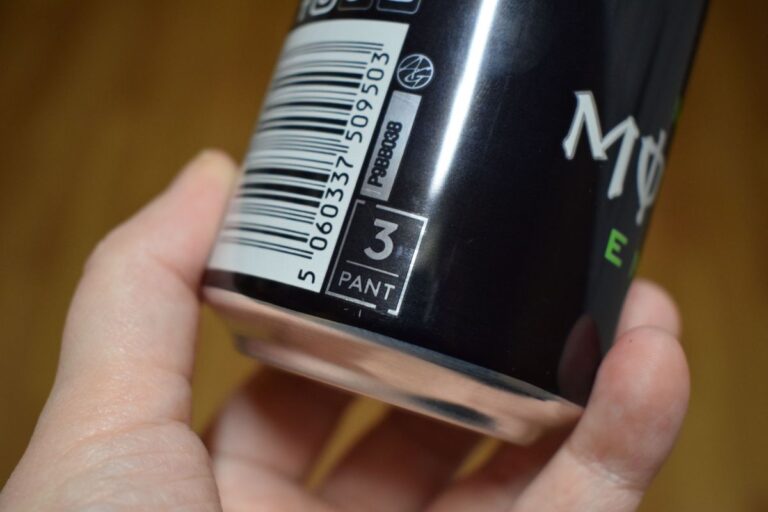
You pay the deposit when buying the drink and get it back when you return the empty container.
Most supermarkets have a machine near the entrance where you insert the bottles and cans. The machine prints a voucher that can be deducted from your grocery bill or usually exchanged for cash.
You'll regularly see people arriving at the supermarket carrying bags full of empty bottles. That's perfectly normal.
Buying souvenirs in Norway
At popular tourist destinations, you won't have any trouble finding a shop selling Norwegian souvenirs. The harder part is finding something you actually want.
Troll figurines, Viking helmets and moose-themed objects are everywhere, but if you're looking for something genuinely connected with Norway, there are much better options.
A Norwegian wool sweater is the classic choice. Brands and producers range from traditional knitwear to modern outdoor clothing, while the famous Marius pattern remains instantly recognisable.
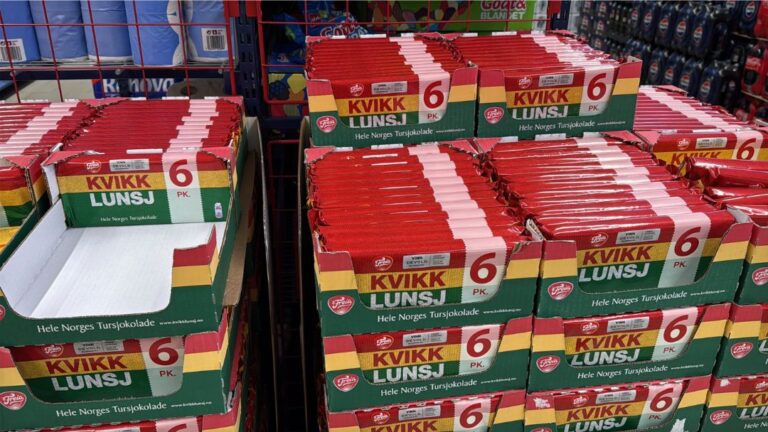
Norwegian chocolate is another easy gift. Freia is the obvious mainstream name, and a supermarket will usually offer a much better price than a souvenir shop.
Other possibilities include Norwegian wool products, locally produced food, craft items, outdoor equipment and the humble ostehøvel, or cheese slicer.
The modern cheese slicer was invented by Norwegian carpenter Thor Bjørklund in the 1920s and remains a fixture in almost every Norwegian kitchen.
Museum shops and local craft stores are often better places to look for distinctive gifts than the most obvious tourist souvenir outlets.
Tax-free shopping for visitors
If you're resident outside Norway and take goods with you when leaving the country, you may be able to reclaim some of the Norwegian VAT.
Not every shop participates. Some retailers work with private tax-refund companies, while there is also an official export-documentation route in certain circumstances.
The rules vary depending on where you live, with special arrangements applying to residents of Sweden, Denmark and Finland.
If you're planning an expensive purchase, ask the shop before paying whether tax-free shopping is available and what paperwork you'll need. Don't assume you can simply turn up at the airport later with a receipt and claim the VAT back.
Shopping in Norway gets easier very quickly
Shopping is one of those everyday things that makes moving abroad feel surprisingly complicated.
For the first few weeks, you may have no idea where to buy something simple, wonder why everything is closed on Sunday, and stare at a parcel notification trying to work out which supermarket now has possession of your new headphones.
Then, suddenly, it becomes normal. You'll know which supermarket has the best selection, which shop sells that oddly specific household item and which loyalty apps are actually worth opening.
You'll pay with your phone, return your bottles for pant, collect your online shopping from a locker and remember not to try buying beer at 8.05pm. At that point, congratulations. You've learned how to shop in Norway.

16 = 4pm