
Set off on a grand Scandinavian road trip from Stockholm, exploring Norway’s fjords, Sweden’s heritage, and Denmark’s vibrant cities, experiencing the best of the region in just three weeks.
A Scandinavian road trip sounds simple enough on paper. Pick up a rental car, follow the coast, cross a few borders, and tick off three countries in one memorable journey.
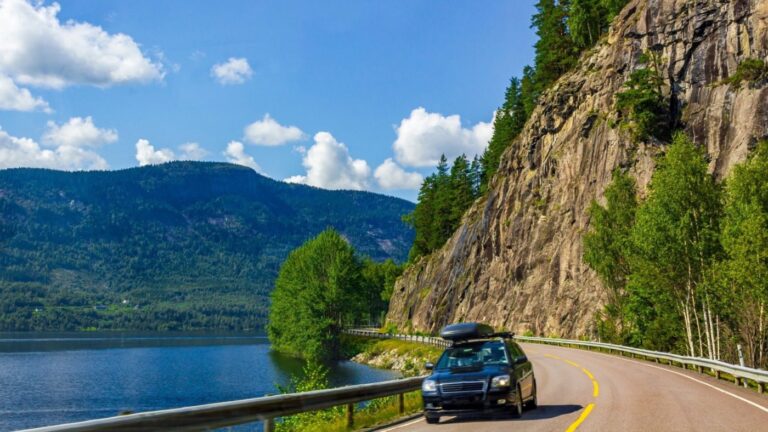
In reality, Scandinavia rewards careful planning. Distances are longer than they look, especially in Norway, where fjords, mountains, ferries, tunnels and winding roads can turn a short-looking route into a full travel day.
This 21-day itinerary is designed to balance ambition with realism. It begins and ends in Stockholm, includes Sweden’s two biggest cities, takes in Oslo and some of Norway’s most famous fjord landscapes, then uses the overnight ferry from Oslo to Copenhagen before returning to Sweden by way of the Øresund Bridge.
It is not a route for seeing everything. Scandinavia is far too big for that. Instead, this itinerary focuses on the classic first-time highlights while leaving enough breathing room to enjoy them.
Before setting off, check the conditions of your car rental agreement carefully. Not all rental companies allow international driving, and some require advance permission to take a car on a ferry.
You should also check mileage limits, toll handling, ferry fees, one-way charges if relevant, and whether your insurance remains valid in all three countries.
🚗 Road Trip Travel Resources: Car Rental from Oslo – Car Rental from Stockholm – Travel Insurance – Road Trips in Norway
This itinerary is best suited to late spring, summer or early autumn. Several of Norway’s most scenic mountain roads are seasonal, and even in summer they can close temporarily because of bad weather, rockfall risk or maintenance.
Days 1-2: Stockholm
Begin in Stockholm, one of Europe’s most attractive capitals and a fitting introduction to Scandinavia. Built across islands and waterways, the Swedish capital combines royal history, maritime heritage, design, food and relaxed urban life.
Spend your first day without the car if possible. Parking in central Stockholm can be expensive and unnecessary, while public transport is efficient.
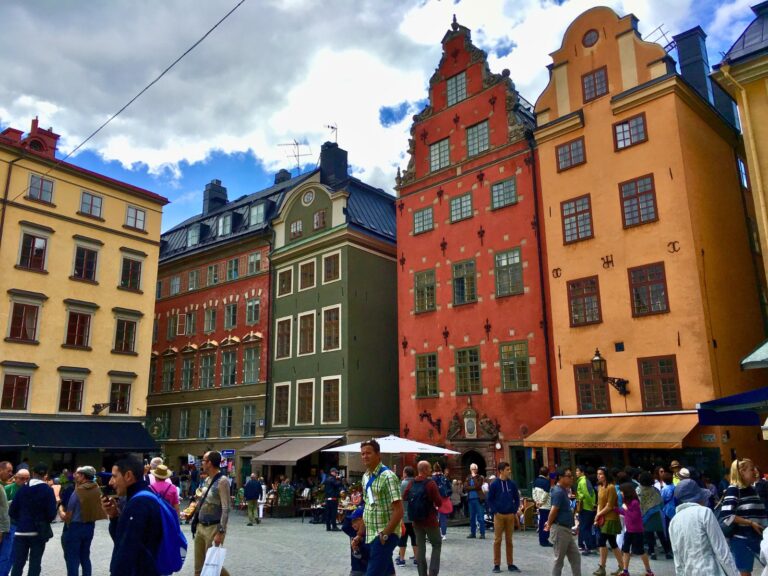
Start in Gamla Stan, the compact old town of narrow lanes, colorful buildings and busy squares. The Royal Palace, Stockholm Cathedral and the waterfront around Skeppsbron make this the obvious place to begin.
On your second day, focus on one or two major museums rather than trying to see them all. The Vasa Museum is the standout choice for many first-time visitors, while the Nordic Museum, ABBA The Museum and Skansen are all nearby on Djurgården.
In good weather, allow time simply to walk by the water or take a short boat trip to understand the city’s island setting.
Day 3: Uppsala Day Trip
Uppsala makes an easy day trip from Stockholm and adds useful historical depth to the itinerary. The city is best known for its cathedral, university heritage and its connections with Sweden’s early history.
The most important stop is Gamla Uppsala, just outside the modern city center. Its royal burial mounds are among Sweden’s most atmospheric ancient sites and help tell the story of the region before the medieval city developed.
Back in central Uppsala, follow the Fyris River through the city and visit Uppsala Cathedral, the largest church in the Nordic region. Rune stones around the cathedral and university area offer a tangible link to the Viking Age, while the city itself is compact enough to explore at an easy pace.
Return to Stockholm for the night, or stay in Uppsala if you prefer a quieter evening before beginning the westward drive.
Note that you could wait until this point to rent a car. Stockholm is easy to navigate on foot or public transport and Uppsala is a straightforward train journey. Our friends at Discover Cars (affiliate link) offer car rental deals from Stockholm.
Day 4: Stockholm To Gothenburg
The drive from Stockholm to Gothenburg is one of the simpler long-distance legs of the trip. It is mostly motorway or good main road, but it is still a substantial journey, so treat this as a transfer day rather than a sightseeing day.
A useful stop is Örebro, roughly halfway between the two cities. Its castle and riverside setting provide a pleasant break from the road. Alternatively, continue toward Lake Vänern or make a short detour depending on your interests and the time available.
Arrive in Gothenburg by late afternoon or early evening. Sweden’s second city has a different feel from Stockholm: more maritime, less formal and strongly connected to the west coast.
Day 5: Gothenburg
Gothenburg deserves at least one full day. The city is known for seafood, canals, trams, cafés and a more relaxed atmosphere than the capital.
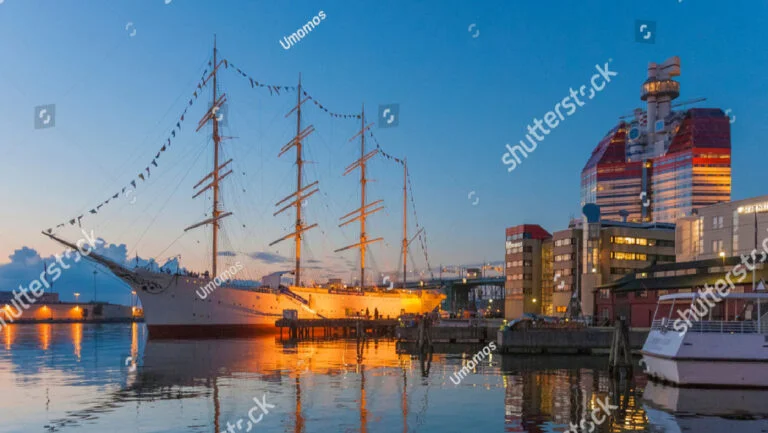
Start with the historic Haga district, known for its wooden houses, independent shops and oversized cinnamon buns. From there, continue toward the city centre, the market hall and the canals.
If the weather is good, consider a boat tour or a trip out toward the southern archipelago, where car-free islands offer a taste of Sweden’s coastal life.
For families, Liseberg amusement park can easily fill an afternoon or evening. For food-focused travelers, this is one of the best stops on the route for seafood.
Day 6: Gothenburg To Oslo
The drive from Gothenburg to Oslo is straightforward by Scandinavian standards. The route follows the west coast north and crosses into Norway at Svinesund. There is no car ferry on this main route, but there are tolls and border rules to be aware of.
Because both Sweden and Norway are part of the Schengen Area, there are not usually formal passport checks in the way visitors may expect at some international borders. However, travelers should still carry passports or national ID, and rental car documents should be kept handy.
Aim to arrive in Oslo by mid-afternoon. As in Stockholm, you do not need the car for most central sightseeing, so choose accommodation with parking or consider staying slightly outside the centre if driving and parking costs are a concern.
Day 7: Oslo
Oslo is compact for a capital, but its attractions are spread out along the waterfront, on the Bygdøy peninsula and into the surrounding hills.
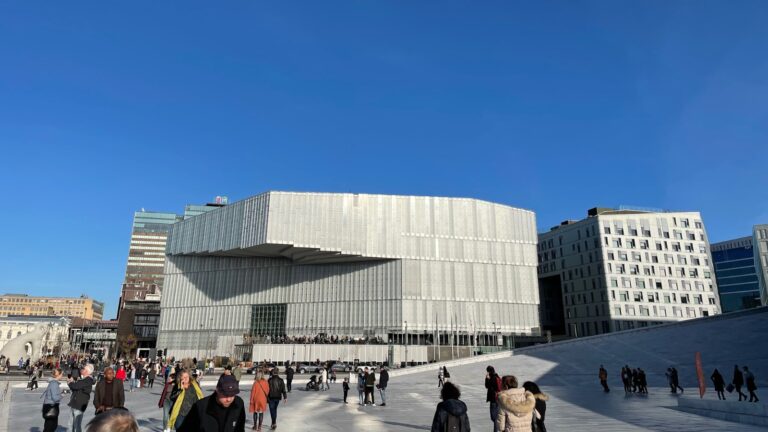
For a first visit, focus on the harborfront and museum choices. The Opera House, Deichman Bjørvika library, MUNCH and the waterfront promenade give a good sense of modern Oslo.
The National Museum is the obvious choice for art and design, while the Fram Museum and Norwegian Folk Museum on Bygdøy are better choices for those interested in polar exploration or cultural history.
Vigeland Sculpture Park is another classic stop, especially if the weather is dry. In the evening, the areas around Aker Brygge, Tjuvholmen, Grünerløkka and Bjørvika all offer different dining atmospheres.
Day 8: Oslo To Flåm Or Aurland
This is the day the Norwegian landscape begins to dominate the itinerary. The drive from Oslo to Flåm or Aurland takes you from the capital through inland valleys, mountain scenery and finally down toward the fjord region.
Allow most of the day for this journey. Although the distance is not extreme, Norwegian roads are slower than many visitors expect. There are tunnels, mountain sections and plenty of places where you will want to stop.
Flåm is the better-known base, thanks to the Flåm Railway and fjord tours. Aurland, a short drive away, is quieter and can be a better overnight choice for travelers who prefer a calmer atmosphere.
The Stegastein viewpoint above Aurland is one of the easiest big-view stops in the fjord region, but the access road is narrow and winding, so take it slowly.
Day 9: Flåm, Aurland And The Nærøyfjord
Use this day to slow down. After several city and transfer days, the fjords deserve time.
The classic choice is a fjord cruise on the Aurlandsfjord and Nærøyfjord, often combined with the Flåm Railway or a shuttle bus depending on the direction of travel.
The Nærøyfjord is one of the narrowest and most dramatic branches of the Sognefjord, and seeing it from the water gives a very different perspective from the road.
If you prefer to stay on land, spend time in Aurland, visit the Stegastein viewpoint, or explore short walks in the area. This is also a good place to build in flexibility. Bad weather is common in western Norway, and a slower day gives you room to adjust.
🚗 Road Trip Travel Resources: Car Rental from Oslo – Car Rental from Stockholm – Travel Insurance – Road Trips in Norway
Day 10: Flåm To Bergen
The drive from Flåm to Bergen is relatively short compared with other Norwegian legs of this itinerary, but do not rush it. The route passes through some striking mountain and fjord scenery before reaching Norway’s second city.
If you did not take the Flåm Railway the previous day, consider doing so in the morning and driving to Bergen later. Otherwise, make your way west and aim to arrive in Bergen with enough time for an evening walk around Bryggen and the harbor.
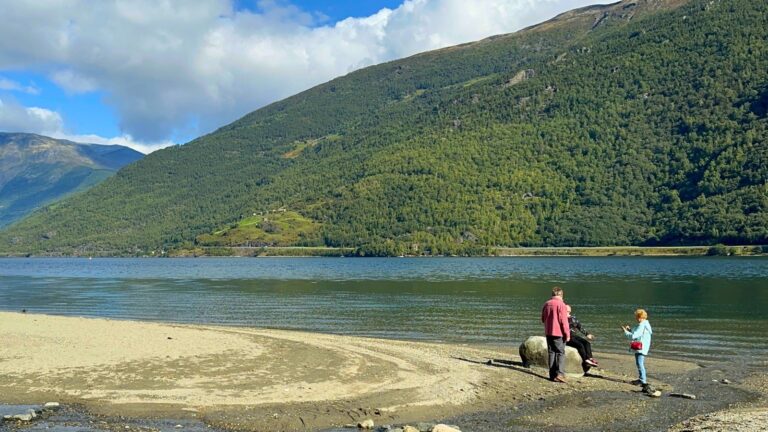
Bergen is one of the best places on the route to park the car and forget about it for a while. The historic centre, harbor, fish market, funicular and many restaurants are all easy to reach on foot.
Day 11: Bergen
Bergen is often described as the gateway to the fjords, but it is much more than a transit point. The old Hanseatic wharf at Bryggen, now a UNESCO World Heritage Site, remains the city’s most recognizable sight.
Take the Fløibanen funicular to Mount Fløyen for views over the city, islands and surrounding mountains. In good weather, you can walk back down or continue along easy trails at the top.
In poor weather, lean into Bergen’s indoor attractions, cafés and museums. This is also a sensible place to do laundry, restock supplies and reset before the more demanding driving days ahead.
Day 12: Bergen To Loen Or Stryn
The drive north from Bergen toward Loen or Stryn is long but rewarding. It introduces a more rural west coast environment, with fjord crossings, small communities and mountain views.
The most direct route north on the E39 involves car ferries, including the Lavik-Oppedal crossing over the Sognefjord and the Lote-Anda crossing farther north.
These are regular public road ferries rather than sightseeing cruises, but they are part of the experience of driving in western Norway. You usually drive to the quay, queue, board when directed and pay through the vehicle’s toll/ferry system.
Loen and Stryn both work as overnight bases. Loen is known for the Loen Skylift, nearby lakes, and onward access to Olden and the Briksdal Glacier, while Stryn is a practical small-town base with good access toward Geiranger.
Day 13: Loen Or Stryn To Geiranger
This is one of the most scenic days of the trip, but it is also one of the days that needs the most careful planning.
There are two main ways to approach the Geirangerfjord from the Stryn and Hellesylt area. One option is to drive via the mountain road toward Geiranger, if open and conditions are suitable. Another is to take the scenic car ferry from Hellesylt to Geiranger, which turns the transfer into a fjord experience.
The Hellesylt-Geiranger ferry is not the same as a frequent commuter ferry. It is a scenic seasonal service, and reservations are strongly recommended in the main travel season. The crossing takes just over an hour and passes through one of Norway’s most famous fjord landscapes.

Once in Geiranger, avoid overloading the rest of the day. Visit Flydalsjuvet viewpoint, Ørnesvingen viewpoint if practical, or simply walk around the village and enjoy the setting.
Geiranger is small and very busy when cruise ships are in port, but the landscape remains extraordinary.
Day 14: Geiranger To Åndalsnes
The drive from Geiranger to Åndalsnes is one of the great road journeys in Norway, but it comes with important caveats. This route involves narrow roads, steep climbs, mountain weather and seasonal closures.
Leaving Geiranger, the road climbs to Ørnesvingen before continuing toward Eidsdal. From Eidsdal, take the short car ferry across to Linge, then continue toward Valldal and Trollstigen.
Trollstigen is one of Norway’s most famous mountain roads, known for its hairpin bends and dramatic viewpoint. However, it closes every winter, can close at short notice in bad weather, and has had periods of closure because of rockfall risk.
Check the official road status before setting out and be prepared to reroute if necessary.
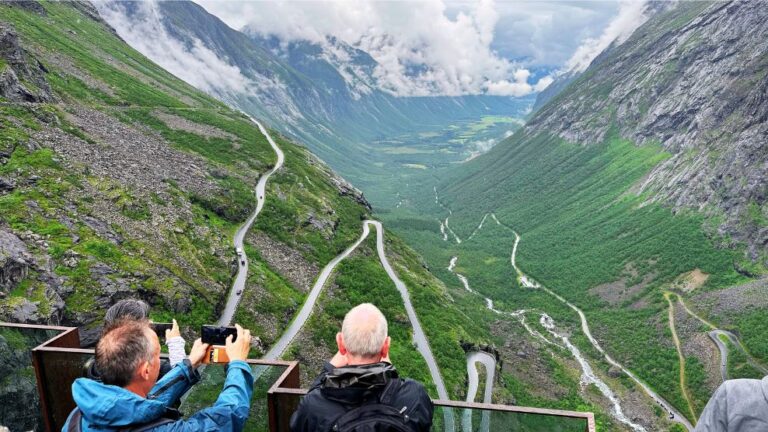
If Trollstigen is open and conditions are good, continue down to Åndalsnes for the night. The town is a superb mountain base, with the Romsdal Gondola a quick way to enjoy the best views.
Day 15: Åndalsnes To Oslo
This is a long transfer day back to Oslo, so start early and keep the plan simple. The route through the valleys of eastern Norway is scenic in a gentler way than the previous few days, with mountains gradually giving way to farmland and forest.
Lillehammer makes the most obvious stop along the way. The town hosted the 1994 Winter Olympics and remains a pleasant place for a break, especially around the open-air Maihaugen museum or the Olympic ski jump area.
Continue to Oslo for the night. This gives you a buffer before the ferry to Denmark and reduces the risk of missing the sailing because of weather, road closures or delays in the mountains.
Day 16: Oslo To Copenhagen By Overnight Ferry
Rather than driving the long way south through Sweden and across Denmark, take the overnight ferry from Oslo to Copenhagen. This turns a demanding transfer into part of the holiday and gives you a break from the road.
The ferry takes cars and normally sails overnight, arriving in Copenhagen the following morning. Book ahead, especially if traveling with a vehicle in summer. Check vehicle height limits, cabin options and arrival procedures before confirming.
This is also a good point in the trip to reset. After the fjords and mountain roads, an evening at sea can feel surprisingly welcome.
Days 17-18: Copenhagen
Arrive in Copenhagen in the morning and give yourself the rest of the day to explore without rushing.
Start with the central waterfront, Nyhavn and the area around Kongens Nytorv. From there, you can walk toward Amalienborg Palace, the Marble Church and the harborfront. If this is your first time in Copenhagen, a canal boat tour is a useful way to understand the city’s layout.

In the evening, focus on food. Copenhagen is one of Europe’s great culinary cities, but it does not have to mean a high-end tasting menu. Bakeries, food halls, smørrebrød restaurants and casual neighbourhood spots are all part of the experience.
Use your second Copenhagen day for one or two deeper experiences. Tivoli Gardens is the classic choice, especially for first-time visitors.
Design and architecture fans may prefer the Danish Architecture Centre, Designmuseum Danmark or simply exploring neighborhoods such as Vesterbro, Nørrebro and Christianshavn. After many days on the road, it may be better to keep this as a low-pressure city day.
Day 19: Copenhagen To Malmö And Lund
Leave Copenhagen by crossing the Øresund Bridge to Sweden. The bridge and tunnel link is one of Scandinavia’s great pieces of modern infrastructure and makes the return to Sweden quick and memorable.
Malmö is just across the water and works well as a short stop. The old town, waterfront and Turning Torso area give a useful contrast with Copenhagen. Nearby Lund is smaller, older and arguably more atmospheric, with its cathedral, university setting and walkable center.

Stay overnight in Malmö, Lund or somewhere farther north depending on how much driving you want to do the next day.
Day 20: Southern Sweden To Kalmar Or Linköping
The return drive to Stockholm is too long to combine comfortably with sightseeing, so break it up.
Kalmar is a strong choice if you want coastal history, a castle and the option of a short visit to Öland. Linköping is more direct and practical, with the open-air museum Gamla Linköping offering a pleasant final cultural stop.
This day is deliberately flexible. By this point in a three-week road trip, travelers often appreciate having a lighter plan. Choose the overnight stop based on your departure time, interests and how much energy remains.
🚗 Road Trip Travel Resources: Car Rental from Oslo – Car Rental from Stockholm – Travel Insurance – Road Trips in Norway
Day 21: Return To Stockholm
Complete the loop by driving back to Stockholm. If time allows, stop in Söderköping, Norrköping or another small town along the way, but do not risk a rushed final day if you have a flight or train connection.
Return the car, allow time for fuel or charging, and check the final invoice carefully for tolls, congestion charges, ferry crossings or cross-border fees.
By the end of the trip, you will have crossed three countries, linked capitals with fjords and coastlines, and experienced many of the landscapes that define Scandinavia. It is still only an introduction, but it is a substantial one.