
Lofoten is a dream destination for many people all over the world. Here are all your travel options for getting to these remote islands in Northern Norway.
The stunning natural beauty of Norway’s Lofoten islands draws visitors from across the world.

Dramatic mountains rising out of the ocean give an unforgettable welcome, but it’s the charming villages, sandy beaches and views from the endless hiking trails that will stick in your memory for years to come.
Many travellers plan an itinerary based around the highlights of the Lofoten Islands, such as specific hiking trails, scenic drives, beaches or places to stay. But planning how to get to this remote part of Northern Norway is just as important.
Choosing the right travel option can help you make the most of your time on the islands. It could also help the journey itself become part of your vacation.
Simply put, you either pay with money or with time. Flying directly to Lofoten is usually the quickest option, but it can be expensive and rental cars may be limited. Travelling via Bodø or Evenes can be cheaper or more flexible, but it adds extra stages to the journey.
There is no single best way to travel to Lofoten. The right choice depends on where you are going, whether you will rent a car, how much time you have and what time of year you plan to visit.
Where is Lofoten?
Although remote, Lofoten is actually pretty easy to locate on a map. The string of islands juts out from the coast of Northern Norway, north of the Arctic Circle and west of Narvik.
When planning travel to Lofoten, there are a few key place names to understand. Bodø is the main mainland hub south of Lofoten. Many people travel to Bodø first, then continue by ferry, express boat or coastal ship.
Evenes, officially Harstad/Narvik Airport, is a mainland airport to the north-east of Lofoten. It is not on the islands, but it is served by larger aircraft and is a common gateway for people renting a car.
Svolvær is the largest town in Lofoten and a good base for people who want hotels, restaurants, tours and onward public transport. Leknes is another important hub, especially for western Lofoten. Moskenes is the ferry port near Reine, Sørvågen and Å, making it useful for travellers heading straight to the western end of the archipelago.
Understanding those names will make the rest of your travel planning much easier.
The Best Way To Get To Lofoten
Before looking at the transport options, it’s worth thinking about what kind of Lofoten trip you are planning.
If you are planning to use Svolvær as a base and take day trips from there, you should focus on routes that get you to Svolvær. That could mean flying directly to Svolvær, flying to Evenes and taking a bus or rental car, or taking the express boat from Bodø.
If you are more interested in Reine, Hamnøy, Å, Kvalvika Beach or the western islands, arriving at Moskenes or Leknes may make more sense.
If you want to drive the length of Lofoten, your choice may depend on where rental cars are available and affordable. Sometimes the best option is not the most obvious one.
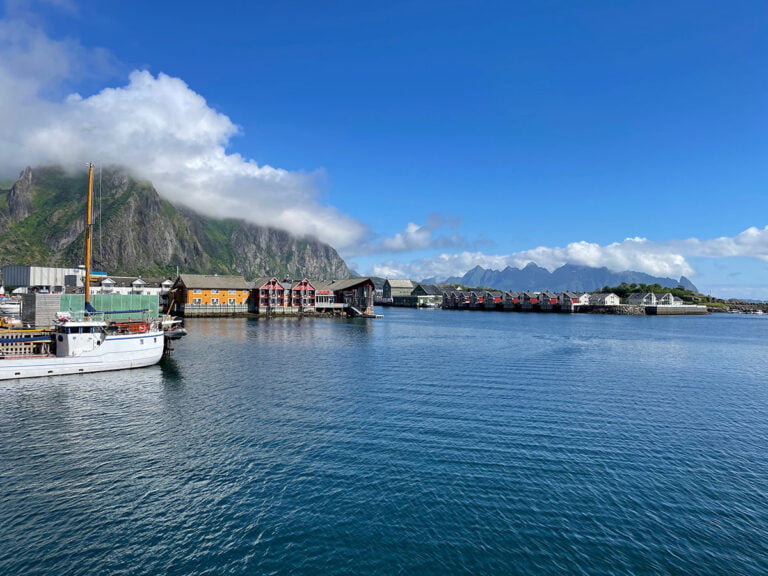
Flying into Evenes and driving into Lofoten can be easier than flying directly to Leknes or Svolvær, especially in high season when rental cars on the islands are in short supply.
If you are travelling in winter, the calculation changes again. Lofoten is beautiful in winter, but weather, darkness, snow, ice and high winds can all affect travel. A summer road trip plan may not be a good winter road trip plan.
Flying Directly to Lofoten
There are two small airports in Lofoten: Svolvær Airport and Leknes Airport. Both are much smaller than the major mainland airports, with short runways and services usually operated by Widerøe’s propeller aircraft.
For much of the year, flying to Lofoten involves changing planes in Bodø. From Bodø, there are several daily Widerøe flights to both Svolvær and Leknes. Some itineraries may also route via Tromsø depending on the season and airline connections.
The big advantage of flying directly to Lofoten is convenience. If everything lines up, you can leave Oslo in the morning and be in Svolvær or Leknes just a few hours later. That is a big deal if you only have a short trip.
There are also seasonal direct flights that can make things even easier. In the summer, Widerøe has offered direct flights from Oslo to both Svolvær and Leknes, along with a Bergen to Leknes route. These summer flights are especially useful for visitors who want to avoid an overnight stop or a ferry connection.
However, flying directly to Lofoten does come with some downsides.
Flights can be expensive, especially in summer. The small aircraft also mean limited capacity, so the cheapest seats may sell out quickly. Bad weather can affect flights too, particularly at the smaller airports.
The other issue is car rental. Many visitors to Lofoten want a car, but rental car availability at Svolvær and Leknes can be limited, especially in the summer season. Do not assume you can turn up and rent a car on arrival. In some cases, rental desks may not even be open if they have no advance bookings.
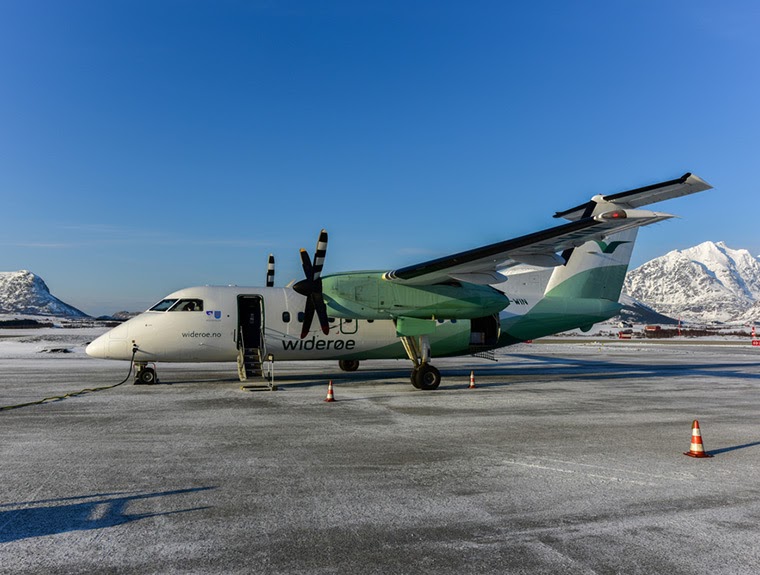
If your trip depends on having a car, book the car before you commit to your flights. That one step can save a lot of stress later.
Flying To Evenes
Harstad/Narvik Airport Evenes is not in Lofoten, but it is one of the most important gateways to the islands.
Because Evenes has a longer runway, it is served by larger aircraft from Oslo and other destinations. This often means more choice, better prices and more rental car availability than you will find at the smaller Lofoten airports.
From Evenes, it is about 170 kilometres to Svolvær. The drive typically takes around two and a half to three hours in good conditions, although you should allow more time in winter or bad weather.
For many visitors, flying to Evenes and renting a car is the most practical option. It gives you flexibility from the start and avoids the need to coordinate ferry times from Bodø.
There are also bus connections between Evenes and Lofoten, although they are not as frequent as airport buses in bigger cities. The main public transport option is Lofotekspressen, route 300, which runs between Narvik, Svolvær, Leknes and Å. Some services connect with Evenes Airport, but not every flight will have a convenient bus connection.
A new airport bus service between Evenes and Svolvær has also been planned for the 2026 summer season, with the intention of becoming a year-round service. Even so, always check current schedules before booking flights.
Evenes is especially useful if you are planning a wider road trip that includes Vesterålen, Narvik, Senja or Tromsø. But if your entire trip is focused on western Lofoten, remember that you still have several hours of driving before you reach places like Reine or Å.
Flying To Bodø First
Bodø is the classic gateway to Lofoten. It is easy to reach by air from Oslo and other Norwegian cities, and from there you have several onward options.
You can take the car ferry from Bodø to Moskenes, the passenger express boat from Bodø to Svolvær, or the coastal route ships to Stamsund or Svolvær.
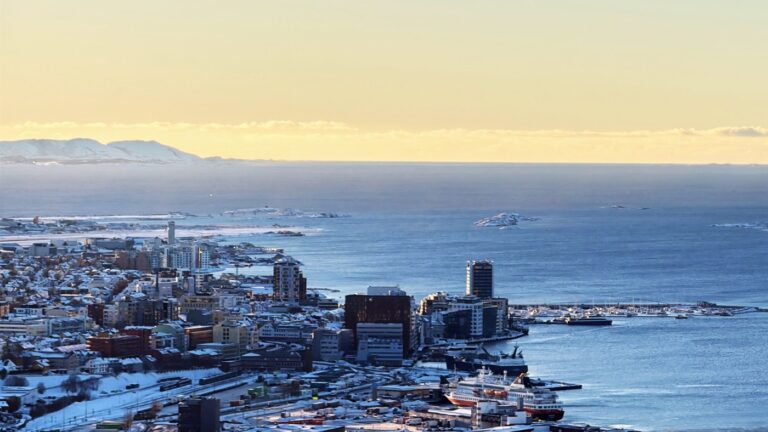
This makes Bodø a very flexible choice. It works for people travelling with a car, people travelling without a car and people who want the journey to Lofoten to feel like part of the experience.
Bodø itself is also worth considering as an overnight stop. This can be a sensible way to avoid tight connections, especially if you are arriving late in the day or travelling in winter. Weather can disrupt flights, ferries and coastal ships, so leaving a buffer in your itinerary is rarely a bad idea.
Taking The Bodø To Moskenes Ferry
For drivers heading to western Lofoten, the Bodø to Moskenes ferry is one of the most important travel links.
The crossing takes around three and a half hours and brings you to Moskenes, close to Reine, Sørvågen and Å. If your dream Lofoten trip involves the famous red cabins of Reine, the mountain views around Hamnøy or the western end of the E10 road, this ferry can be the most logical way to arrive.
The ferry can be used by cars, campervans, motorbikes and foot passengers. It runs all year, but schedules vary by season and weather can affect departures.
In summer, demand can be high. A portion of the ferry capacity can usually be reserved in advance, while the rest is available for travellers who queue at the quay. If you have a reservation, make sure you arrive in good time. Turning up late can mean losing your place.
For visitors with rental cars, the Bodø to Moskenes ferry can be a very efficient option. You can fly to Bodø, collect a car there, take the ferry to Moskenes, then drive east through Lofoten towards Leknes and Svolvær.
The downside is that you need to coordinate several moving parts: flight, rental car pickup and ferry departure. If your flight is delayed, the ferry will not wait. For that reason, many people choose to spend a night in Bodø before taking the ferry the next day.
That may sound like an inconvenience, but it can make the start of the trip much more relaxed.
Taking The Express Boat To Svolvær
If you are travelling without a car, the passenger-only express boat from Bodø to Svolvær is one of the most attractive ways to reach Lofoten.
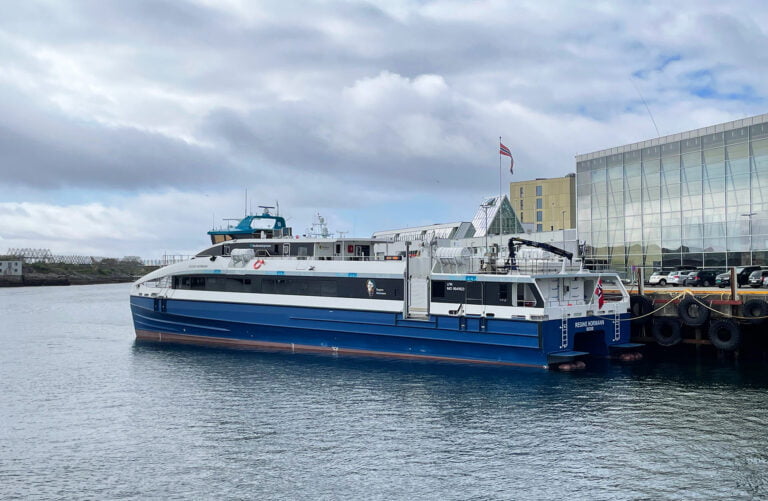
Known as Nordlandsekspressen, this service sails through the coastal landscape between Bodø and Svolvær, stopping at small communities along the way. It is not just a transport link. On a clear day, it can feel like a mini sightseeing cruise through islands, skerries and mountain scenery.
The express boat is especially useful if you plan to stay in Svolvær and use local buses, tours or rental cars from there. It also avoids the issue of taking a car ferry to Moskenes when you do not actually need to start your trip in western Lofoten.
Tickets and schedules should be checked through Reis Nordland or the Reis app. If you are bringing a bicycle, check the rules and availability in advance.
The main disadvantage is that, like all sea transport in Northern Norway, the express boat can be affected by weather. Do not plan an important long-haul flight or international connection immediately after a boat arrival.
Driving To Lofoten
Driving gives you the most flexibility in Lofoten, especially if you want to visit beaches, viewpoints, trailheads and smaller villages. But it also requires realistic planning.
Most visitors who drive in Lofoten do not drive all the way from Oslo. It is possible, of course, but it is a long journey. Even getting from Oslo to Bodø takes the best part of two days of driving without much sightseeing.
If you want to make a proper road trip of Norway, that can be wonderful. If Lofoten is your main focus, flying north and renting a car is usually a better use of time.
From Bodø, the most common driving route is to take the ferry to Moskenes and continue through Lofoten from west to east. This is ideal if you want to visit Reine and western Lofoten first.
It is also possible to drive from Bodø without taking the Moskenes ferry, but the route still usually involves another ferry crossing, such as Bognes to Lødingen. This can be useful if the Bodø to Moskenes ferry is full, cancelled or inconvenient, but it adds time and distance.
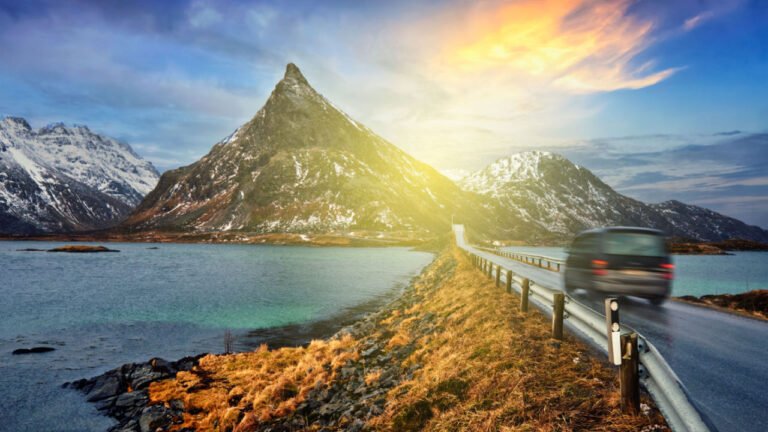
A completely ferry-free route is possible via Narvik and Evenes, but from Bodø it is a long detour. It makes more sense if you have flown into Evenes or are already travelling in the Narvik or Vesterålen area.
Once in Lofoten, the E10 is the main road through the islands. It links Å in the west with Leknes, Svolvær and the mainland connection to the east. Distances are not huge, but progress can be slower than you expect. Narrow roads, campervans, photo stops, sheep, cyclists and weather all play a role.
A Warning About Winter Driving In Lofoten
Lofoten in winter can be spectacular. Snow-covered peaks, low Arctic light and the chance of northern lights make it a tempting destination. But winter driving in Northern Norway should not be taken lightly.
Norwegian authorities have raised concerns about foreign visitors driving on winter roads without enough experience. Recent serious accidents in Northern Norway have led to renewed warnings about rental cars, winter conditions and the risks of unfamiliar roads.
This is not to say you should never rent a car in Lofoten in winter. Many visitors do, and many have wonderful trips. But you should be honest about your own experience.
If you are not used to driving on snow and ice, in darkness, in high winds or on narrow rural roads, think very carefully before planning a winter self-drive itinerary. Conditions can change quickly. A road that feels manageable in the morning may be icy, windy or snow-covered later in the day.
You should also remember that winter days are short. In December and early January, there is no real daylight for part of the season, only a few hours of twilight. That makes scenic driving more limited and can make navigation more tiring.
For some winter visitors, a better option is to base yourself in Svolvær or Leknes and use organised tours, buses or taxis where practical. You may see less of Lofoten, but you will probably enjoy the trip more than if you are constantly worried about the roads.
If you do rent a car in winter, make sure it is properly equipped, check weather and road conditions daily, allow generous time and be prepared to change your plans.
Travel To Lofoten By Train And Public Transport
It is possible to travel from Oslo to Lofoten using train, ferry and bus, but patience is required.
The railway does not go to Lofoten. The closest major railhead is Bodø, at the northern end of the Nordland Line. In normal times, you can travel by train from Oslo to Trondheim, then continue from Trondheim to Bodø.
This is one of Norway’s great overland journeys. The Nordland Line crosses the Arctic Circle and gives a real sense of the scale of the country. But it is a long trip. Oslo to Trondheim takes around seven hours, while Trondheim to Bodø takes around ten hours.
Night trains have traditionally made the journey more practical, but train services in Northern Norway can be affected by long-term disruption, landslides, maintenance work and replacement buses.
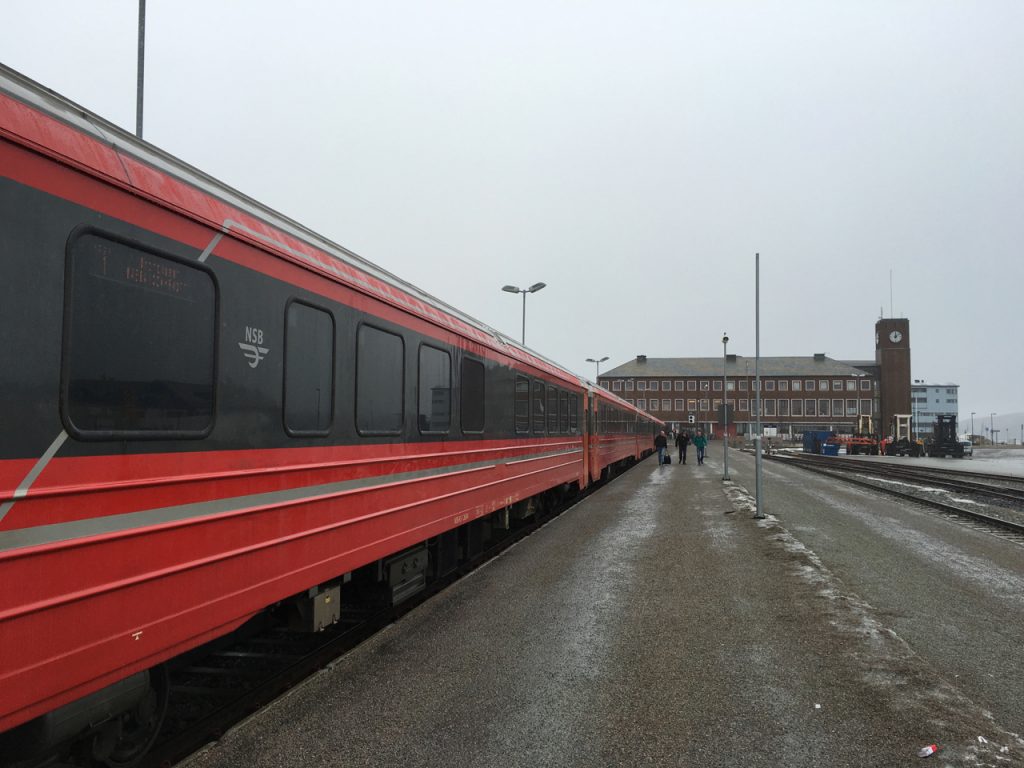
At the time of updating this article, parts of the Nordland Line have been affected by disruption and cancelled night train services.
For that reason, do not plan a train-based trip to Lofoten based on old assumptions. Check current schedules with Entur or SJ before booking accommodation or onward transport.
Once you reach Bodø, you can continue by ferry to Moskenes, express boat to Svolvær or coastal ship to Stamsund or Svolvær.
Within Lofoten, public transport is possible but limited. The most useful long-distance bus is Lofotekspressen, route 300, which links Å, Leknes, Svolvær and Narvik. There are also local bus routes between the main communities.
This can work well if you are travelling between towns and villages, especially in summer. But public transport is much less convenient if you want to visit remote beaches, trailheads or viewpoints. Buses may be infrequent, and some places that look close on a map are not easy to reach without a car.
If you are planning a car-free trip, build your itinerary around bus routes rather than trying to force public transport to fit a car-based itinerary. Svolvær and Leknes are the most practical bases for this kind of trip.
Ferries And Local Boats In Lofoten
Ferries are part of everyday life in coastal Northern Norway, and they can be useful for visitors too.
The Bodø to Moskenes ferry is the most important for many travellers, but it is not the only one. Other relevant routes include Bognes to Lødingen, Melbu to Fiskebøl and the summer route between Skutvik, Skrova and Svolvær.
These routes can be useful if you are combining Lofoten with Vesterålen, Narvik, Bodø or other parts of Northern Norway. They can also help you create a more scenic circular road trip rather than simply driving in and out the same way.
However, ferry timetables vary by season. Some routes are much more useful in summer than winter. Weather can also cause delays and cancellations.
Always check current ferry times before setting off, especially if your day depends on making a specific crossing. This is even more important if you are travelling with a campervan in July or August, when demand can be high.
The Coastal Route To Lofoten
Another way to travel to Lofoten is by sea using the Norwegian coastal route.
Hurtigruten and Havila both operate ships along the Norwegian coast between Bergen and Kirkenes. These ships are often thought of as cruises, but they also function as working coastal ferries, carrying local passengers between ports.
For Lofoten, the most relevant ports are Stamsund and Svolvær. You can board in places such as Bergen, Ålesund, Trondheim or Bodø and travel north to Lofoten as a port-to-port passenger.
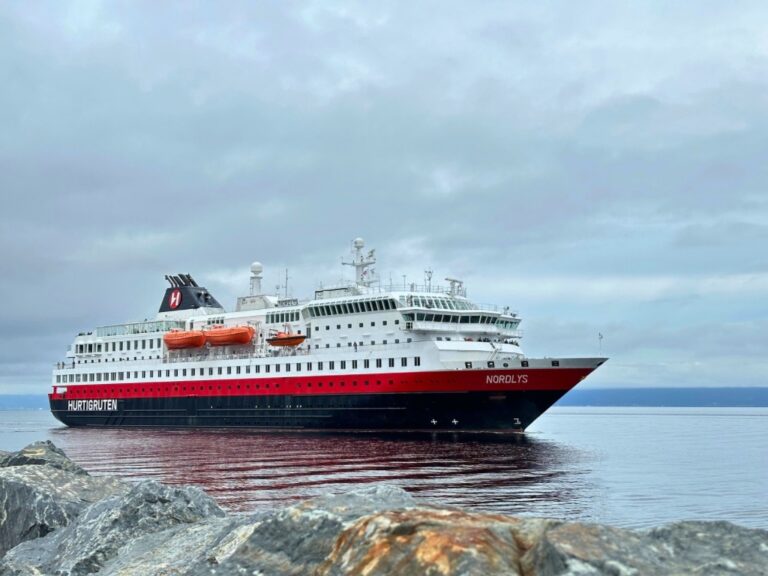
This is not the cheapest or fastest way to reach Lofoten, but it can be one of the most memorable. The journey along the coast gives you a sense of Norway’s geography that you simply do not get from a flight.
The stretch around Lofoten is especially scenic. Depending on the schedule and weather, the approach to Stamsund and the sailing towards Svolvær can be a highlight of the entire journey.
The coastal route works best if you have time and want Lofoten to be part of a bigger coastal Norway experience. It is less suitable if you are trying to maximise time on the islands or keep costs low.
Port-to-port fares vary depending on season, cabin availability and whether you book meals. On longer journeys, the price can quickly become significant. But for most travellers, the coastal route is not just transport. It is part of the holiday.
Leave Room For Weather Disruption
One of the most important pieces of advice for travelling to Lofoten is simple: do not over-plan tight connections.
This applies in all seasons, but especially in winter and the shoulder seasons. Flights can be delayed or cancelled. Ferries can be disrupted by wind. Bridges can close during storms. Buses may be delayed by road conditions. Coastal ships can skip ports if the weather is too severe.
That does not mean travel to Lofoten is unreliable. People live here, work here and travel here every day. But the weather is part of life in Northern Norway, and visitors should plan accordingly.
If you are booking international flights, avoid leaving Lofoten on the same day as your flight home from Oslo if you can. If you have an important connection, build in an overnight buffer in Bodø, Evenes, Tromsø or Oslo.
It may feel like “losing” a day, but it can be the difference between a relaxed trip and a very expensive problem.
Which Travel Option Should You Choose?
If you are heading to western Lofoten and plan to rent a car, flying to Bodø and taking the ferry to Moskenes is a classic choice. It works especially well for Reine, Hamnøy, Sørvågen and Å.
If you want the quickest journey and can find suitable flights and rental cars, flying directly to Leknes or Svolvær is hard to beat.
If you want more flight choice and better rental car availability, Evenes may be the most practical gateway. It is especially useful for road trips that include Svolvær, eastern Lofoten, Vesterålen or Narvik.
If you are travelling without a car and want to base yourself in Svolvær, the express boat from Bodø is a very appealing option. It is scenic, practical and avoids the need to deal with car ferry logistics.
If you want the journey itself to be part of the adventure, consider the train to Bodø when services are running normally, or the coastal route with Hurtigruten or Havila.
For winter trips, be cautious about ambitious self-drive plans. Lofoten is beautiful in winter, but the roads and weather demand respect. A slower trip based around one or two places may be far more enjoyable than trying to see everything.


Never heard of Lofoten until today. Saw a picture of a beautiful shot of a circular harbor in Lofoten from a mountain view. Always wanted to visit Norway, Sweden, Denmark, and Finland. Will now have to include Lofoten in the trip plans. Thanks for the article.
great summary! thank you!
always interesting information!
I’m hoping to make it back to Norway in the next two or three years. Fantastic place🥰 but quite a long way from California.